
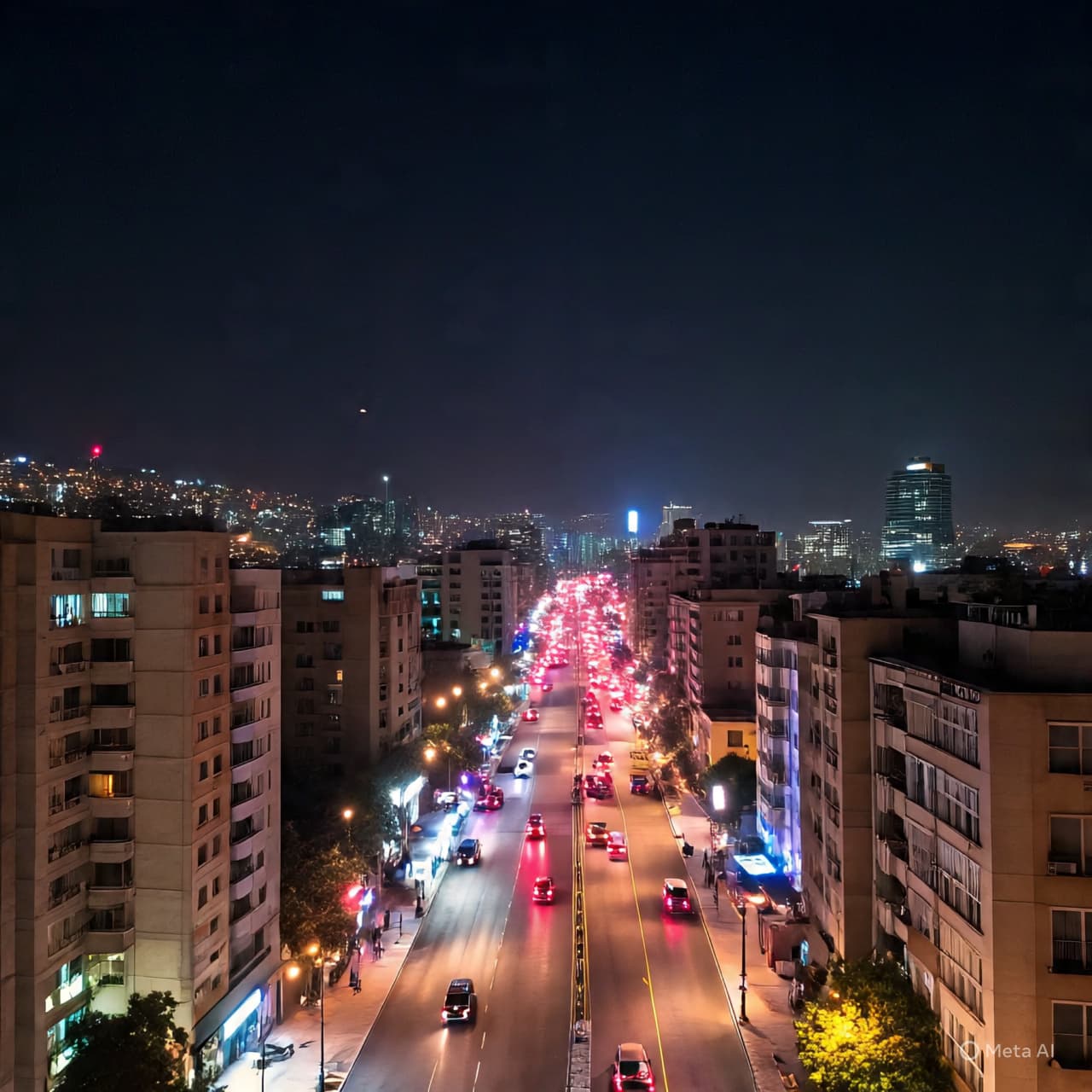
Even in cities long accustomed to uncertainty, there are places that quietly earn a different reputation—streets where cafés stay open a little later, neighborhoods where the rhythm of daily life carries a softer edge. In Beirut, such places once existed as small assurances, fragments of normalcy held gently against a wider history of disruption.
Now, those distinctions appear to be fading.
In recent days, Israel has intensified its airstrikes across Beirut, extending operations into districts that had previously been regarded as relatively insulated from direct attack. The shift is not defined by a single moment, but by a pattern—strikes reaching deeper into the city’s fabric, altering the mental map residents carry of where it is possible to feel, if not safe, then at least less exposed.
The targets, according to military statements, remain tied to infrastructure and networks associated with Hezbollah. Yet the geography of the strikes suggests a widening scope, one that blurs the lines between strategic intent and lived space. Buildings that once held offices, apartments, or shops become points of reference in a different kind of map—one marked by impact rather than function.
For residents, the change is subtle at first, then unmistakable. Areas that had been considered peripheral to the conflict begin to carry the same tension as those long associated with it. The familiar becomes uncertain, and the boundaries that once offered a sense of orientation start to dissolve.
Officials in Lebanon have responded with concern, emphasizing the risks posed to civilian areas and infrastructure. Meanwhile, Israeli authorities frame the operations within a broader effort to limit threats and disrupt capabilities they view as imminent. Between these positions lies a space where interpretation and experience diverge, shaped by perspective and proximity.
The city itself absorbs these developments in a way that is both visible and quiet. Traffic continues, shops open, and conversations unfold as they always have, yet beneath this continuity runs a current of awareness. The sound of aircraft, the distant echo of strikes, the pause before checking for updates—these become part of the rhythm of the day.
International observers note the escalation with measured language, pointing to the potential for wider consequences. Diplomatic efforts persist in parallel, attempting to contain the situation even as events on the ground evolve. The balance between action and restraint becomes more delicate with each passing day, as the margin for miscalculation narrows.
There is a particular weight carried by places once considered safe. Their transformation does not only alter geography; it reshapes expectation. When such areas are drawn into the scope of conflict, the change extends beyond physical damage, touching the way people understand their environment and their place within it.
As night falls again over Beirut, the city returns to its patterns—lights flickering on, streets settling into evening routines. Yet the sense of distance that once separated certain neighborhoods from the center of tension has diminished. What remains is a quieter, more pervasive uncertainty, one that moves with the city rather than staying confined to its edges.
In the days ahead, the facts will continue to clarify: the locations struck, the extent of damage, the responses from those involved. But already, a shift is evident. The intensification of strikes has redrawn not only the map of the city, but the boundaries of what is considered possible within it—leaving behind a question that lingers in the spaces between: where, now, does safety reside?
AI Image Disclaimer Illustrations were created using AI tools and are not real photographs.
Sources Reuters BBC News Al Jazeera Associated Press The Guardian
Published by Banx Network. This article is part of the Banx decentralized media programme, powered by the BXE token on the XRP Ledger.
.jpg&w=3840&q=75 "Blake Lively Awarded $400,000 in Legal Fees After Justin Baldoni Lawsuit Dismissed")
.jpg&w=3840&q=75 "US Declares Drought Disaster for Parts of Puerto Rico as Dry Conditions Persist")
