There are moments in space when motion itself seems to hesitate—when an object that has traveled silently for ages begins to falter, as if reconsidering its path. In the vast, indifferent theater of the cosmos, even a comet can appear to pause, its rhythm disrupted by forces too subtle to see, yet powerful enough to rewrite its fate.
High above Earth, the has captured one such moment: a comet not only slowing its spin, but reversing it entirely. The observation, rare and quietly dramatic, offers a glimpse into the delicate physics that govern even the smallest wanderers of our solar system.
At the center of this phenomenon is the interplay between sunlight and ice. As a comet approaches the Sun, its surface begins to warm, releasing jets of gas and dust in a process known as outgassing. These jets act like tiny thrusters, exerting torque on the comet’s nucleus. Over time, and with uneven distribution, they can alter the object’s rotation—speeding it up, slowing it down, or, in this case, gradually forcing it to reverse direction.
The comet observed by Hubble appears to be undergoing exactly this transformation. Once spinning in one direction, it has been steadily decelerated by asymmetric outgassing until its rotation halted and began to shift the other way. Scientists note that such behavior is not just unusual—it is a sign of instability. The forces acting on the comet are not balanced, and that imbalance may ultimately lead to its structural failure.
Comets are often described as fragile, and for good reason. Composed of loosely bound ice, dust, and rock, they are sometimes called “dirty snowballs.” When rotational changes become too extreme, the internal cohesion of the nucleus can be compromised. In some cases, this leads to fragmentation—where the comet breaks apart into smaller pieces, each continuing its own journey through space.
What makes this observation particularly valuable is its clarity over time. Hubble’s long-term monitoring allows scientists to track not just a single snapshot, but a sequence of changes—watching the comet’s spin evolve, slow, and reverse. This kind of data provides deeper insight into how outgassing influences comet behavior, helping refine models that explain their life cycles.
The implications extend beyond a single object. Understanding how comets respond to solar heating can improve predictions about their trajectories, stability, and potential for disintegration. It also sheds light on the early solar system, as comets are considered remnants from its formation—preserving materials that date back billions of years.
For now, the comet continues its altered spin, its future uncertain. It may hold together, adjusting to its new motion, or it may fragment under the stress of competing forces.
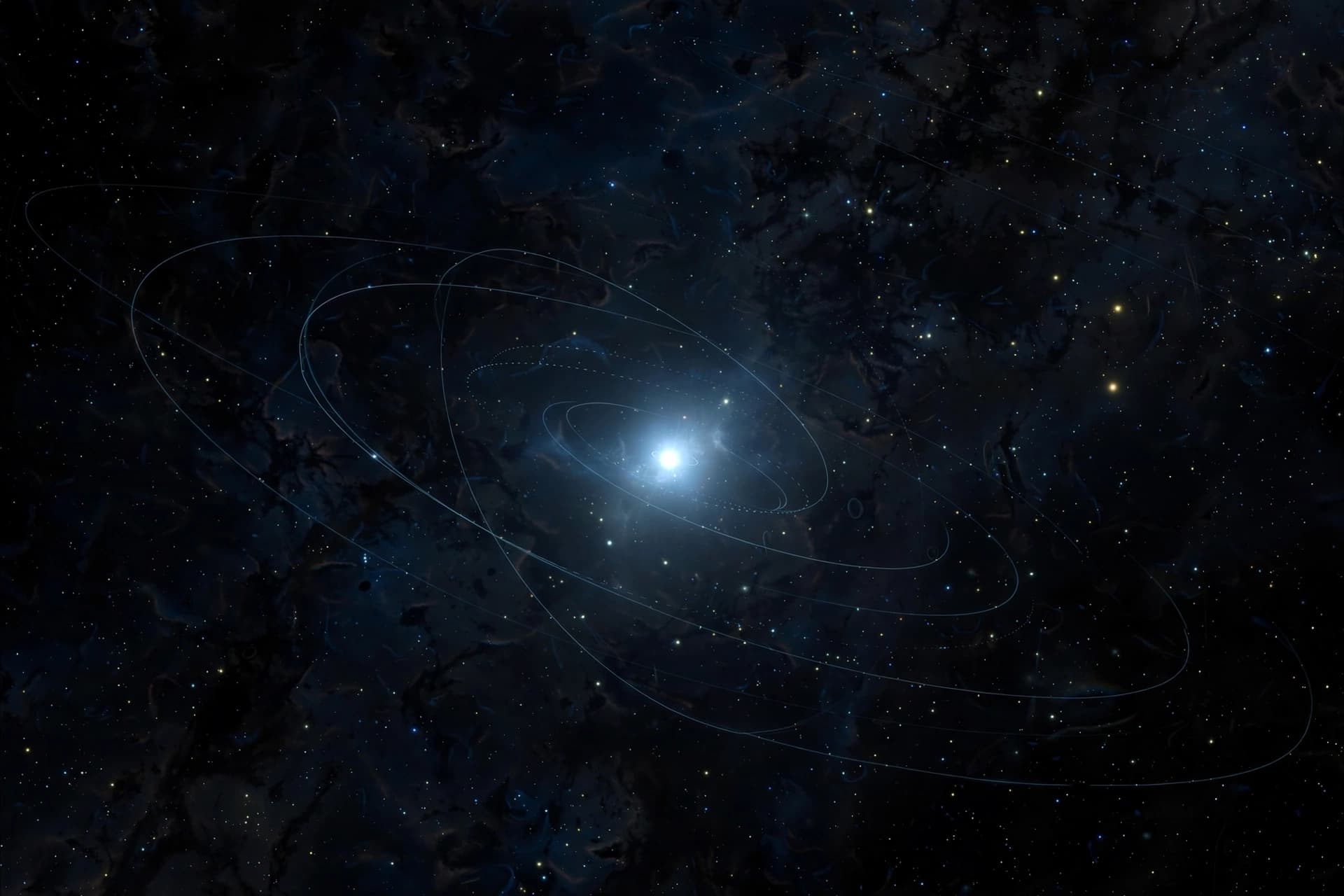
AI Image Disclaimer Illustrations were produced with AI and serve as conceptual depictions.
Source Check Credible coverage exists from:
NASA ESA (European Space Agency) Space.com Live Science Scientific American
Published by Banx Network. This article is part of the Banx decentralized media programme, powered by the BXE token on the XRP Ledger.