The sky above Earth often feels timeless, a vast and steady canopy that has watched centuries unfold below. Yet in recent years, subtle changes have begun to appear in that familiar darkness. Small points of light glide silently across the night sky—satellites moving in quiet formation, each part of a growing constellation that now circles the planet.
Behind those moving lights lies a rhythm of launches that has grown increasingly steady.
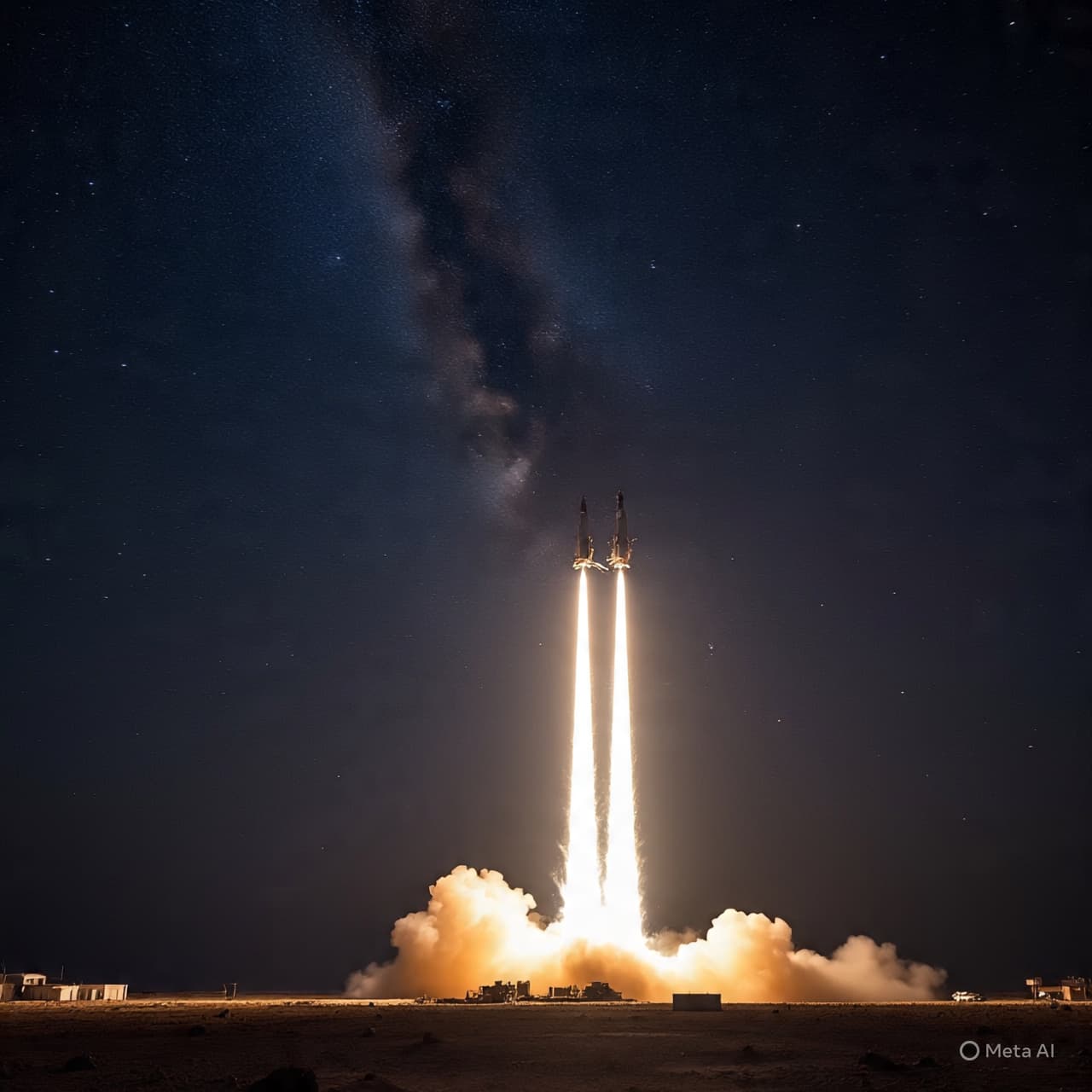
Within the span of two days, rockets lifted from both the eastern and western coasts of the United States, each carrying a fresh group of satellites into orbit for the expanding Starlink network. The missions, launched by SpaceX, continued the company’s rapid deployment of satellites designed to provide global internet coverage.
Though separated by thousands of miles of coastline, the launches formed part of a single ongoing effort to populate low-Earth orbit with a dense grid of communication satellites.
One rocket rose from Florida’s Space Coast, climbing into the early sky before releasing its cargo of Starlink satellites high above the Atlantic. Not long after, another Falcon 9 rocket lifted from California’s Vandenberg Space Force Base, carrying another batch into polar orbit over the Pacific.
Two coasts, two launches, and dozens more satellites joining the growing constellation.
Each Falcon 9 mission followed a familiar yet still remarkable pattern. After propelling its payload toward orbit, the rocket’s first-stage booster separated and guided itself back toward Earth. In many cases, these boosters land either on autonomous drone ships at sea or on landing pads near the launch site, allowing them to be reused for future flights.
This reusability has played a central role in SpaceX’s ability to launch satellites at a pace rarely seen in the history of spaceflight.
The Starlink constellation itself has grown steadily since its first launches in 2019. Thousands of satellites now orbit the planet, working together to beam internet connectivity to ground terminals across continents, remote islands, and rural regions that previously lacked reliable broadband access.
The system relies on satellites positioned relatively close to Earth—roughly 550 kilometers above the surface—allowing signals to travel faster than traditional satellite internet systems that operate much farther away.
As more satellites are added, coverage expands and network capacity increases.
For observers on the ground, the growing constellation sometimes reveals itself in unexpected ways. Shortly after launch, newly deployed satellites can appear as a line of moving lights crossing the night sky before gradually dispersing into their operational orbits. For some skywatchers, these passing formations offer a brief reminder of the technological systems quietly assembling above the planet.
At the same time, the expanding network has also prompted conversations among astronomers and space researchers about how satellite constellations may affect observations of the night sky. SpaceX and other organizations have explored ways to reduce satellite brightness and mitigate interference with astronomical research.
Such discussions continue alongside the rapid growth of commercial space infrastructure.
For now, the two recent launches reflect something broader about modern space activity: the increasing normalization of frequent orbital missions. What once felt rare—rockets rising into the sky—has gradually become part of an evolving routine.
From one coast to another, the launches echo the same quiet message: the region just above Earth’s atmosphere is becoming an increasingly active place.
SpaceX is expected to continue launching additional Starlink missions in the months ahead as the constellation expands and evolves. Each launch adds another small piece to a network that now circles the globe, linking distant places through signals traveling silently through orbit.
And with each rocket that climbs into the sky, the pattern continues—two coasts, two launches, and a growing constellation quietly spreading across the heavens.
AI Image Disclaimer Illustrations were produced with AI and serve as conceptual depictions.
Sources Space.com NASASpaceflight Spaceflight Now Ars Technica Reuters
Published by Banx Network. This article is part of the Banx decentralized media programme, powered by the BXE token on the XRP Ledger.