
Key Highlights
- Incident:A large crocodile was evacuated in Indonesia following a fatal encounter with a human.
- Discovery:Human remains were found inside the crocodile, prompting a sensitive response from authorities.
- Community Response:Local residents express grief and concern, leading to discussions on safety measures.
In the quiet margins where land meets water, nature often moves in rhythms unseen, and stories unfold without witness. Yet sometimes, an incident rises from that stillness, carrying both tragedy and urgency, drawing attention to the fragile boundary between human presence and the wild. This was the case in Indonesia, where a recent crocodile incident has sparked significant concern and reflection on human-wildlife interactions.
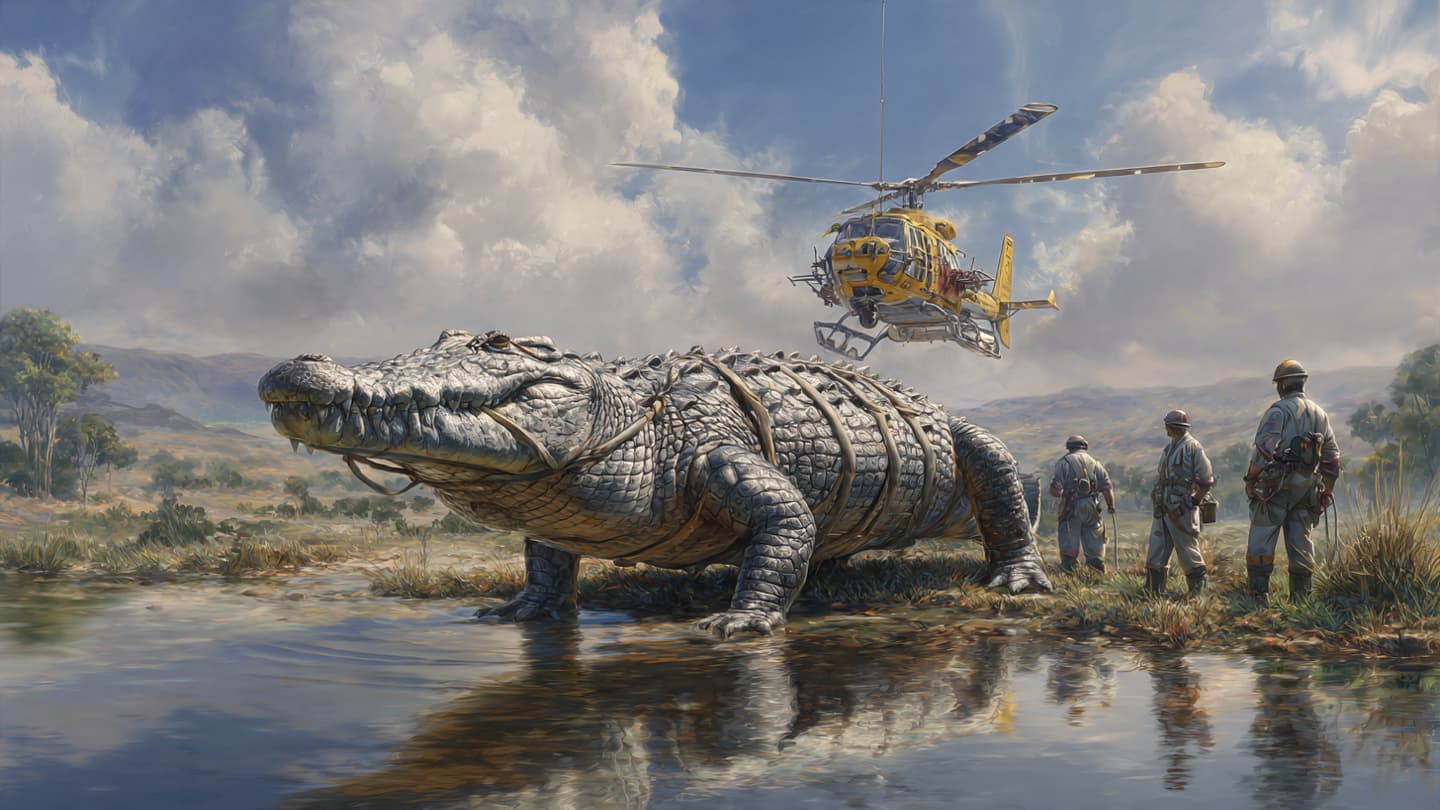
Authorities in Indonesia reported the evacuation of a large crocodile measuring approximately 4.5 meters in length following a fatal incident involving a human victim. The operation, which involved lifting the animal by helicopter, was conducted as part of efforts to recover remains and ensure public safety. The discovery that the crocodile contained human remains added a somber dimension to the response, highlighting the tragic intersection of human life and wildlife.
Officials approached the situation with caution and respect, recognizing both the sensitivity of the loss and the need for careful handling of the animal. Crocodile-related incidents, while relatively rare, are not unknown in certain parts of Indonesia where human settlements intersect with natural habitats. Expanding populations and environmental changes have gradually increased the frequency of such encounters, making it imperative for authorities to address the risks involved.
Local authorities, alongside wildlife management teams, coordinated the evacuation to prevent further risk. The use of a helicopter reflects the logistical challenges of handling an animal of that size, particularly in areas with limited access. Experts often emphasize that such incidents are shaped by overlapping factors, including habitat disruption and human activity near waterways. The presence of large predators in these environments underscores the importance of awareness and precaution.
Community members in the affected area have expressed both grief and concern, prompting renewed discussions about safety measures and coexistence with wildlife. Educational efforts are frequently highlighted as part of long-term prevention strategies. The incident has served as a catalyst for conversations about how to better manage human-wildlife interactions, ensuring that both public safety and wildlife conservation are prioritized.
The incident also serves as a reminder of the complexity of managing wildlife in regions where natural ecosystems remain closely intertwined with daily life. Balancing conservation and safety continues to be an ongoing challenge, as authorities strive to protect both human lives and the natural world. As the situation is addressed, authorities have reiterated their commitment to both public safety and responsible wildlife management, ensuring that responses remain grounded in both compassion and practicality.
As communities reflect on this tragic event, it is clear that ongoing dialogue and education are essential in fostering a safer coexistence with the wildlife that shares their environment.
Published by Banx Network. This article is part of the Banx decentralized media programme, powered by the BXE token on the XRP Ledger.



