
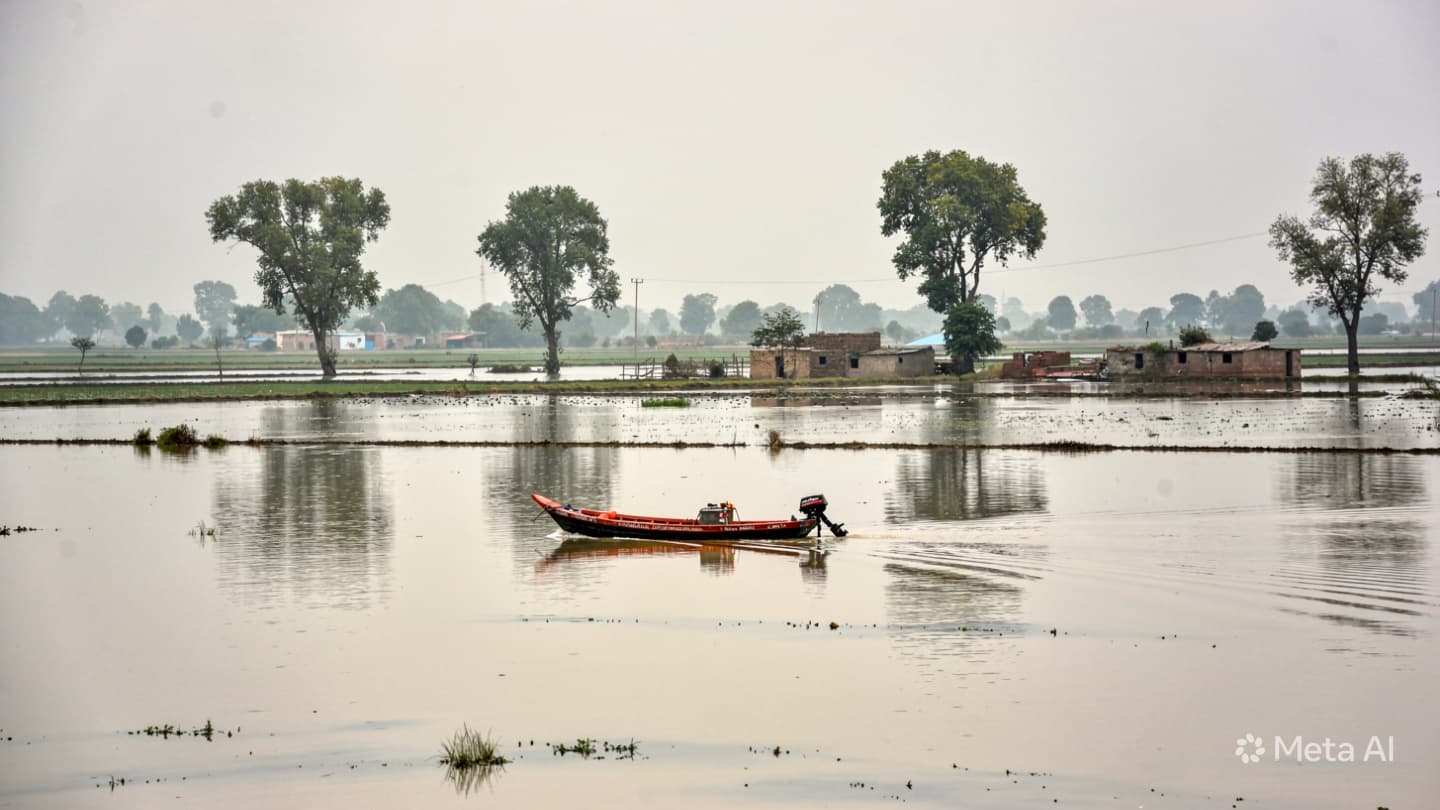
The water moves with a quiet, deliberate purpose, reclaiming the lowlands with a silence that is more unsettling than any storm. In Uttar Pradesh, when the rivers swell and spill their banks, the geography of the land is rewritten overnight. Paths that were once firm ground become fluid channels, and the horizon blurs, merging the earthy tones of the fields with the slate-grey reflection of the rising flood. It is a transformation that feels ancient and inevitable, yet for those who call these plains home, it is a sudden, stark interruption of the cycle of their days.
There is a strange, melancholy beauty to a flooded landscape, even as one recognizes the hardship it brings. The fields, transformed into vast, reflective mirrors, appear to be resting, though the reality is far more turbulent. To watch the water rise is to observe a slow, creeping encroaching of the wild back into the spaces we have carefully cultivated. It is a reminder of the fragility of our borders, how easily the line between dry land and water is erased when the heavens remain open for too long.
Rescue teams have been navigating these shifting environments with a cautious, steady hand. Their boats cut through the stillness, creating ripples that distort the reflected sky, a visual metaphor for the disruption being felt across the region. They are the conduits between the isolated and the accessible, their work defined by the constant, shifting geography of the flood. Each mission is a quiet act of defiance against the water’s steady, rhythmic push to expand its territory.
The deployment of these units is a response to the urgent, unmet needs of communities now cut off by the currents. There is no sensationalism in their approach; it is a clinical, necessary response to a natural event that has outpaced the existing infrastructure. They bring with them the essentials—the dry rations, the clean water, and the medical supplies—that bridge the gap between the precarious present and a more stable, dry-land future.
Throughout the affected districts of Uttar Pradesh, the atmosphere is one of waiting. The residents, many of whom have lived through such cycles before, demonstrate a quiet, stoic patience as they move their belongings to higher ground or gather on the rooftops that have become temporary islands. It is a scene of communal endurance, where the shared experience of the flood fosters a silent, resilient solidarity that is both profound and deeply human.
The local meteorological offices continue to monitor the water levels, their data reflecting the slow movement of the river systems across the state. The information they provide is the silent map that guides the rescuers, a set of technical coordinates that translate the chaos of the flood into a manageable, albeit difficult, series of operations. It is a collaborative effort between the science of the weather and the instinct of the rescue worker, both operating in concert to minimize the impact of the rising tides.
As the evening settles over the submerged fields, the work of the teams remains constant. They move with the current, their flashlights casting long, searching beams across the water, looking for the signs of life that persist even in the face of such overwhelming saturation. The cycle of the flood will eventually break, and the waters will retreat, but for now, the focus is entirely on the present moment, on the simple, vital task of moving through the water to reach those who remain waiting.
Authorities report that flood rescue teams have successfully accessed several of the most isolated communities in Uttar Pradesh. The India Meteorological Department continues to provide real-time water level monitoring to aid in the deployment of personnel. Relief efforts are currently ongoing, with local agencies coordinating with national teams to provide essential supplies to residents affected by the flooding.
Published by Banx Network. This article is part of the Banx decentralized media programme, powered by the BXE token on the XRP Ledger.


