
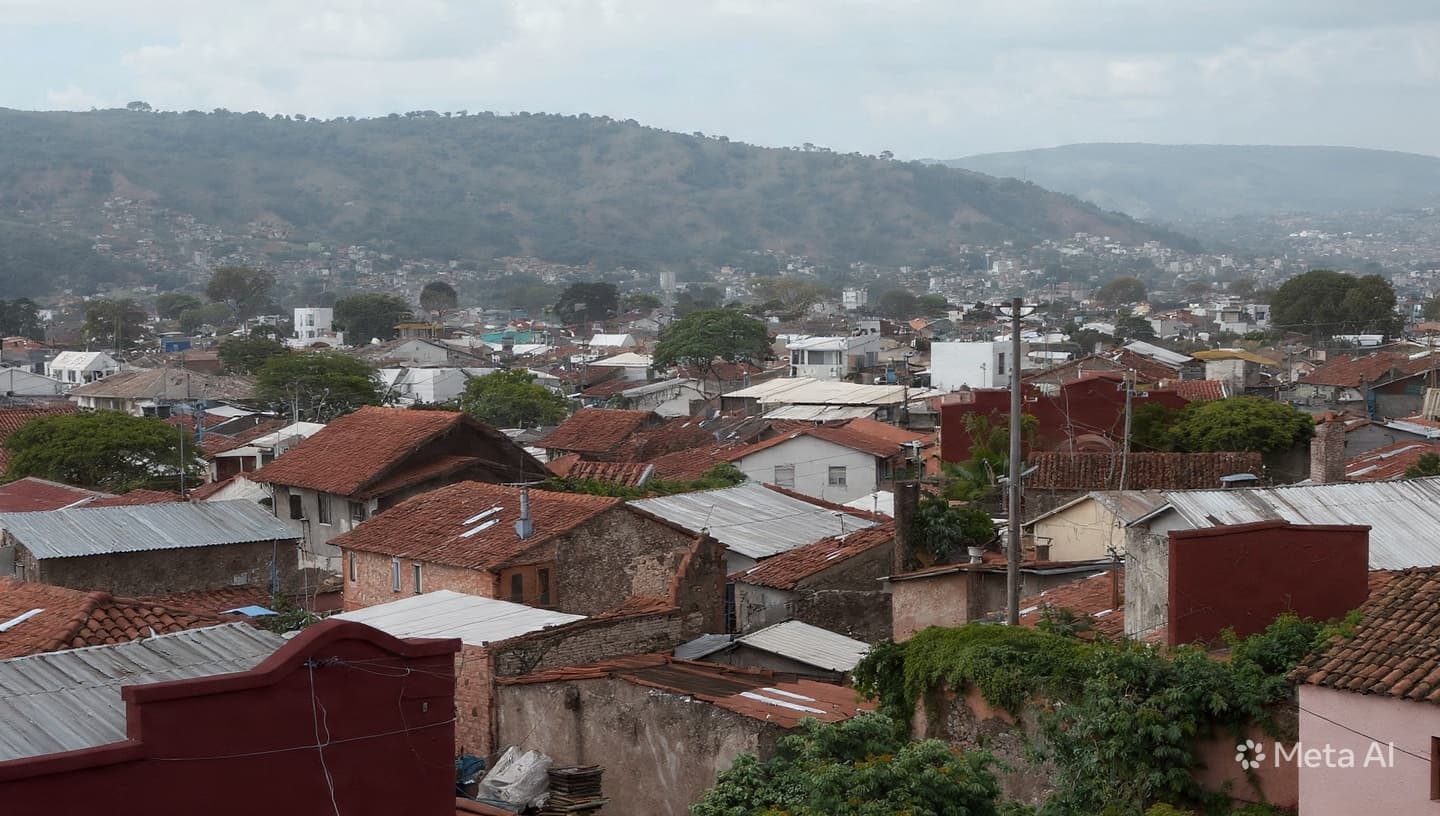
Key Highlights
- Location:The outskirts of Guatemala City, marked by gang rivalries.
- Gangs:Ongoing conflict between Barrio 18 and MS-13.
- Impact:Daily life affected by violence and social instability.
On the outskirts of Guatemala City, where the urban landscape begins to thin and the environment becomes harsher, daily life is dictated by a rhythm of caution. In these areas, the rivalry between the gangs Barrio 18 and MS-13 unfolds with unsettling frequency. For residents, the sound of gunfire is not a distant news report but a stark reminder of the boundaries that define their existence, drawn by unseen forces competing for territory and influence.
The violence in these neighborhoods is often labeled as "urban" or "gang-related," terms that fail to capture the visceral reality of life under constant threat. Residents live in a state of perpetual waiting—waiting for the next confrontation, for a semblance of peace, and for a future increasingly tethered to a troubled past. The sprawling complexity of the city creates pockets of exclusion where state presence is intermittent, allowing alternative power structures to flourish.
These rivalries are not merely tactical; they are woven into the community's fabric. The struggle for control over local commerce and transportation creates a web of intimidation that affects nearly every inhabitant. When a fatal shooting occurs, shockwaves ripple through the community, silencing markets and emptying streets in a reflex of survival. This scene, repeated with wearying consistency, highlights the difficulty of establishing a trustworthy order in such a volatile environment.
Observers note that the violence reflects a broader disconnection between the political center and peripheral communities that bear the brunt of instability. Government efforts to quell unrest often focus on large-scale crackdowns, yet the reality in these neighborhoods requires a more nuanced approach that addresses the underlying lack of opportunity and social cohesion. Without such focus, the cyclical nature of conflict seems destined to persist, regardless of security operations' intensity.
Walking through these outskirts, the resilience of residents is evident amid the tension. People navigate hazards with a quiet, practiced awareness, adapting to their circumstances. Their ability to survive is a testament to the human spirit, yet it underscores the tragedy of a situation where survival has become an act of defiance. In this fractured city, the ordinary is constantly interrupted by the extraordinary, with mundane tasks performed under the watchful eye of danger.
The narrative of urban battles is often reduced to statistics, such as homicide rates and police patrol movements. However, behind these numbers lie the stories of individuals whose lives are constrained by their neighborhoods' geography. The rivalry between the two major gangs acts as a dark filter through which every interaction is viewed, fostering an environment where suspicion becomes a necessary survival skill. This social environment demands constant vigilance, a toll paid by generations of citizens who deserve a different reality.
As the government employs emergency measures to stabilize these areas, the question remains whether the focus can expand to include long-term community reintegration and development. Current strategies, while providing a necessary pause in violence escalation, represent only the first step in a much longer journey toward urban peace. For the outskirts of Guatemala City, the hope is not for temporary silence but for the restoration of a space where the city can feel whole again, free from the shadows of rivalry.
Ultimately, the urban violence that persists on the city’s edge challenges the entire nation. It raises fundamental questions about how society can protect its most vulnerable members from influences that undermine community potential. As the city continues its slow, uncertain path toward stabilization, the voices from these neighborhoods must be heard and addressed to foster lasting change.
Published by Banx Network. This article is part of the Banx decentralized media programme, powered by the BXE token on the XRP Ledger.



