
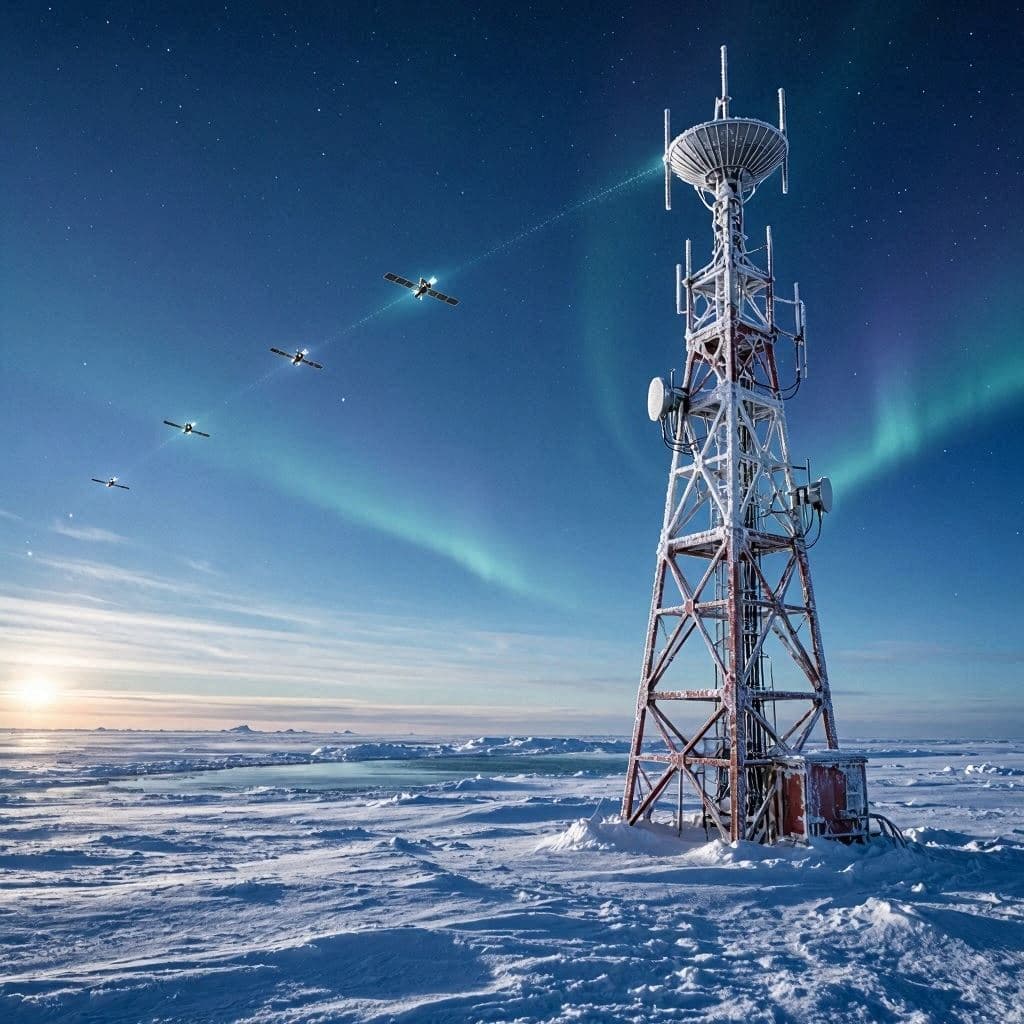
Across Canada’s vast and remote territories, communication has always depended on technology that can overcome distance and extreme geography. Satellite systems are now becoming central to that effort.
Body: Canada is developing a next-generation satellite communication network designed to improve internet access, emergency communication, and data transfer in remote and Arctic regions.
The system is being built through collaboration between government agencies, aerospace organizations, and technology partners specializing in space-based infrastructure.
Satellite connectivity plays a crucial role in areas where traditional ground-based communication networks are difficult to establish due to terrain and weather conditions.
Engineers are focusing on improving signal strength, reducing latency, and expanding coverage across high-latitude regions where connectivity has historically been limited.
The network is also expected to support scientific research by enabling faster transmission of environmental and climate monitoring data from remote stations.
Experts highlight that satellite infrastructure is becoming increasingly important for national resilience, emergency response, and digital inclusion.
This development reflects a broader global trend of integrating space-based systems into national communication frameworks.
Closing: As deployment progresses, Canada’s satellite network represents a significant step toward connecting its most remote regions.
AI Image Disclaimer: Some visuals may be AI-generated for editorial illustration purposes.
Source Verification Check: Canadian Space Agency, NASA Collaboration Reports, Reuters Technology Desk, Nature Communications
Published by Banx Network. This article is part of the Banx decentralized media programme, powered by the BXE token on the XRP Ledger.



