
Key Highlights
- Date:A temporary ceasefire was observed from May 9 to May 11.
- Participants:Ukrainian President Volodymyr Zelensky and U.S. President Donald Trump were key figures in the ceasefire announcement.
- Significance:The ceasefire coincided with Russia's annual Victory Day ceremony, a major national event.
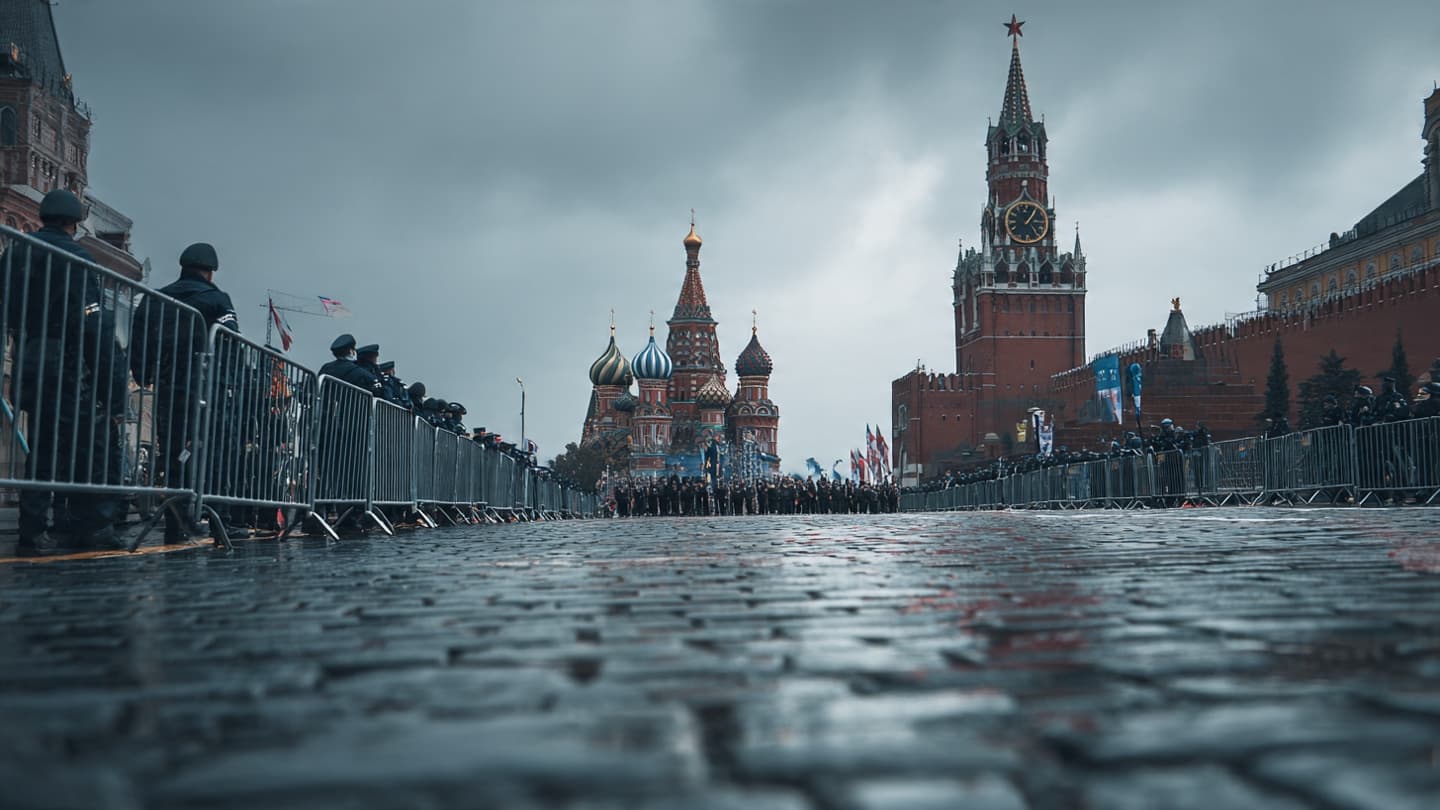
On May 9, as Moscow prepared for its annual Victory Day ceremony, a temporary ceasefire was observed in the ongoing conflict between Russia and Ukraine. This moment of silence, albeit brief, marked a significant pause in hostilities, allowing for a rare glimpse of tranquility amid the chaos of war. Ukrainian President Volodymyr Zelensky announced that Ukraine would refrain from targeting Moscow's Red Square during the celebrations, a gesture that carried both symbolic weight and practical implications.
The ceasefire, which was agreed upon by both Moscow and Kyiv, was set to last from May 9 through May 11. U.S. President Donald Trump played a pivotal role in facilitating this temporary halt in hostilities, which also included discussions about a potential prisoner exchange. While the ceasefire was limited in scope, it represented one of the clearest coordinated pauses in recent months, highlighting the complexities of diplomacy in wartime.
Victory Day is a significant event in Russia, commemorating the Soviet Union's victory over Nazi Germany in 1945. The day is marked by military parades, speeches, and public displays of patriotism. For the Kremlin, it serves as both a remembrance of past sacrifices and a demonstration of national strength. In the context of the ongoing conflict, the symbolism of Red Square takes on even greater importance, as it becomes a stage for both allies and adversaries to observe.
For Ukraine, the decision to observe a ceasefire during such a significant event was not merely a concession but a strategic calculation. Zelensky emphasized the importance of Ukrainian lives, particularly those of prisoners, over symbolic military strikes. This pragmatic approach reflects the broader realities of the conflict, where battlefield fatigue and humanitarian concerns often shape decisions.
In the lead-up to the parade, Russian authorities implemented heightened security measures, tightening access to central districts and increasing surveillance in anticipation of potential threats. These precautions underscore the extent to which symbolic events have become intertwined with military vulnerabilities, as the Kremlin seeks to project strength while remaining aware of the risks involved.
Despite the temporary pause, both sides remained cautious. Ukrainian officials warned that previous ceasefires had often been fragile, while Russian officials framed the truce as a humanitarian gesture linked to the national holiday rather than a step toward formal negotiations. The complexities of the situation were evident as history and present conflict coexisted, with the march in Moscow proceeding while the battlefield experienced a momentary quiet.
As the day progressed, neither Kyiv nor Moscow characterized the ceasefire as a peace agreement. Instead, it was viewed as a necessary pause rather than a resolution to the ongoing conflict. Nevertheless, on this Victory Day, the brief stillness carried significant weight, serving as a reminder of the human cost of war and the fragile nature of peace.
Published by Banx Network. This article is part of the Banx decentralized media programme, powered by the BXE token on the XRP Ledger.



