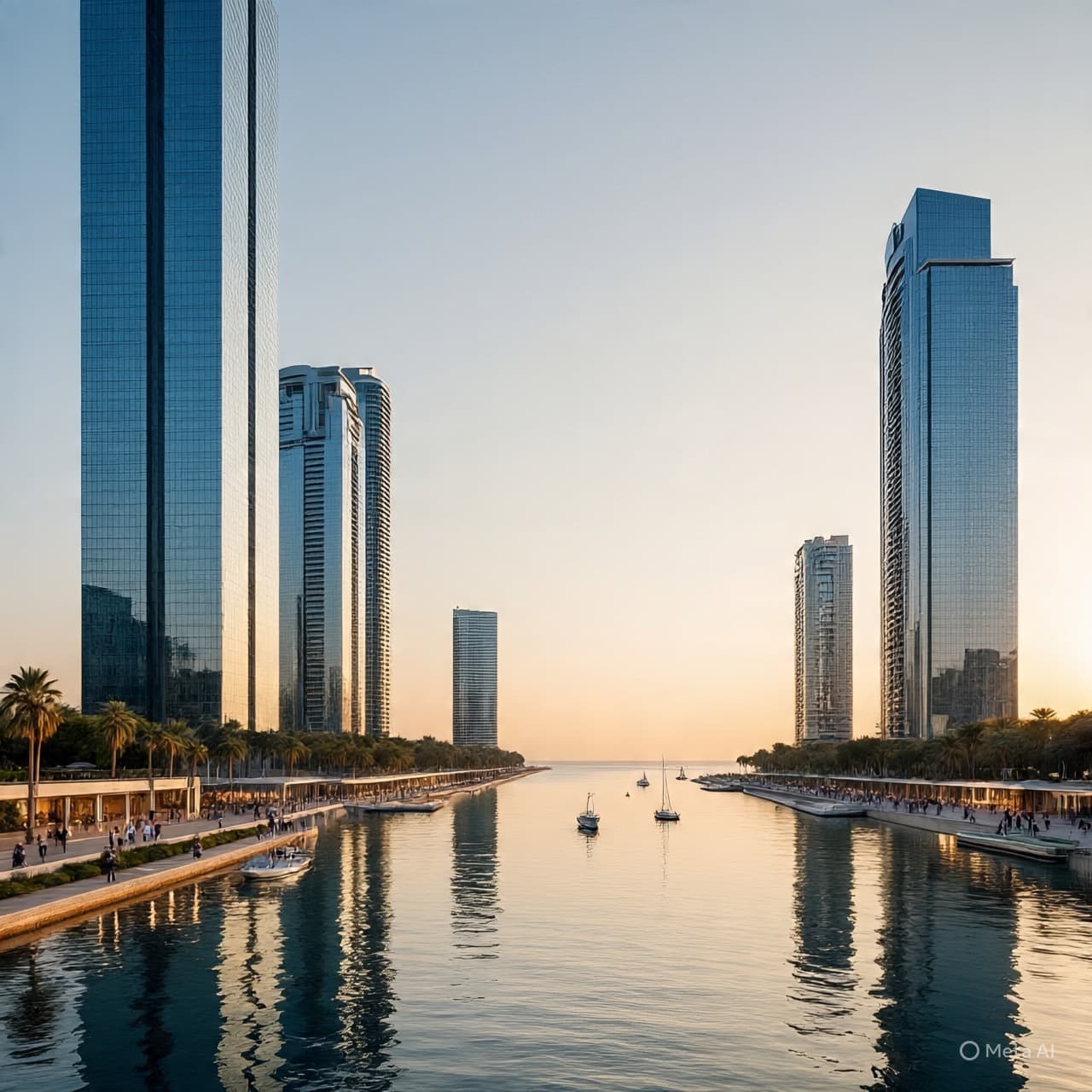
The proposal arrives polished and serene, its edges clean where the reality beneath them is anything but. Renderings of tall buildings rise against a bright horizon, suggesting order, growth, and a future shaped by symmetry. This week, Donald Trump’s son-in-law unveiled a development plan for Gaza centered on skyscrapers and large-scale urban renewal, offering an image of transformation at a moment defined by uncertainty.
Urban visions have a particular power. They compress complexity into perspective views and master plans, promising that scale and design can reorder the present. In this case, the plan gestures toward economic revival—investment, housing, modern infrastructure—an argument that stability can be built upward, floor by floor.
Yet Gaza resists abstraction. It is one of the most densely populated places on earth, marked by repeated cycles of destruction and rebuilding, each leaving deeper scars. Any proposal to remake it inevitably collides with questions of sovereignty, governance, and consent. Buildings do not stand alone; they rely on systems that remain fragile or unresolved.
Supporters describe the plan as forward-looking, an attempt to imagine life beyond emergency relief and reconstruction as repetition. Critics hear dissonance in the timing. Skyscrapers suggest permanence, but permanence requires peace. Without political settlement, even the most ambitious designs risk becoming symbols rather than solutions.
There is also a quieter tension embedded in the unveiling itself. The distance between planner and place matters. Development conceived far from daily realities can feel detached, even when intentions are framed as benevolent. In Gaza, where survival has long overshadowed aspiration, visions imposed from above can feel premature.
Still, the plan reflects a broader impulse shaping global responses to crisis: the belief that economic frameworks and private investment can accelerate what diplomacy has stalled. It is an idea with precedent, and with limits. History shows that cities rebuild most successfully when reconstruction grows from within, guided by those who inhabit the streets being redrawn.
As the images circulate, they invite reflection more than resolution. They ask whether imagining a skyline is enough, or whether imagination must wait for conditions that allow it to take root. In Gaza, the future will not be determined by height or glass, but by whether rebuilding becomes a shared act—grounded in reality, and paced by peace.
AI Image Disclaimer Illustrations were created using AI tools and are not real photographs.
Sources (names only) Reuters Bloomberg Financial Times The New York Times The Guardian
Published by Banx Network. This article is part of the Banx decentralized media programme, powered by the BXE token on the XRP Ledger.