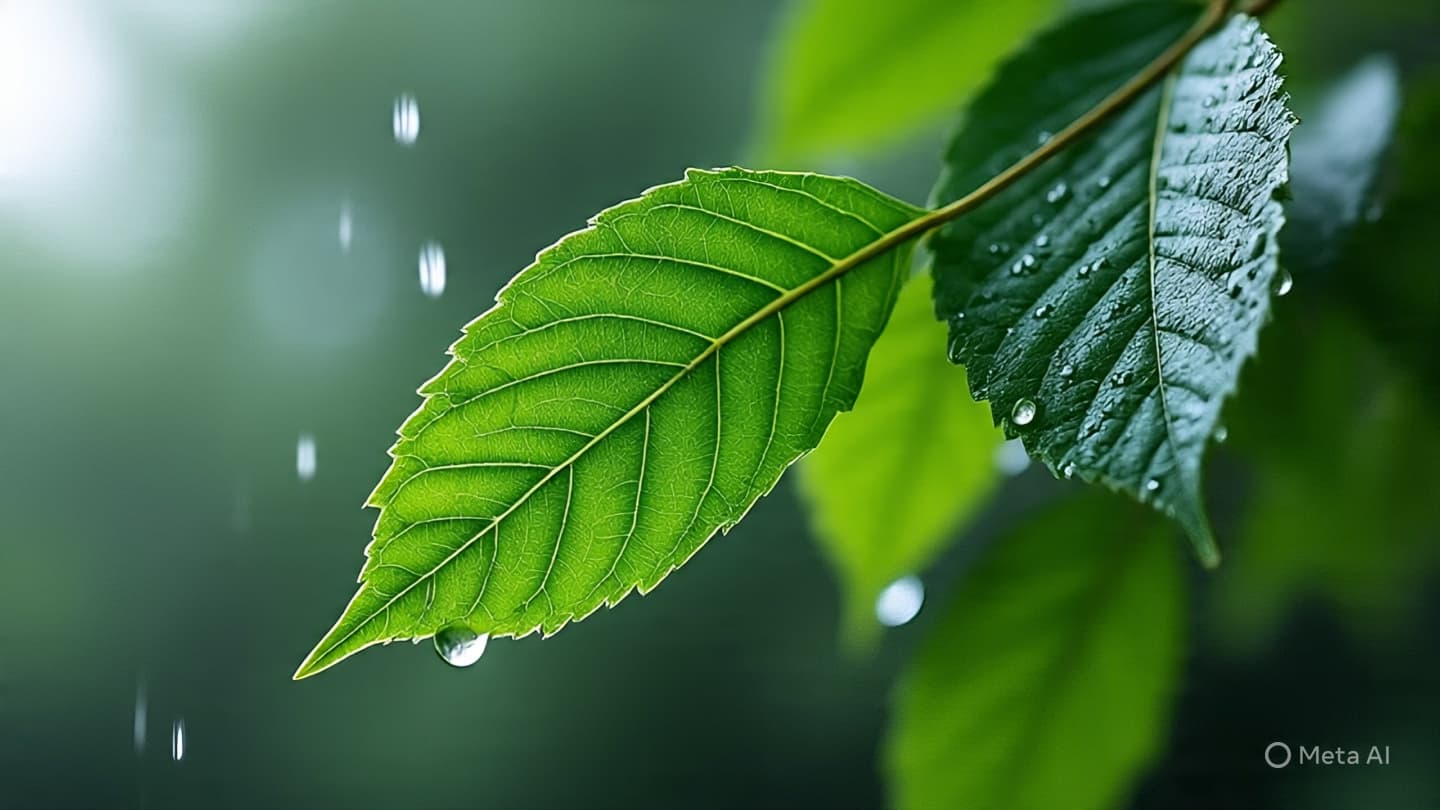
The first drops of rain often arrive as a soft prelude, a rhythm that settles into the soil before it is fully seen. In that gentle interval, a new study suggests, plants may already be responding—not to the water itself, but to the sound that announces its arrival.
Researchers have found evidence that certain plants can detect the acoustic signature of rainfall, triggering physiological responses even before moisture reaches their leaves. The findings add a new dimension to how plant behavior is understood, extending beyond light, touch, and chemical signals.
The study indicates that vibrations caused by falling rain create subtle sound waves, which plants may interpret through mechanoreceptors. These responses can influence gene expression linked to water management and stress adaptation, preparing the plant for incoming changes.
While plants lack auditory systems in the traditional sense, their sensitivity to environmental cues appears broader than previously recognized. Sound, in this context, becomes another layer of interaction between organisms and their surroundings.
Scientists emphasize that the response is not universal across all species. Variations suggest that some plants are more attuned to these signals than others, depending on their ecological niches and evolutionary history.
The research builds on a growing body of work exploring plant perception. Previous studies have examined how plants respond to vibrations from insects or nearby movement, hinting at a complex sensory world that operates without a nervous system.
Understanding how plants anticipate rainfall could have practical implications, particularly in agriculture. Insights into these mechanisms may inform strategies for crop resilience in environments where water availability is unpredictable.
At the same time, the findings invite a broader reflection on how life forms communicate with their environment. What seems silent at first glance may carry signals that are simply tuned to frequencies humans do not perceive.
The study contributes to an evolving scientific perspective: that plants are not passive recipients of change, but active participants in sensing and adapting to the rhythms around them.
AI Image Disclaimer: Images used for this article are AI-generated interpretations of plant-environment interactions and are intended for illustrative purposes only.
Sources: Nature Plants Science Advances BBC Science The Guardian Science
Published by Banx Network. This article is part of the Banx decentralized media programme, powered by the BXE token on the XRP Ledger.