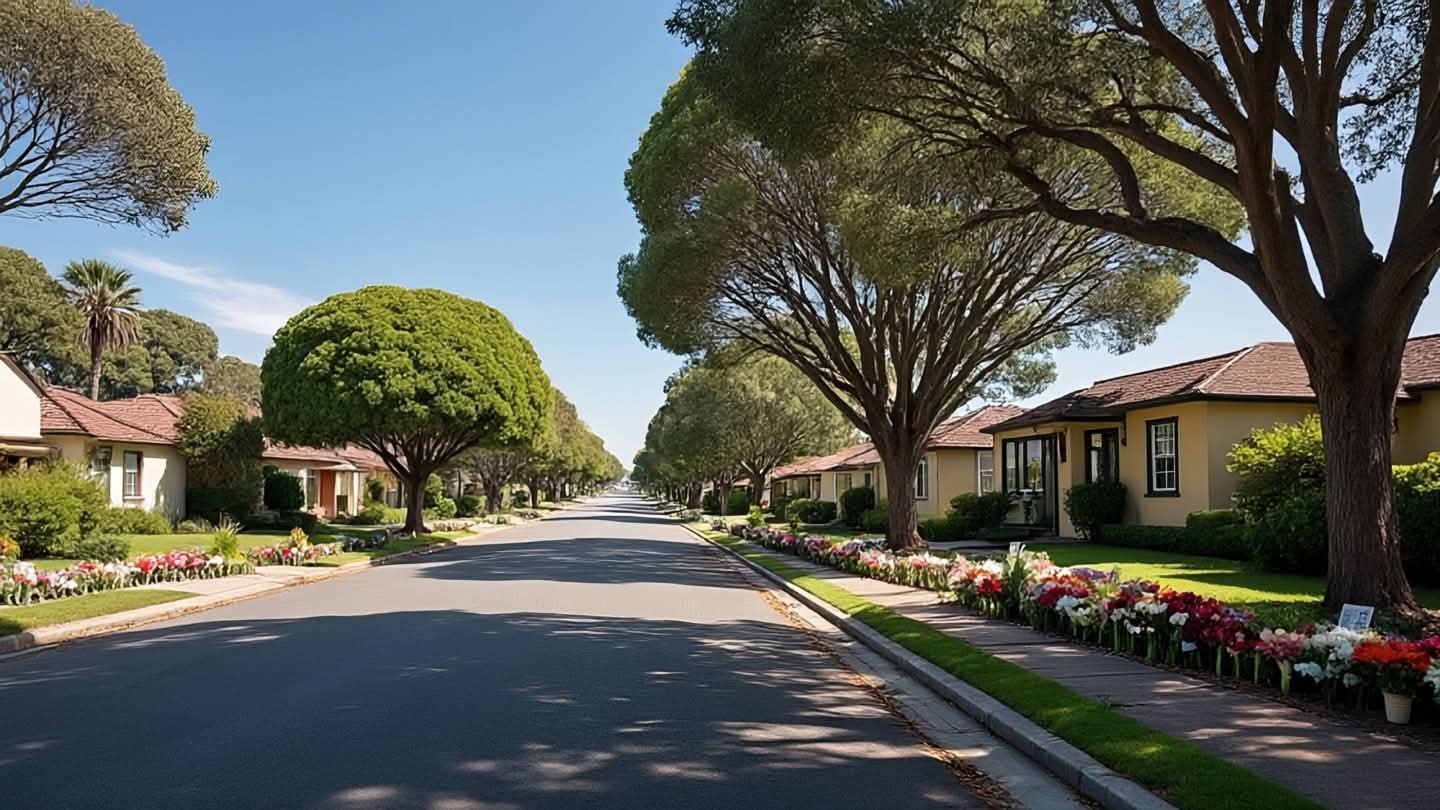
There are times when the sky seems to gather its thoughts slowly, almost imperceptibly, before speaking in a language that cannot be ignored. Clouds thicken, winds shift, and the horizon begins to carry a quiet tension—an unspoken signal that something larger is approaching. In coastal Queensland, that sense of anticipation has taken on a more defined shape, as communities turn their attention toward an approaching storm.
Tropical Cyclone Narelle has begun to make its presence felt, moving toward Queensland with a force that has prompted warnings of severe flooding. Forecasts suggest that the system will bring intense rainfall, strong winds, and conditions capable of overwhelming rivers and drainage systems already sensitive to seasonal variability.
Weather events of this scale often unfold in layers. At first, there is the steady rain—persistent, unyielding—followed by the gradual swelling of waterways. Creeks that once traced quiet paths through towns begin to widen, roads disappear beneath rising water, and the distinction between land and river softens. It is within this progression that the greatest risk often lies, not only in the immediate impact of the storm, but in the lingering effects that follow.
Authorities, guided by the Bureau of Meteorology, have issued warnings urging residents in vulnerable areas to prepare for potential flooding. Emergency services have also mobilized resources, coordinating response efforts and advising communities to remain alert to updates. Evacuation plans, where necessary, are being considered with caution, reflecting both the seriousness of the forecasts and the need for measured response.
Queensland is no stranger to cyclones. The region’s history includes storms that have tested infrastructure, resilience, and recovery in equal measure. Yet each event carries its own character—shaped by timing, trajectory, and intensity. In the case of Tropical Cyclone Narelle, the concern centers not only on wind strength but on the volume of rainfall expected over a relatively short period. When rainfall accumulates faster than the land can absorb or redirect it, flooding becomes less a possibility and more an unfolding reality.
For rural areas, the implications extend beyond immediate safety. Agriculture, already attuned to the delicate balance of weather, faces the risk of crop damage and livestock displacement. Transport routes, vital for connecting communities and moving goods, may become temporarily impassable. In urban settings, the focus shifts toward drainage systems, infrastructure resilience, and the safety of densely populated neighborhoods.
There is also a quieter dimension to such events—the way they reshape routine. Schools may close, businesses pause, and daily life adjusts to the rhythm of weather updates and precautionary measures. These changes, while temporary, reflect a collective response that prioritizes safety over continuity.
At the same time, public messaging has emphasized calm preparedness. Authorities continue to stress the importance of staying informed, securing property where possible, and avoiding floodwaters. The goal is not to alarm, but to ensure that communities are equipped to respond as conditions evolve.
As the system approaches, its exact impact will depend on variables that are still shifting—wind direction, rainfall concentration, and the timing of landfall. Forecasts provide guidance, but the full picture often becomes clear only as the event unfolds.
For now, Queensland stands in a moment of watchful attention. The arrival of Tropical Cyclone Narelle is not unexpected, yet it carries with it the familiar uncertainties that accompany all major weather events. In the hours and days ahead, the focus will remain on preparation, response, and the careful navigation of conditions that demand both respect and resilience.
In closing, officials continue to monitor the cyclone closely, with emergency services on standby and communities advised to follow official guidance. Flood warnings remain in place across several regions, and updates are expected as the situation develops.
AI Image Disclaimer Illustrations were produced with AI and serve as conceptual depictions.
Source Check (Credible Media Identified): Bureau of Meteorology Australia ABC News Australia Reuters The Guardian Sky News Australia
Published by Banx Network. This article is part of the Banx decentralized media programme, powered by the BXE token on the XRP Ledger.