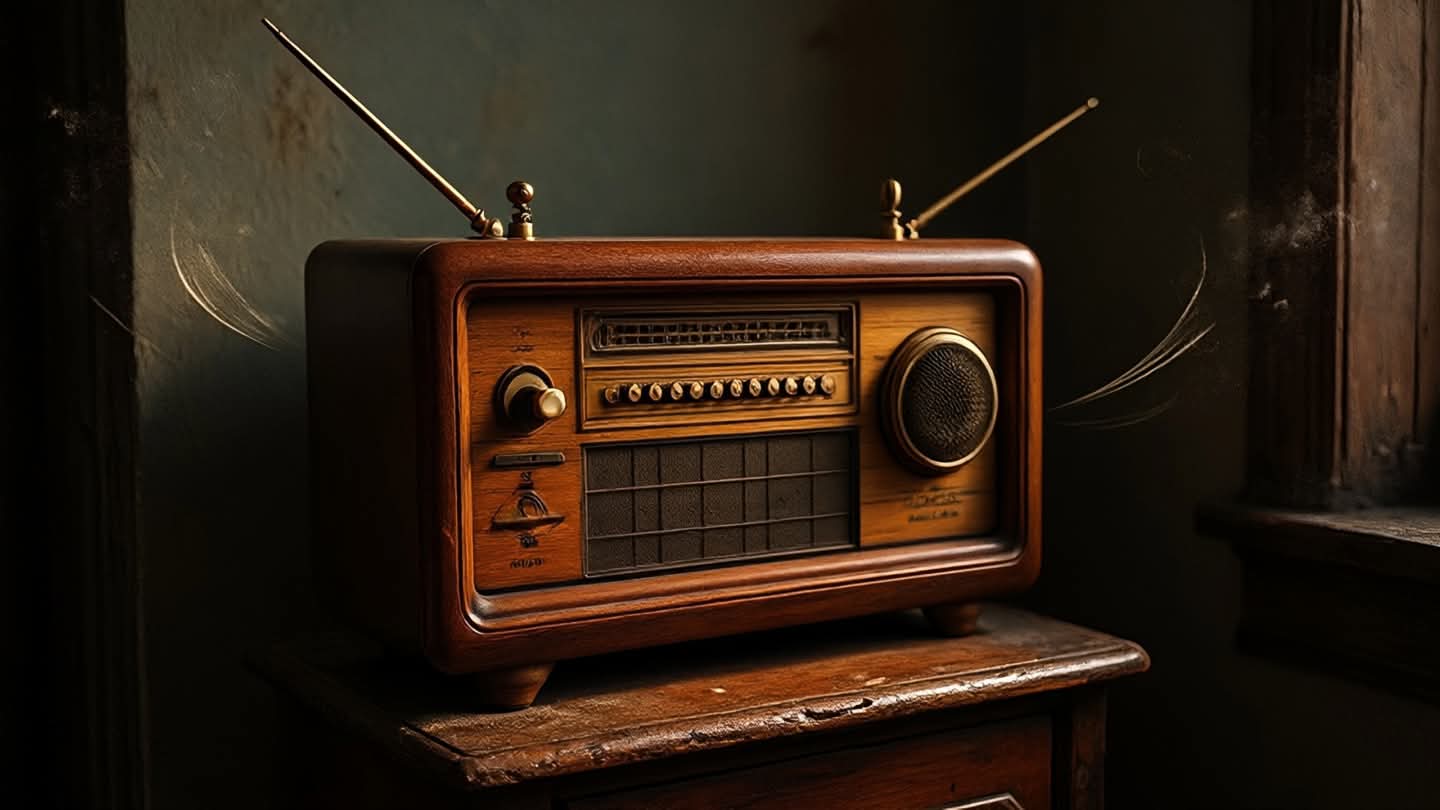
In the quiet hum of shortwave frequencies, there exists a relic of the Cold War that refuses to fade into history. Known colloquially as the "Doomsday Radio," this mysterious broadcast system has recently sparked intrigue once again. Following a high-profile visit by the CIA director to Moscow, the radio erupted with a series of coded messages, stirring speculation about hidden communications and geopolitical signaling. It is a reminder that in the world of intelligence, silence is often louder than words, and old channels still hold relevance.
The UVB-76 station, or "The Buzzer," has been transmitting a monotonous buzzing sound for decades, occasionally interrupted by voice messages in Russian. These interruptions are rare and often coincide with periods of heightened political tension or significant diplomatic events. The recent burst of activity, coming shortly after bilateral talks between US and Russian intelligence chiefs, has drawn the attention of amateur radio enthusiasts and analysts alike.
While the exact meaning of the messages remains classified, experts suggest they are likely routine operational codes rather than imminent threats. Such broadcasts are used to communicate with deep-cover agents or military units, ensuring secure lines of communication that are difficult to intercept or jam. The timing, however, inevitably leads to public interpretation as a symbolic gesture or a warning.
The visit of the CIA chief to Moscow was aimed at discussing critical issues such as nuclear stability, cyber security, and detainee exchanges. In this context, the radio activity may simply be a coincidence, part of the regular rhythm of state security operations. Yet, in the theater of international relations, coincidences are often scrutinized for deeper meaning, reflecting the underlying distrust between major powers.
For historians, the persistence of the Doomsday Radio is a fascinating anomaly. It represents a continuity of Soviet-era infrastructure that has been repurposed for modern use. Its endurance speaks to the robustness of certain communication methods, which remain effective despite the advent of digital technology. It is a tangible link to a past era of espionage and ideological conflict.
Public reaction has been a mix of curiosity and anxiety. Online forums buzz with theories, ranging from mundane administrative updates to apocalyptic predictions. This engagement highlights the enduring allure of mystery in an age of information overload. People are drawn to the unknown, finding excitement in the possibility of secret narratives unfolding in real time.
Security analysts emphasize the importance of not overinterpreting these signals. While they are certainly part of Russia’s strategic communication toolkit, they do not necessarily indicate immediate action or escalation. Instead, they serve as a reminder of the complex and layered nature of global intelligence operations.
The Russian government has not commented on the specific content of the recent broadcasts. Meanwhile, radio enthusiasts continue to monitor the frequency, documenting each beep and voice in the ongoing saga of the Doomsday Radio.
AI Image Disclaimer: The images associated with this piece are AI-generated visualizations intended to represent the themes of cold war history, radio waves, and geopolitical mystery.
Sources: BBC News Reuters The Guardian Associated Press
Published by Banx Network. This article is part of the Banx decentralized media programme, powered by the BXE token on the XRP Ledger.