

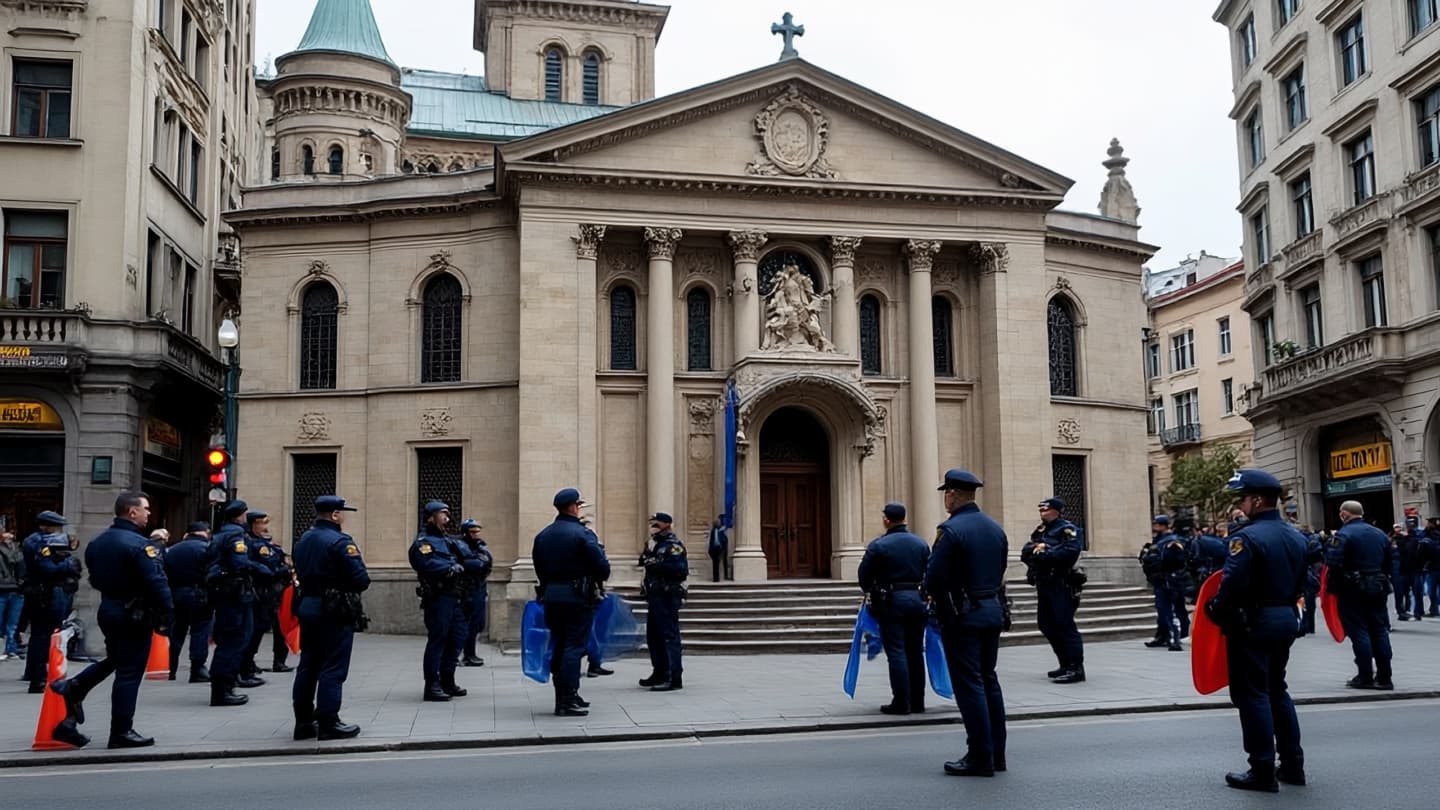
Key Highlights
- Rising Security Concerns:Recent attacks on Jewish institutions in Europe have heightened fears of antisemitism.
- Hybrid Warfare Concept:Analysts suggest these incidents may reflect hybrid warfare tactics, blending conventional and unconventional methods.
- Government Response:European authorities are enhancing protective measures and community outreach to address security vulnerabilities.
Across Europe’s historic cities, where centuries-old architecture meets modern life, security concerns often surface in subtle ways before becoming more pronounced. In recent times, a series of incidents targeting Jewish institutions, including synagogues and community centers, has prompted deeper reflection—not only on safety but on the evolving nature of conflict itself.
Authorities across several European countries have reported attacks or attempted attacks on these institutions, raising alarms about antisemitism and broader security vulnerabilities. The incidents have sparked discussions among security analysts, who suggest that these events may align with characteristics of what is often described as hybrid warfare. This concept involves a blend of conventional and unconventional tactics, including cyber operations, disinformation, and indirect forms of destabilization.
The idea of hybrid warfare has gained traction in discussions about how state and non-state actors seek to influence societies without engaging in direct military confrontation. In this framework, attacks on symbolic or community targets can have psychological and social impacts that extend beyond immediate damage. The implications of such tactics are profound, as they can instill fear and disrupt community cohesion.
In response to these threats, European governments have ramped up protective measures around Jewish sites, coordinated intelligence efforts, and reinforced community outreach initiatives. These actions reflect both immediate security needs and longer-term concerns about social cohesion and resilience. The balance between ensuring safety and maintaining an open community life poses a significant challenge for many institutions.
Jewish organizations across Europe have called for vigilance while emphasizing the importance of preserving openness and community engagement. They argue that while security is paramount, it should not come at the cost of stifling community interactions and cultural expression. This delicate balance is crucial as communities navigate the complexities of modern threats.
Experts caution that while patterns may suggest broader strategies, each incident requires careful investigation. Attribution in hybrid contexts is often complex, and premature conclusions can complicate diplomatic and legal responses. The need for thorough analysis is essential to avoid missteps that could exacerbate tensions.
The broader conversation touches on how societies adapt to evolving threats—whether through policy, technology, or community engagement—while striving to preserve fundamental freedoms. As investigations continue, the focus remains on ensuring safety while understanding the deeper forces that may be shaping these events across Europe. The challenge lies in addressing immediate security concerns while fostering an environment of trust and cooperation among diverse communities.
Published by Banx Network. This article is part of the Banx decentralized media programme, powered by the BXE token on the XRP Ledger.




