

Key Highlights
- Microsoft CEO Satya Nadella warns AI could lose public trust if it fails to show real-world benefits.
- Nadella emphasizes the importance of AI's contributions to sectors like healthcare and education.
- The discussion took place at the World Economic Forum in Davos, highlighting the need for responsible innovation.
At the intersection of innovation and necessity lies a critical question: how can society trust the technologies that shape its future? This inquiry has gained prominence in recent discussions among global leaders, particularly regarding artificial intelligence (AI) and its expanding influence. During the recent World Economic Forum in Davos, Microsoft CEO Satya Nadella articulated this sentiment, emphasizing the need for AI to earn its place in society by demonstrating tangible benefits.
Nadella's remarks reflect a growing awareness of the responsibilities that accompany technological advancement. He described a metaphorical “social permission” that innovators must secure from the public, suggesting that trust is not merely given but must be cultivated through meaningful outcomes. As AI continues to evolve, its energy consumption and societal impact are under scrutiny, prompting questions about whether the benefits justify the costs.
In his address, Nadella highlighted the significant energy demands of AI systems, which can consume vast resources for training and operation. He argued that the public will increasingly evaluate whether this energy use is warranted by real improvements in critical areas such as healthcare, education, and economic productivity. If AI fails to deliver on these fronts, it risks losing the societal support that is essential for its continued development and integration.
This perspective resonates with broader concerns within the tech community regarding the equitable distribution of AI's advantages. Nadella cautioned that if AI primarily serves the interests of large tech firms or speculative investments, without benefiting essential sectors, public acceptance may wane. The potential backlash could lead to a diminished willingness to bear the environmental and economic costs associated with AI technologies.
While acknowledging the excitement surrounding AI's capabilities, Nadella stressed that potential must be matched with purpose. He pointed out that AI has already made significant strides in areas like data analysis, drug discovery, and personalized learning. However, he maintained that these advancements must translate into visible improvements in people's lives to sustain public trust and support.
The implications of Nadella's message extend beyond corporate boardrooms and research labs. Educators, healthcare professionals, and policymakers are all grappling with the question of how AI can serve the common good. As Nadella suggested, the answer to this question will shape the future of technological progress and determine whether it is perceived as a collective advancement or a unilateral leap taken without the consent of those it impacts.
In summary, Satya Nadella's remarks at the World Economic Forum underscore the critical need for AI to demonstrate its value to society. As the technology continues to evolve, its ability to earn and maintain public trust will hinge on its capacity to deliver real-world benefits, particularly in vital sectors like health and education. The conversation around AI's role in society is not just about innovation; it is about ensuring that progress is meaningful and inclusive.
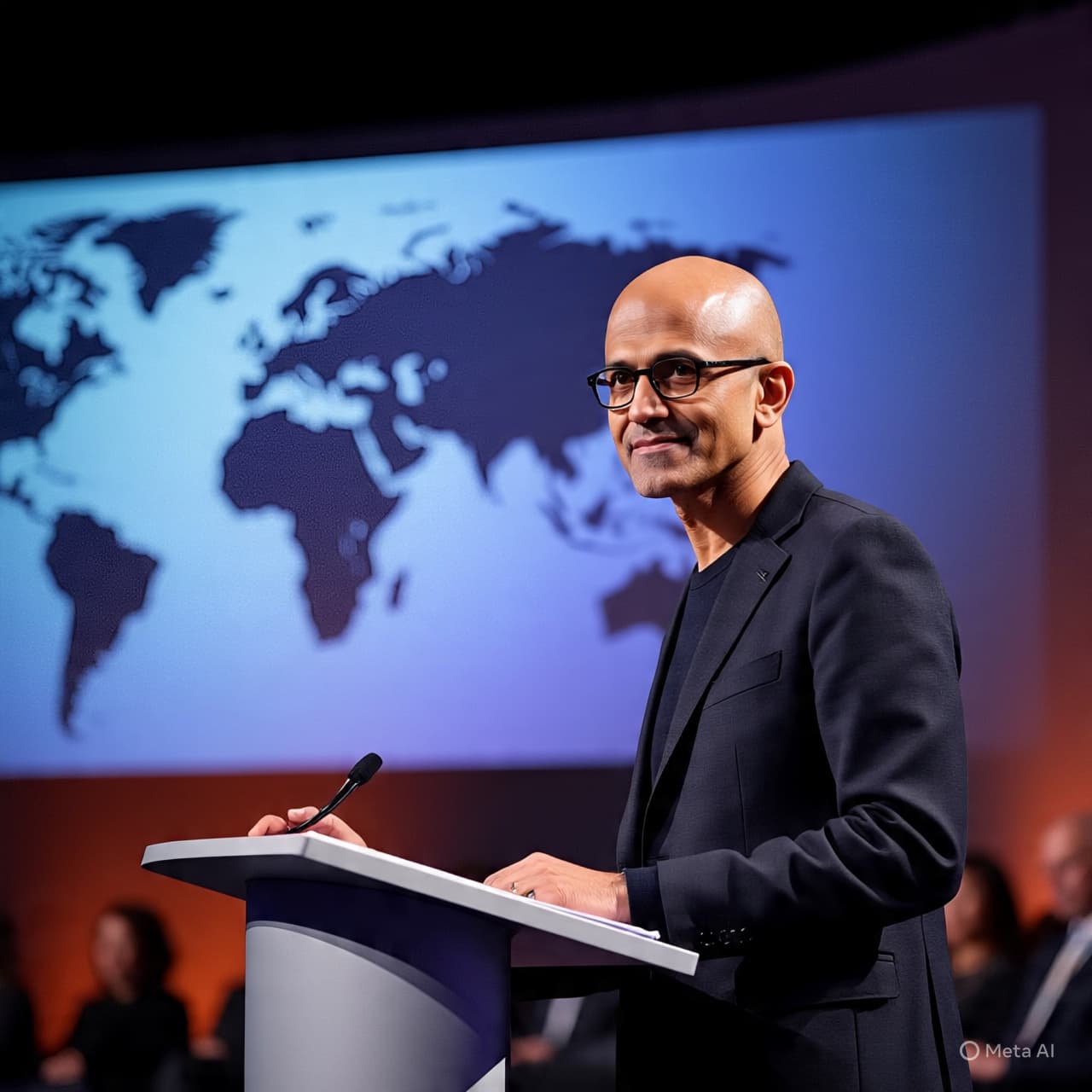
AI Image Disclaimer
Visuals are created with AI tools and are not real photographs.
Published by Banx Network. This article is part of the Banx decentralized media programme, powered by the BXE token on the XRP Ledger.




