There are movements in the global economy that feel immediate, almost pressing, as though they have arrived to stay. Prices rise, numbers shift upward, and the effect travels quickly—through markets, through industries, through the everyday calculations of households. Yet within these moments, there are also voices that speak of time, of cycles, of the possibility that what is rising now may not remain so.
In Washington, that sense of temporality has shaped recent remarks from U.S. Secretary of the Interior Doug Burgum. Speaking against the backdrop of elevated energy costs, Burgum suggested that higher prices are, in essence, temporary—part of a broader pattern rather than a fixed condition.
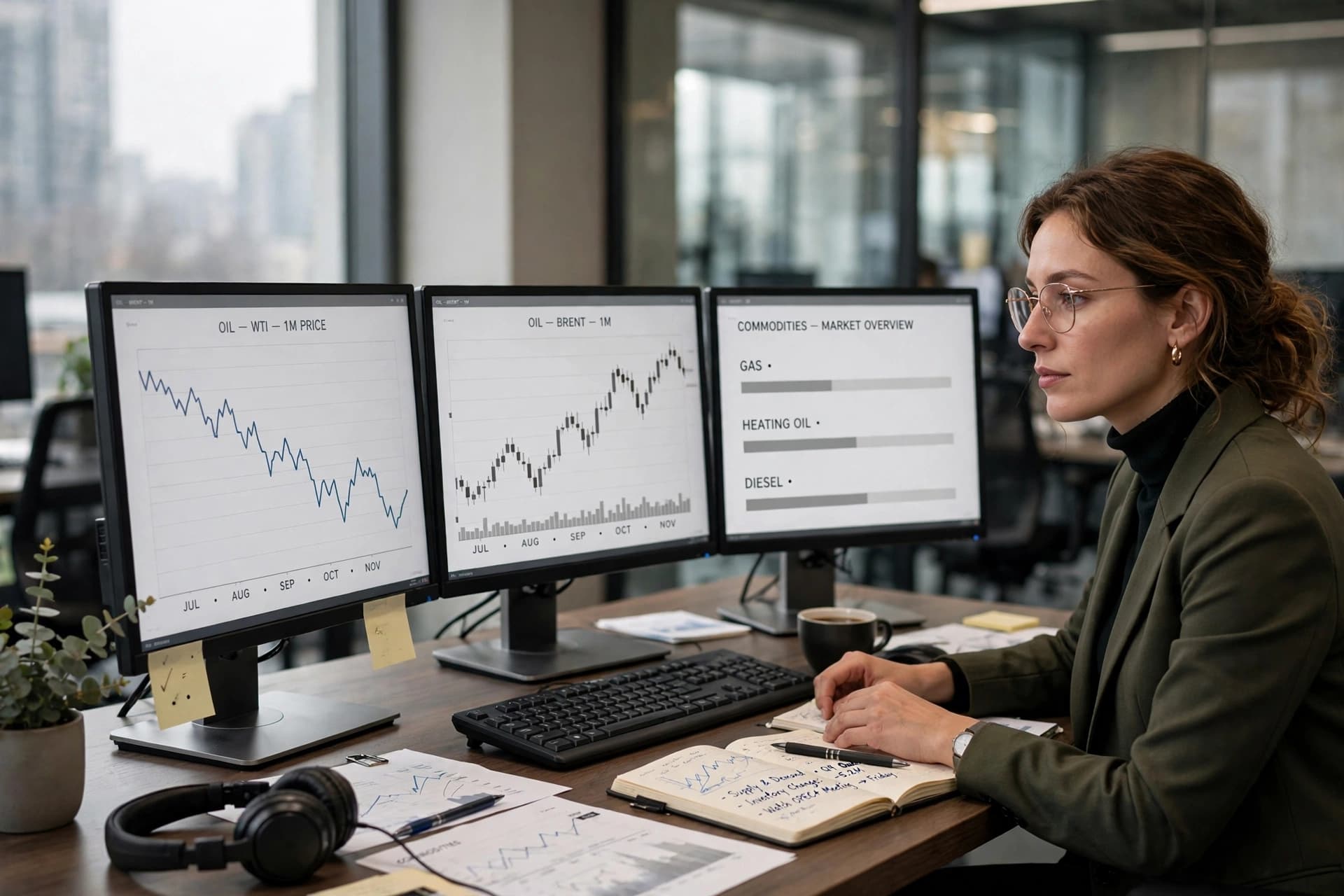
The statement arrives as energy markets continue to respond to a convergence of pressures. Geopolitical tensions, particularly in key producing regions, have introduced uncertainty into supply expectations. At the same time, demand has remained resilient, supported by ongoing economic activity across major economies. The result is a landscape in which prices have moved upward, sometimes sharply, reflecting both immediate concerns and future possibilities.
To describe this movement as temporary is to place it within a longer arc. Energy markets have historically moved in cycles, shaped by shifts in production, technological change, and global demand. Periods of constraint often give way to adjustment—new supply enters the market, demand patterns evolve, and prices gradually find a different equilibrium.
Burgum’s remarks also reflect a policy perspective that emphasizes capacity and response. The United States, as one of the world’s leading energy producers, holds a degree of flexibility that can influence how quickly markets adjust. Increased production, if sustained, has the potential to ease pressures over time, contributing to the moderation of prices.
Yet the path from elevation to easing is rarely immediate. Market expectations, infrastructure timelines, and external developments all play a role in shaping how quickly conditions change. Even as policymakers express confidence in eventual stabilization, the present moment continues to be defined by uncertainty.
For businesses and consumers, this creates a dual reality. Costs are experienced in the present, influencing decisions and planning, while the expectation of future relief remains just beyond reach. The tension between these two perspectives—immediacy and temporality—defines much of the current conversation around energy.
Markets, in turn, reflect this balance. Prices move not only in response to current supply and demand, but to expectations about what lies ahead. If the belief in temporary elevation holds, it may temper longer-term projections. If uncertainty persists, it may reinforce caution.
And so the narrative unfolds between what is now and what may come. The rise in energy prices, while tangible, is framed as part of a cycle rather than an endpoint—a movement that, in time, is expected to shift.
U.S. Interior Secretary Doug Burgum said that higher energy prices are temporary, pointing to the cyclical nature of energy markets and the potential for increased supply to ease current pressures over time.
AI Image Disclaimer
Illustrations were created using AI tools and do not represent real-world images.
Source Check Reuters Bloomberg CNBC The Wall Street Journal Financial Times
Published by Banx Network. This article is part of the Banx decentralized media programme, powered by the BXE token on the XRP Ledger.