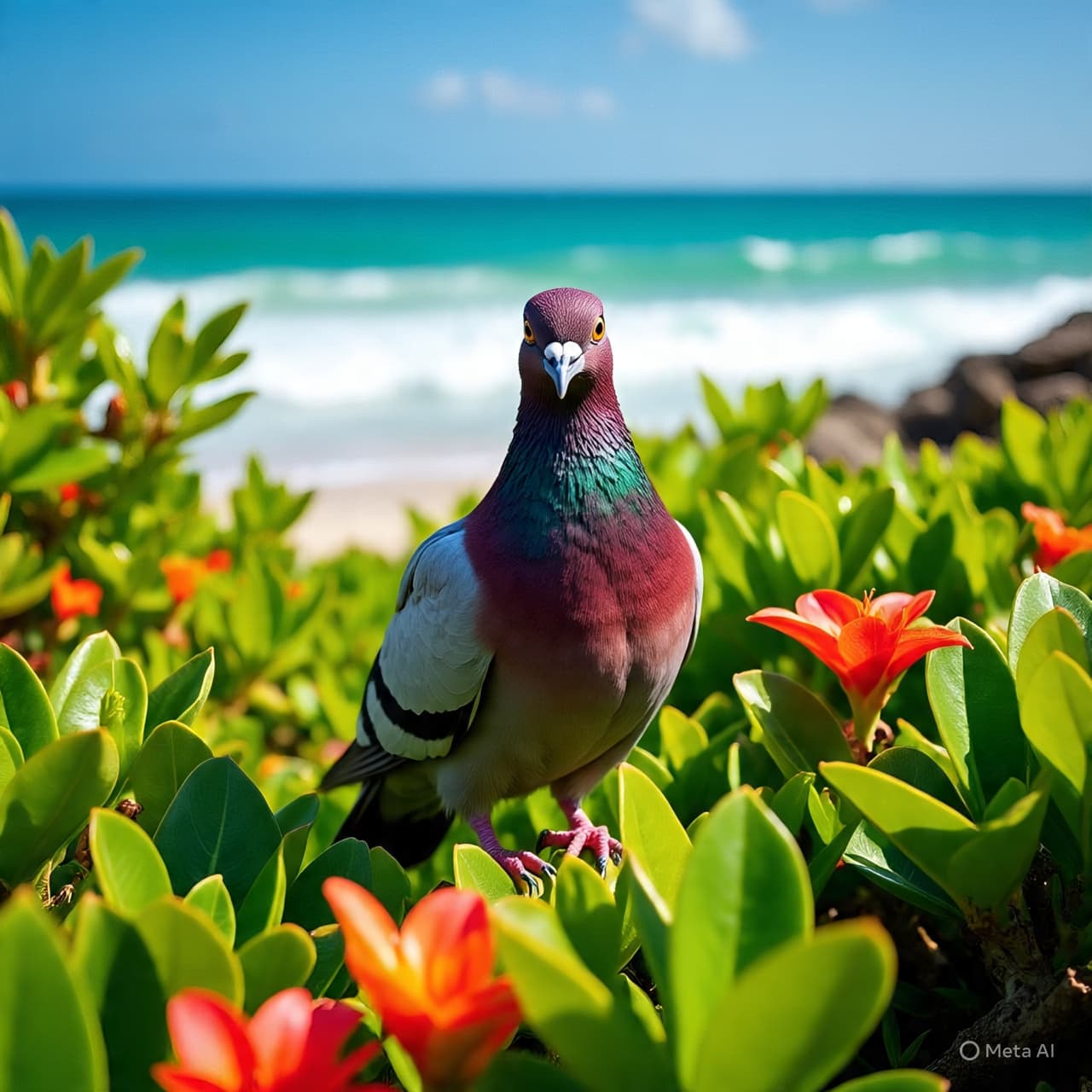
There’s a gentle unfolding in nature that sometimes feels like watching a long‑locked door slowly swing open. On the remote Ogasawara Islands of Japan, an island ecosystem that evolved for millennia in isolation, a quiet conservation experiment has revealed just how dramatic that opening can be — not in thunderous spectacle, but in the rebirth of a species once on the brink of extinction. After conservation teams removed 131 feral cats from the islands, the critically endangered red‑headed wood pigeon has surged in number, illustrating how delicate balances in nature can shift toward recovery when pressures are eased.
For years, the red‑headed wood pigeon (Columba janthina nitens), endemic to the Ogasawara archipelago, faced a precarious existence. Once widespread, its population dwindled sharply due to habitat loss and predation by introduced cats, a common ecological threat on islands where native birds evolved without mammalian predators. By the early 2000s, perhaps only a few dozen birds remained — a whisper of a population threatened with permanent silence.
Beginning in 2010, a targeted conservation program set out to change that narrative by humanely removing feral cats from the island. Efforts over several years reduced the cat population from more than one hundred to a few dozen, markedly reducing predation pressure on ground‑nesting and low‑perching birds. The results, unfolding over the next three years, were remarkable: the number of adult red‑headed wood pigeons soared nearly tenfold, and fledgling counts surged similarly, marking one of the most dramatic recorded recoveries for a wild bird species in such a timeframe.
Scientists, intrigued by the speed of this turnaround, also examined the birds’ genetics. Island species often suffer from low genetic diversity, which in many cases can hamper recovery due to inbreeding depression. Yet in this case, researchers found evidence suggesting that centuries of isolation may have led to genetic purging — a process where harmful mutations are gradually eliminated from a small population, leaving behind a gene pool surprisingly resilient to the pressures it faced.
The story of the red‑headed wood pigeon’s recovery underscores how removing key threats can unlock resilience in native species, particularly on islands where ecosystems are finely balanced and evolved without certain predators. Island conservationists have long pointed to invasive cats as a significant threat to birds and reptiles globally; on other islands, eradication of invasive predators has similarly led to measurable rebounds in native wildlife.
That said, optimism is tempered with caution. Although the pigeon’s numbers have risen dramatically, they remain below historic levels, and the species’ limited genetic diversity still poses a challenge for long‑term adaptability to future environmental changes. Conservationists emphasize that continued monitoring and habitat protection are critical to securing this species’ future — a reminder that recovery is a sustained journey, not a single event.
In the broader sweep of biodiversity conservation, the Ogasawara example offers both a hopeful chapter and a thoughtful lesson: that when human intervention aligns with ecological understanding, even the most fragile threads of life can sometimes find their strength again.
AI Image Disclaimer Visuals are AI‑generated illustrations intended for concept and representation, not actual photographs.
Published by Banx Network. This article is part of the Banx decentralized media programme, powered by the BXE token on the XRP Ledger.