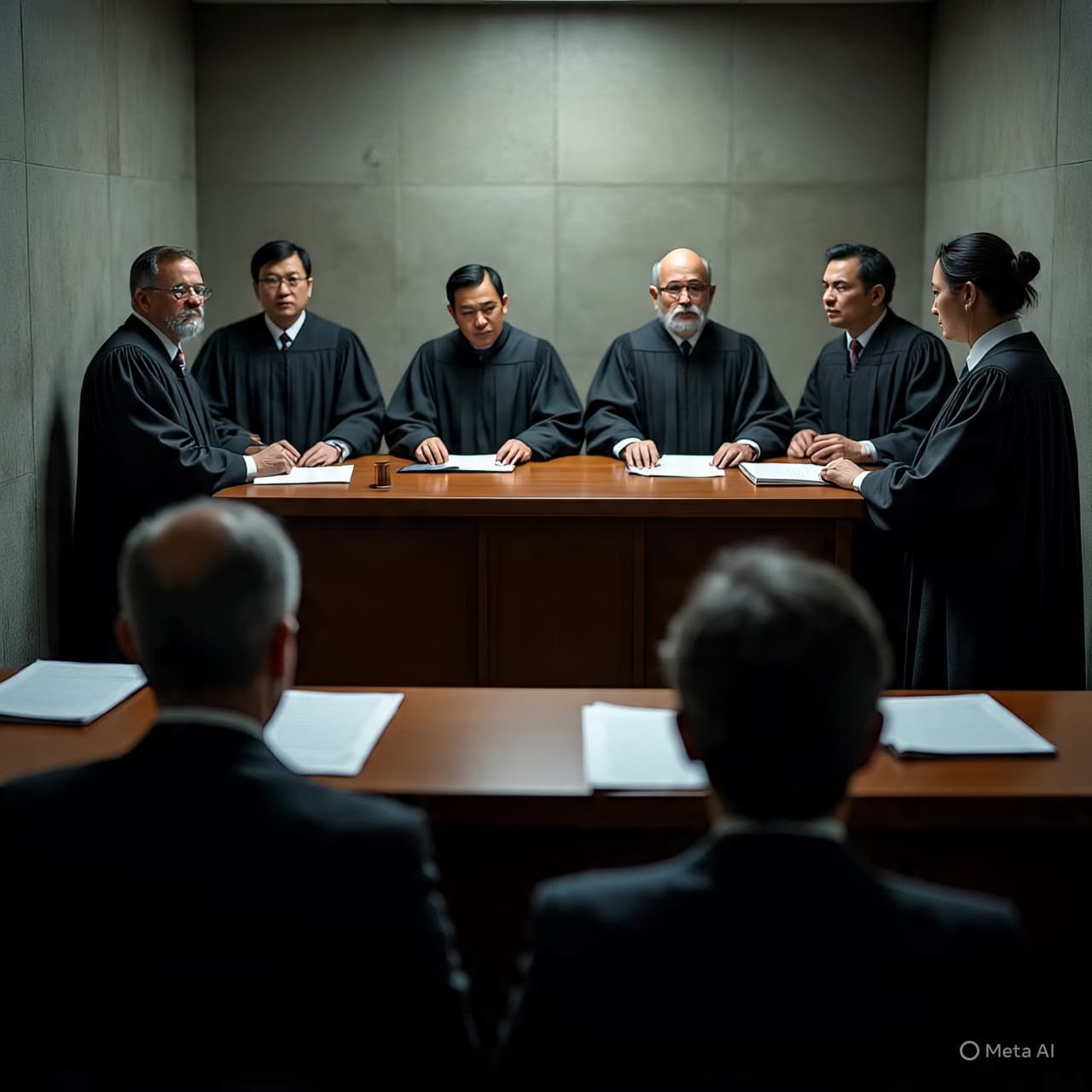
In a courtroom within the high‑security walls of Rawalpindi’s Adiala Jail, the echo of a gavel has marked a defining moment in Pakistan’s fraught political journey. On December 20, 2025, a special court handed down 17‑year prison sentences to former Prime Minister Imran Khan and his wife Bushra Bibi, each convicted in a high‑profile graft case involving the alleged mishandling and undervaluation of lavish state gifts. The decision — rooted in laws governing the retention and sale of official gifts — comes against a backdrop of deep political divisions and years of legal battles that have shadowed Pakistan’s politics.
The case centers on valuables received by the couple during Khan’s tenure, particularly an expensive jewellery set and luxury watches gifted by foreign dignitaries, including the Saudi crown prince. Prosecutors argued that these items were declared at a fraction of their market value, allowing them to be purchased cheaply and then sold, resulting in a significant loss to the state treasury. Under Pakistani anti‑corruption law, officials must declare such gifts, purchase them at full market value and report any profits from disposals — requirements the court found the couple violated.
Judge Shahrukh Arjumand delivered the verdict inside the jail, where both defendants were already incarcerated on other convictions, drawing attention to how Pakistan’s legal system has intersected with the political fortunes of one of its most polarising leaders. Khan, 73, a former cricket star turned politician, was ousted from office in April 2022 and has since faced a growing number of charges ranging from corruption and graft to national security offences.
The latest sentence allocates 10 years for criminal breach of trust under the Pakistan Penal Code and 7 years under anti‑corruption statutes, reflecting the cumulative severity the court attributed to the violation of trust and mismanagement of state assets. Additionally, both Khan and Bushra were fined a substantial amount — reinforcing the punitive stance of the judgment.
Pakistan’s political landscape has been quick to react. The Pakistan Tehreek‑e‑Insaf (PTI) party, which Khan founded and which remains a potent force in the country’s political life, denounced the sentence as politically motivated and an assault on democratic expression. Party statements referred to the verdict as a “black chapter in history” and vowed to challenge it through the courts and street mobilisations. Critics assert that the trial reflected selective justice and questioned procedural fairness, noting that defence lawyers were reportedly not present at the time of sentencing.
Supporters of the punishment, including government officials, framed the verdict as a necessary affirmation of the rule of law — an assertion that enforces accountability irrespective of stature. They emphasise that adherence to financial and ethical obligations is fundamental to public service and that misconduct, especially at the highest levels of government, must be addressed without favoritism.
This conviction adds to a lengthening list of legal setbacks for Khan, whose multiple sentences — if upheld through appeals — collectively amount to decades behind bars. It also reignites debates over the role of the judiciary and accountability institutions in Pakistan, raising questions about fairness, political interference and the balance between law enforcement and democratic rights in an increasingly fractious public sphere.
Beyond the courtroom, Pakistan grapples with the broader implications: a divided electorate watching one of its most prominent leaders face extended imprisonment; a party base interpreting punishment as persecution; and legal institutions asserting their independence amid accusations of politicisation. Whatever the long‑term outcome, this chapter in Pakistan’s legal and political history underscores how deeply justice and politics are intertwined in the country’s ongoing narrative.
AI Image Disclaimer “Visuals are created with AI tools and are not real photographs.”
Sources Reuters Associated Press / The Washington Post Al Jazeera France24 ABC News
Published by Banx Network. This article is part of the Banx decentralized media programme, powered by the BXE token on the XRP Ledger.