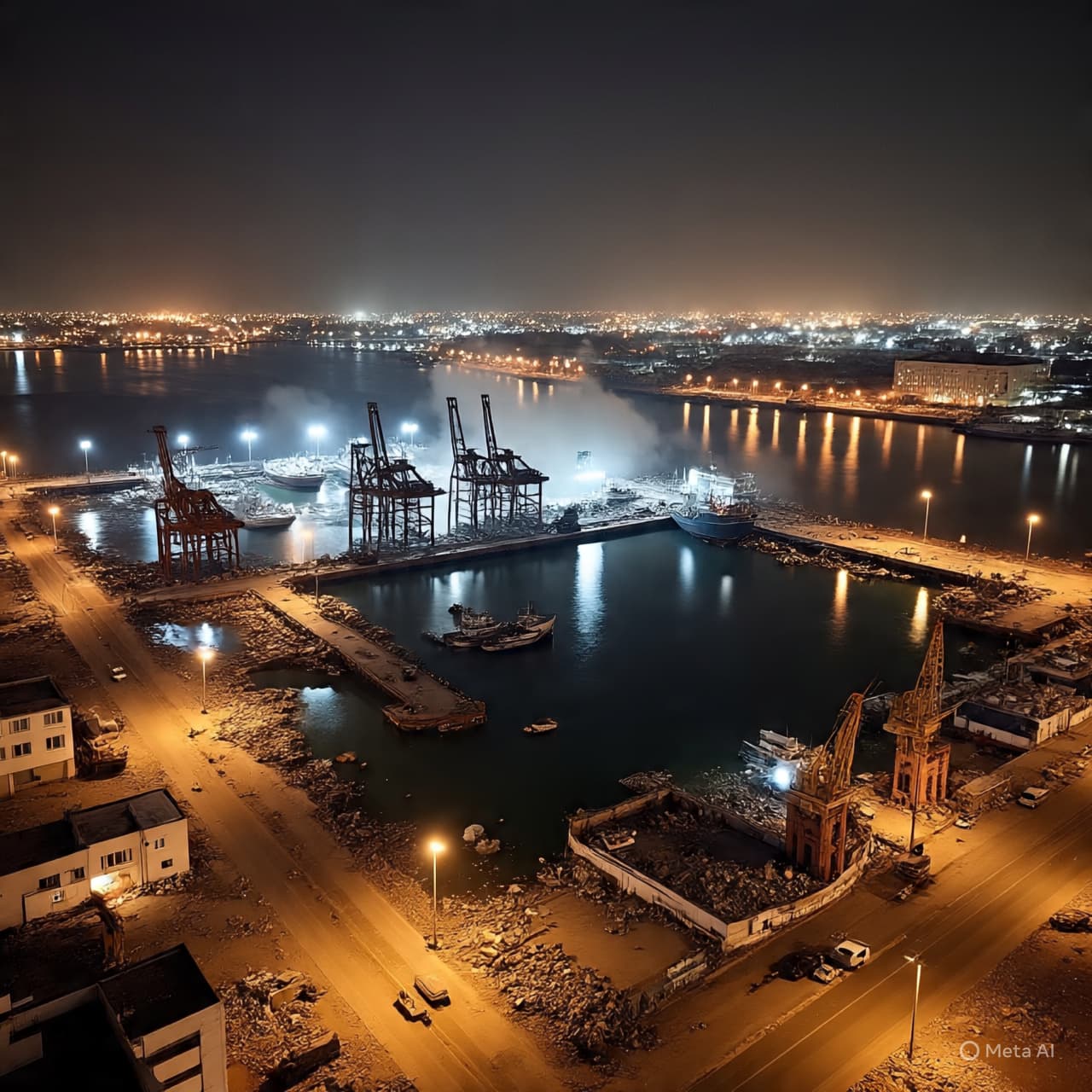
Along the Black Sea coast, Odesa has long stood as more than a city. It is Ukraine’s maritime artery — a place where grain, steel, and trade connect the country to the wider world. In recent months, that role has placed it squarely in the crosshairs of Russia’s evolving military strategy.
Strikes on Odesa and its surrounding infrastructure have intensified, targeting ports, storage facilities, and transportation nodes critical to Ukraine’s economy. While military officials frame the attacks as tactical operations, their broader impact extends far beyond immediate damage. Each strike reverberates through supply chains, export routes, and the livelihoods tied to them.
Ukraine’s agricultural exports, particularly grain, have long depended on access to the Black Sea. With alternative land routes strained and costly, the southern ports remain vital. Disrupting them does not only weaken Ukraine’s wartime logistics but also sends ripples through global markets that rely on its shipments. In this sense, the battlefield stretches well beyond the coastline.
The attacks also carry symbolic weight. Odesa represents resilience, culture, and continuity — a city that has endured empires and upheaval. Targeting it signals an attempt to erode not just material capacity, but morale. Each strike becomes part of a broader message: that no economic artery is beyond reach.
For Ukrainian authorities, protecting these routes has become a strategic priority equal to defending territory. Air defenses have been reinforced, emergency repairs accelerated, and alternative export corridors expanded where possible. Yet the pressure remains constant, testing the country’s ability to sustain both its economy and civilian life under prolonged threat.
As the conflict grinds on, the struggle over Odesa reveals a deeper truth about modern warfare. Control is no longer measured only in land captured, but in flows disrupted — of goods, energy, and confidence. In that sense, the battle for Ukraine’s ports is not only about geography, but about the endurance of a nation’s economic heartbeat.
Published by Banx Network. This article is part of the Banx decentralized media programme, powered by the BXE token on the XRP Ledger.