In the heart of Washington, where art and politics often intertwine like vines on a trellis, the John F. Kennedy Center for the Performing Arts stands as a monument to cultural expression. Yet, recent events have cast a shadow over its marquee, not from a lack of applause, but from a legal and ideological tug-of-war that has left its future uncertain. The board’s decision to close the center for renovations, following a judge’s ruling against adding former President Donald Trump’s name to the facade, is a moment of pause in a narrative that has become increasingly polarized. It is a story of identity, legacy, and the delicate balance between honoring leadership and preserving institutional integrity.
The controversy began when the board, appointed under Trump’s influence, sought to inscribe his name on the building, a move intended to recognize his role in its revitalization. However, U.S. District Judge Christopher Cooper ruled that such a change required Congressional approval, citing the center’s federal charter. This legal setback was not merely a procedural hurdle but a profound statement on the limits of executive power over national cultural institutions. The judge’s decision underscored the principle that some symbols belong to the public domain, protected from unilateral alteration by any single administration.
In response to the ruling, the board voted to close the center indefinitely, framing the shutdown as necessary for extensive renovations. Critics, however, view this move as a retaliatory gesture, a way to leverage the institution’s closure to pressure lawmakers into approving the name change. The closure halts performances, displaces artists, and silences a venue that has long been a beacon of American creativity. For many, this feels like a loss not just of a physical space, but of a shared cultural home, where diverse voices once converged in harmony.
The legal battle has highlighted the fragility of non-partisan spaces in an era of deep political division. The Kennedy Center, named after a president who championed the arts, now finds itself at the center of a dispute that threatens to overshadow its artistic mission. The board’s insistence on the name change, despite judicial opposition, reflects a broader trend of politicizing cultural landmarks. This raises questions about who gets to define national heritage and whether such definitions should be subject to the whims of political cycles.
As the center remains closed, the arts community faces uncertainty. Musicians, dancers, and actors who rely on the venue for their livelihoods are left in limbo, their schedules disrupted by decisions made in courtrooms rather than rehearsal halls. The economic impact ripples outward, affecting local businesses and tourism. Yet, beyond the financial costs, there is a deeper emotional toll—a sense of disconnection from a place that once symbolized unity through art.
The judge’s ruling serves as a reminder of the checks and balances that underpin American democracy. By requiring Congressional approval for such a significant change, the judiciary has reinforced the idea that major alterations to national institutions must undergo rigorous democratic scrutiny. This process, though slow and often contentious, ensures that decisions reflect a broader consensus rather than the preferences of a select few. It is a safeguard against the erosion of public trust in shared cultural assets.
Looking ahead, the path forward for the Kennedy Center remains unclear. Will the board persist in its efforts to rename the center, or will it eventually yield to legal and public pressure? The answer may depend on the outcome of future legislative sessions and the shifting political landscape. In the meantime, the silence within the concert halls speaks volumes, a quiet protest against the politicization of art. It is a pause that invites reflection on the true purpose of such institutions: to inspire, to unite, and to transcend the divisions of the day.
In the end, the story of the Kennedy Center is not just about a name on a building. It is about the values we choose to uphold in our public spaces. As the nation watches, the hope remains that the center will reopen not as a battleground for political scores, but as a sanctuary for creativity and dialogue. Its future should be defined by the art it hosts, not the controversies that surround it. Let the music play again, free from the shadows of partisan strife.
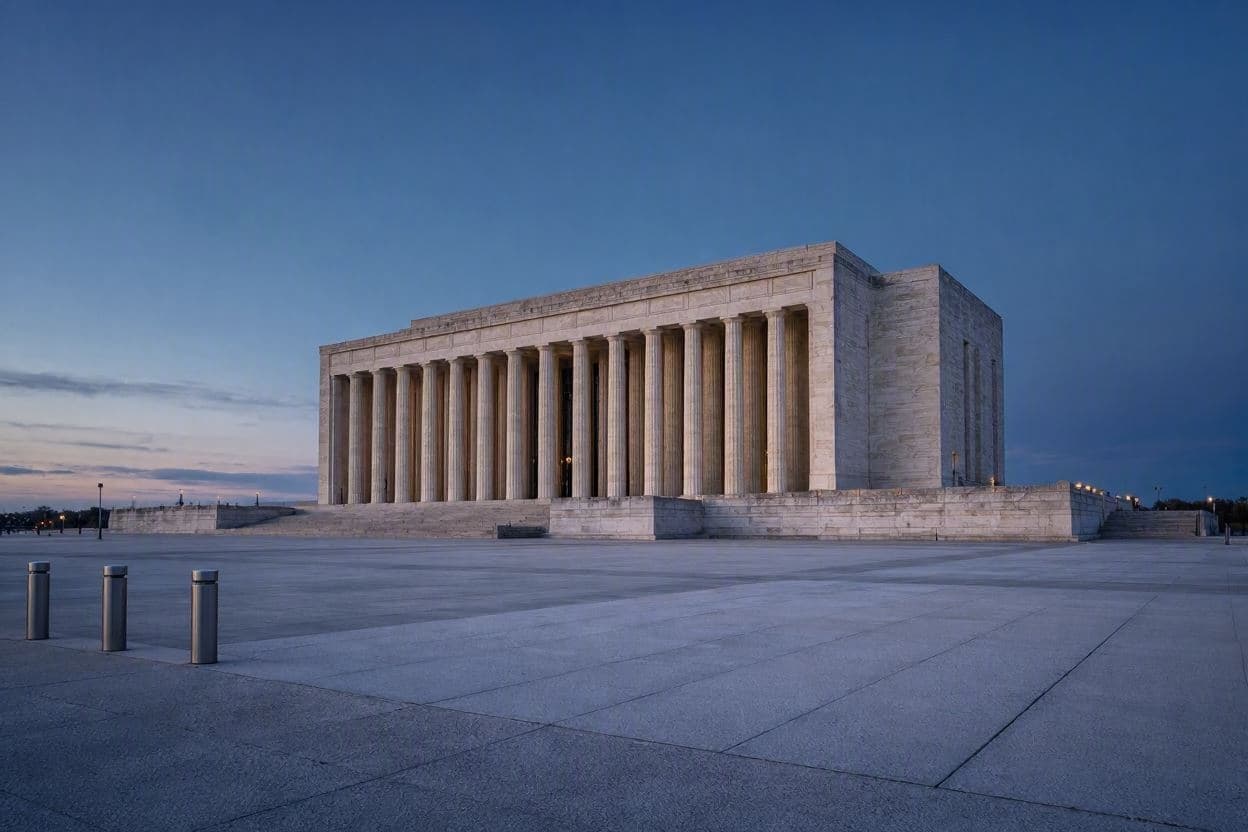
Note: The visual elements accompanying this article are AI-generated interpretations designed to reflect the solemnity and cultural significance of the Kennedy Center.
Sources: NPR, Reuters, The Hill, Politico, NBC News
Published by Banx Network. This article is part of the Banx decentralized media programme, powered by the BXE token on the XRP Ledger.