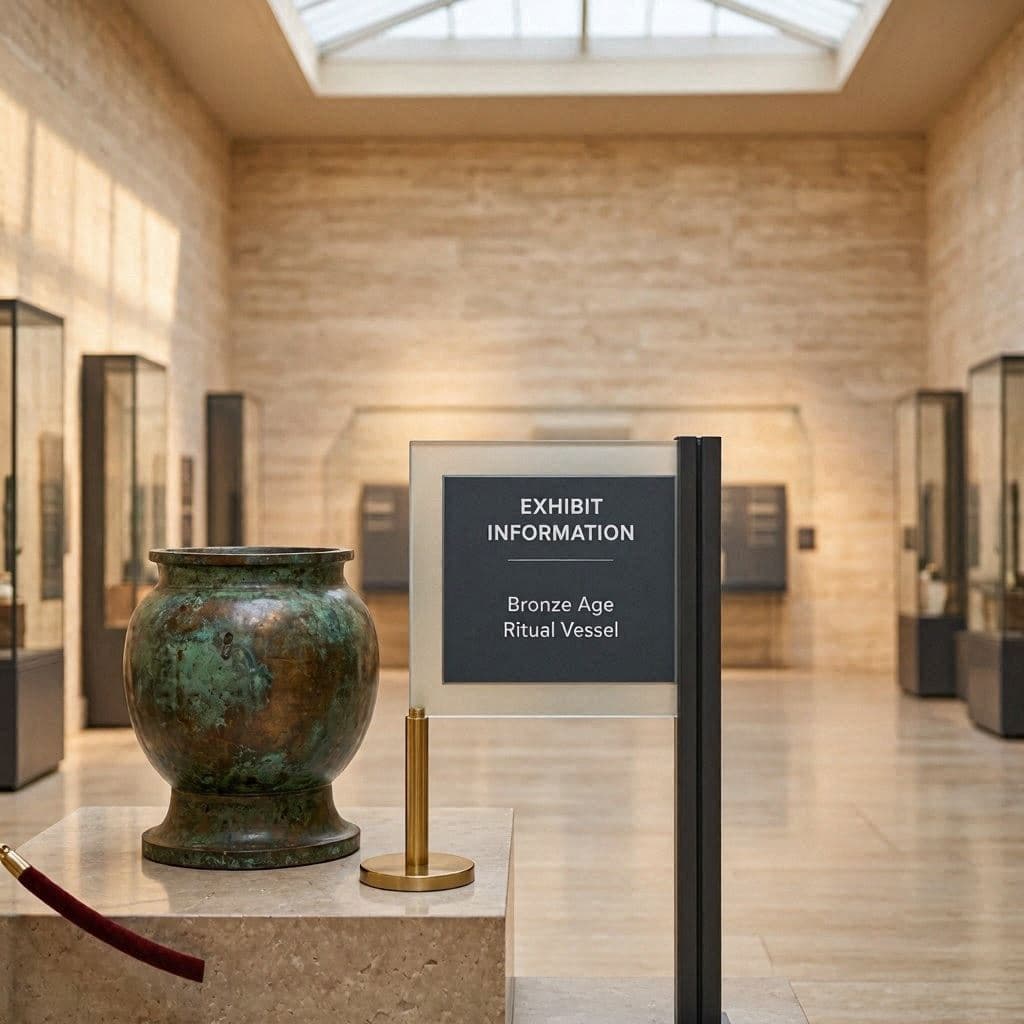
In the hallowed halls of the Smithsonian Institution, where history is preserved and interpreted for the public, a new directive from the White House has sparked controversy. President Donald Trump has signed an executive action ordering the placement of new signage outside certain exhibits, aiming to correct what he perceives as biased or inaccurate narratives. This move has been described by critics as an attempt to politicize national museums, while supporters view it as a necessary step toward historical accountability.
The order targets specific displays related to American history, civil rights, and social movements, requiring additional context that aligns with the administration’s perspective. For curators and historians, this intervention raises profound questions about academic freedom, institutional independence, and the role of government in shaping public memory.
Body: The executive action mandates that signs be placed near exhibits that the administration deems to present a "one-sided" or "negative" view of American history. These signs are intended to provide what the White House calls "balanced perspectives," often highlighting achievements and positive aspects that critics argue are overlooked in current displays. The requirement applies to several major Smithsonian museums, including the National Museum of African American History and Culture.
Smithsonian officials have expressed concern over the directive, noting that it interferes with their professional judgment and scholarly standards. They argue that museum exhibits are carefully researched and curated to reflect the complexity of historical events, and that adding politically motivated signage could undermine their credibility. The institution has historically operated with a degree of autonomy from direct political control.
Supporters of the president’s action applaud the effort to ensure that museums present a more patriotic and comprehensive view of the nation’s past. They argue that recent exhibitions have focused too heavily on conflict and injustice, neglecting the stories of progress and unity. For them, the new signage is a corrective measure that restores balance to public education.
Historians and educators, however, warn that such mandates could set a dangerous precedent. They fear that political interference in museum curation could lead to censorship and the distortion of historical facts. The integrity of institutions like the Smithsonian relies on their ability to present evidence-based narratives without external pressure.
The reaction from the public has been mixed, with some visitors welcoming the additional context and others viewing it as propaganda. Social media has become a battleground for these differing views, with hashtags and debates trending across platforms. The controversy has drawn attention to the broader culture war over how history is taught and remembered.
Legal experts are examining the authority of the executive branch to impose such requirements on federally funded but independently managed institutions. Questions about the First Amendment and the separation of powers are likely to arise, potentially leading to legal challenges. The outcome of any such cases could have lasting implications for cultural institutions.
As the signage is installed, museum staff are working to integrate the new requirements while maintaining their professional standards. The process is delicate, requiring negotiation and compromise to ensure that the visitor experience remains educational and engaging. The hope is that dialogue, rather than division, will emerge from this contentious episode.
Closing: The executive action ordering new signage at the Smithsonian highlights the ongoing tension between political authority and historical interpretation. It invites a broader conversation about who controls the narrative of the past and how we ensure that it remains truthful and inclusive.
AI Image Disclaimer: The visuals in this article are AI-generated illustrations designed to reflect the themes of museum curation and political influence.
Sources: The Washington Post NPR Smithsonian Magazine Politico
Published by Banx Network. This article is part of the Banx decentralized media programme, powered by the BXE token on the XRP Ledger.