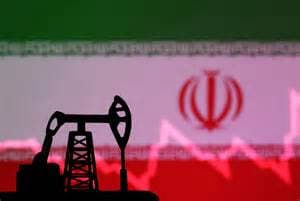
Winter light falls softly on the streets of Washington, D.C., brushing the marble of government buildings with a cold, indifferent glow. Inside offices and living rooms alike, the distant rumble of geopolitical tensions drifts into everyday life, subtle but insistent, like the undertone of a storm approaching over calm seas. The conflict between the United States and Iran, ignited by former President Donald Trump’s aggressive policies, now resonates far beyond the desert sands and oilfields of the Middle East, spilling quietly into grocery aisles, gas pumps, and the ledger books of the Federal Reserve.
For consumers, the consequences are immediate yet often unnoticed: energy prices rising as Middle Eastern uncertainty ripples through global markets, grocery bills inching upward with transportation and fuel costs, and the hidden tax of inflation pressing on household budgets. The Federal Reserve, with its delicate balancing act, watches these currents with caution, aware that interest rates, credit availability, and monetary policy are now intertwined with geopolitical unrest. Economic stability, once measured in predictable increments, feels more fragile as the international storm grows.
Businesses, too, feel the tremor. Supply chains stretched thin before the escalation now face renewed strain; firms importing materials from the region or dependent on global energy are compelled to adjust production schedules, raise prices, or absorb losses. Every small decision, from a manufacturer in Ohio delaying shipments to a shipping company in Houston recalculating fuel costs, contributes to a broader mosaic of economic uncertainty. The cost is not merely financial—it threads into human experience, shaping hiring decisions, wage growth, and retirement plans.
Yet amid this turbulence, there is also a rhythm of resilience. Consumers make incremental adjustments, businesses innovate around constraints, and the Federal Reserve weighs long-term economic health against immediate pressures. The storm may swirl, but it is navigated in daily choices, measured steps, and incremental policy moves. The lesson, quietly etched into the lives of Americans, is that the impacts of distant conflicts are never truly distant—they settle into the fabric of daily life, subtle as snowfall yet potent in accumulation.
By the end of another week, as commuters navigate familiar streets and families tally their monthly expenses, the reality of this economic ripple becomes clear: Trump’s strategic decisions in Iran are no longer abstract headlines; they are the undercurrent shaping the nation’s financial landscape, testing the patience of both markets and individuals alike.
AI Image Disclaimer Visuals are AI-generated and serve as conceptual representations.
Sources Fraser Institute U.S. Federal Reserve U.S. Bureau of Labor Statistics International Energy Agency Financial Times
Published by Banx Network. This article is part of the Banx decentralized media programme, powered by the BXE token on the XRP Ledger.