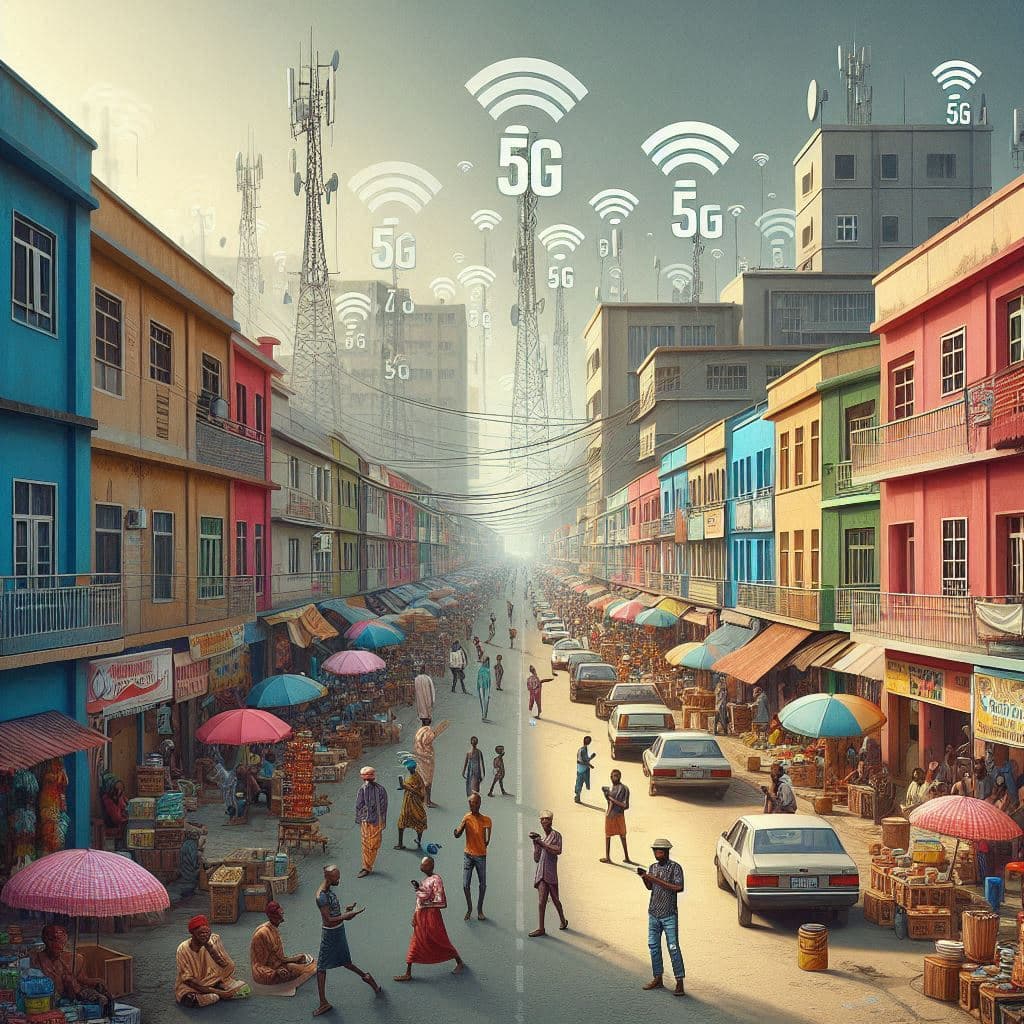
In the gentle, humming rhythm of daily life across Nigeria’s towns and cities, there exists a promise of connection—like a distant melody that seems close enough to touch yet still out of reach. For many Nigerians who have embraced the latest generation of mobile technology, that promise takes the form of a 5G-enabled device: sleek, capable, and humming with possibility. Yet, despite possessing such devices, a notable portion of the population finds itself waiting by the metaphorical window, watching the promise of seamless connectivity flicker on the horizon without quite arriving.
According to the Nigerian Communications Commission’s fourth quarter 2025 industry performance report, presented by Edoyemi Ogoh, director of technical standards and network integrity, roughly half of Nigerians who own 5G devices still cannot access 5G services where they live or work. This isn't just a statistic; it’s a quiet reflection of a gulf between aspiration and reality—a gap in coverage that remains despite years of deployment and technological advancement.
The NCC’s findings reveal that while ownership of 5G-capable phones continues to rise, the actual network footprint has not expanded at the same pace. In many areas outside urban centers, particularly in rural landscapes where distances stretch wide and infrastructure investments are harder to sustain, the full promise of 5G remains just beyond reach. Network operators have indeed installed thousands of new sites over the past year, but a significant number remain concentrated in cities, leaving areas beyond the hustle of metropolitan life still waiting for that next leap forward.
Even within urban corridors like Lagos and Abuja, improvements in coverage—while welcome—still paint a picture of unfinished progress. Lagos saw its 5G coverage gap decrease from more than 70 percent to around 55 percent between the third and fourth quarters of 2025, and Abuja recorded a similar trend. These gains hint at forward motion, yet also underscore how much work remains before the network matches the devices in people’s hands.
More than coverage percentage points, the NCC also pointed to differences in network performance that echo the larger story of digital inequality. Users in urban areas tend to enjoy lower latency and stronger download speeds—sometimes enough for high-quality streaming or smooth video calls—while those living beyond city centers often experience slower, less reliable connectivity. Operators such as MTN and Airtel are seen performing relatively better in certain regions, while others have more to do to bring experiences closer to expectation.
What emerges from this snapshot is a nation caught between technological promise and practical experience. The hardware is in the hands of Nigerians; the networks, in many places, are still trying to catch up. As the country continues to navigate this landscape—with its blend of progress and unevenness—the task for policy makers, regulators, and service providers alike is to turn those waiting figures into stories of connection realized.
In straight terms, the NCC’s latest report shows about half of Nigerians with 5G-capable devices still lack access to 5G networks, largely due to coverage gaps that persist across the country, especially beyond major urban centers. While improvements in major cities are evident, significant disparities remain, and 4G networks continue to provide the backbone of mobile connectivity across much of the nation.
AI Image Disclaimer Illustrations were produced with AI and serve as conceptual depictions.
📰 Sources TheCable Arise News TechEconomy.ng TrendsNAfrica BrandIconImage
Published by Banx Network. This article is part of the Banx decentralized media programme, powered by the BXE token on the XRP Ledger.