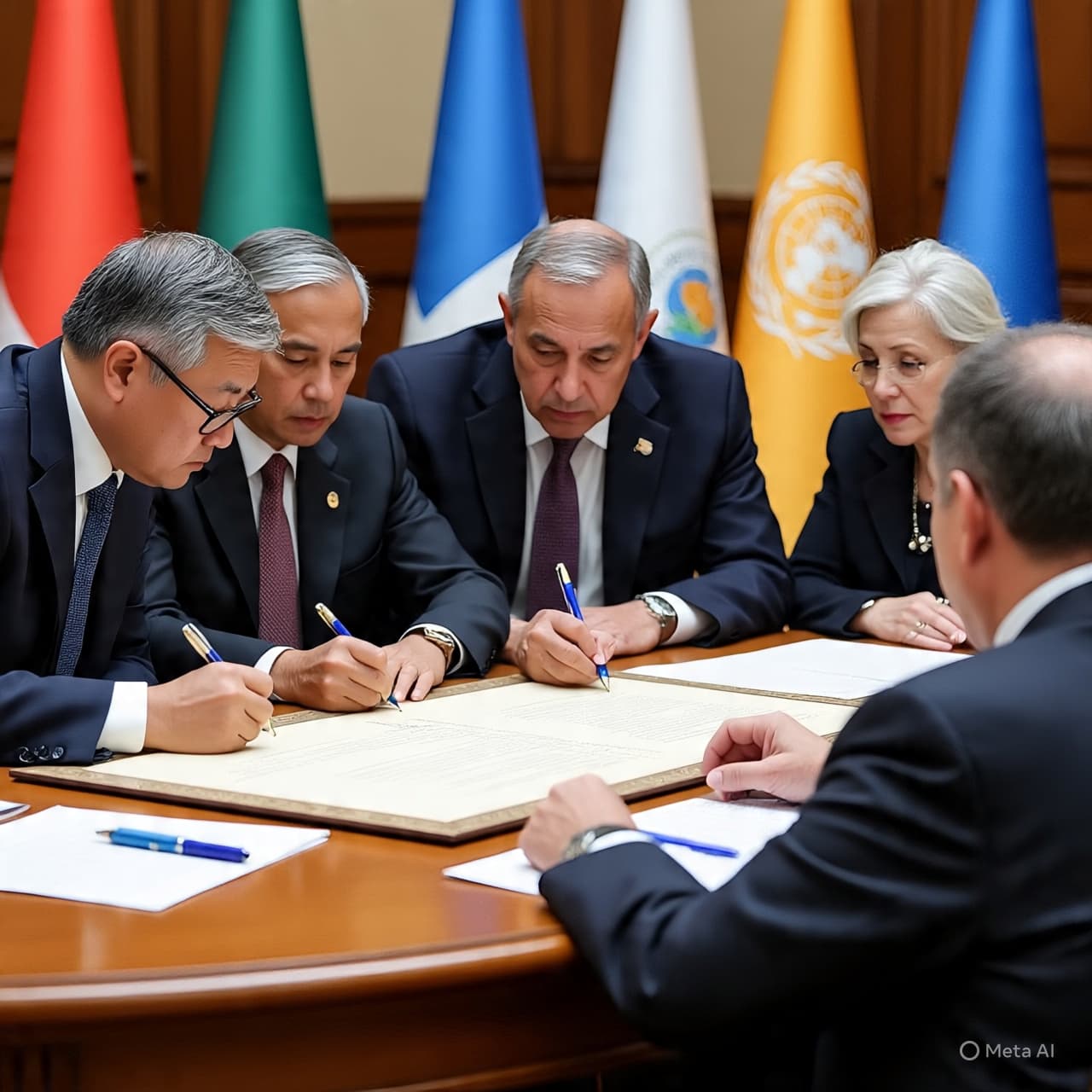
In the hush of a winter morning in Davos, where the air carries both the chill of mountain winds and the warmth of global ambition, a new chapter in diplomacy began to unfold. Leaders from far-flung corners gathered not for trade or trophies, but for aspirations borne of centuries-old hopes. Amid the clatter of conversation and the quiet hum of cameras, Indonesia’s President took a pen — and with it, a symbolic step toward a horizon of peace that many have only dreamed of.
In the midst of the World Economic Forum’s grand stage, the Board of Peace charter was signed, an initiative envisioned as a fresh scaffold for healing and rebuilding. Indonesia’s President articulated that this moment, marked by the joining of nations to this new council, could be a gentle but meaningful breeze in the long, arid landscape of Palestinian peace efforts. He spoke not in sweeping proclamations, but with the soft cadence of someone who sees the weight of history lying quietly beside the promise of future reconciliation.
For Indonesia, this participation carries multiple layers of meaning. As Foreign Minister voices suggested, it reflects a continuity of the nation’s longstanding commitment to peace in Palestine and to supporting tangible steps toward stability in Gaza. In quiet terms, the gesture was framed as part of larger dialogues and cooperative efforts that extend beyond mere rhetoric — an embrace of action that aims to attend to humanitarian needs and long-term rehabilitation.
Observers have noted that the Board of Peace itself is conceived to oversee stabilization, reconstruction, and governance transition in territories that have borne the scars of conflict. Its formation has elicited varied responses on the international stage, with some countries expressing reservations about how such new frameworks might interface with established multilateral institutions. Yet for participating leaders, including Indonesia’s, the focus remained on the gentle insistence that sustained peace — however distant — is a canvas worth tending.
At home, this decision has also sparked discussion. Analysts and commentators reflect on the geopolitical complexities inherent in joining an initiative led by one of the world’s major powers. There are reminders that, even as bridges are built, careful stewardship of diplomatic paths must ensure that voices of Palestinians themselves remain central to the narrative of peace.
In the end, the act of signing a charter is both simple and profound. It is a moment where ink and intention meet — where nations signal a willingness to walk alongside hope itself. Whether this will blossom into lasting peace for Palestine remains unwritten, but in the quiet corridors of diplomacy, such beginnings carry their own gentle promise.
AI Image Disclaimer “Illustrations were produced with AI and serve as conceptual depictions.”
Sources:
Reuters (international news agency) The Star (ASEAN regional news) ANTARA News (Indonesia state news agency) Tempo (Indonesian media reporting participation) Republika (Indonesian mainstream newspaper)
Published by Banx Network. This article is part of the Banx decentralized media programme, powered by the BXE token on the XRP Ledger.