
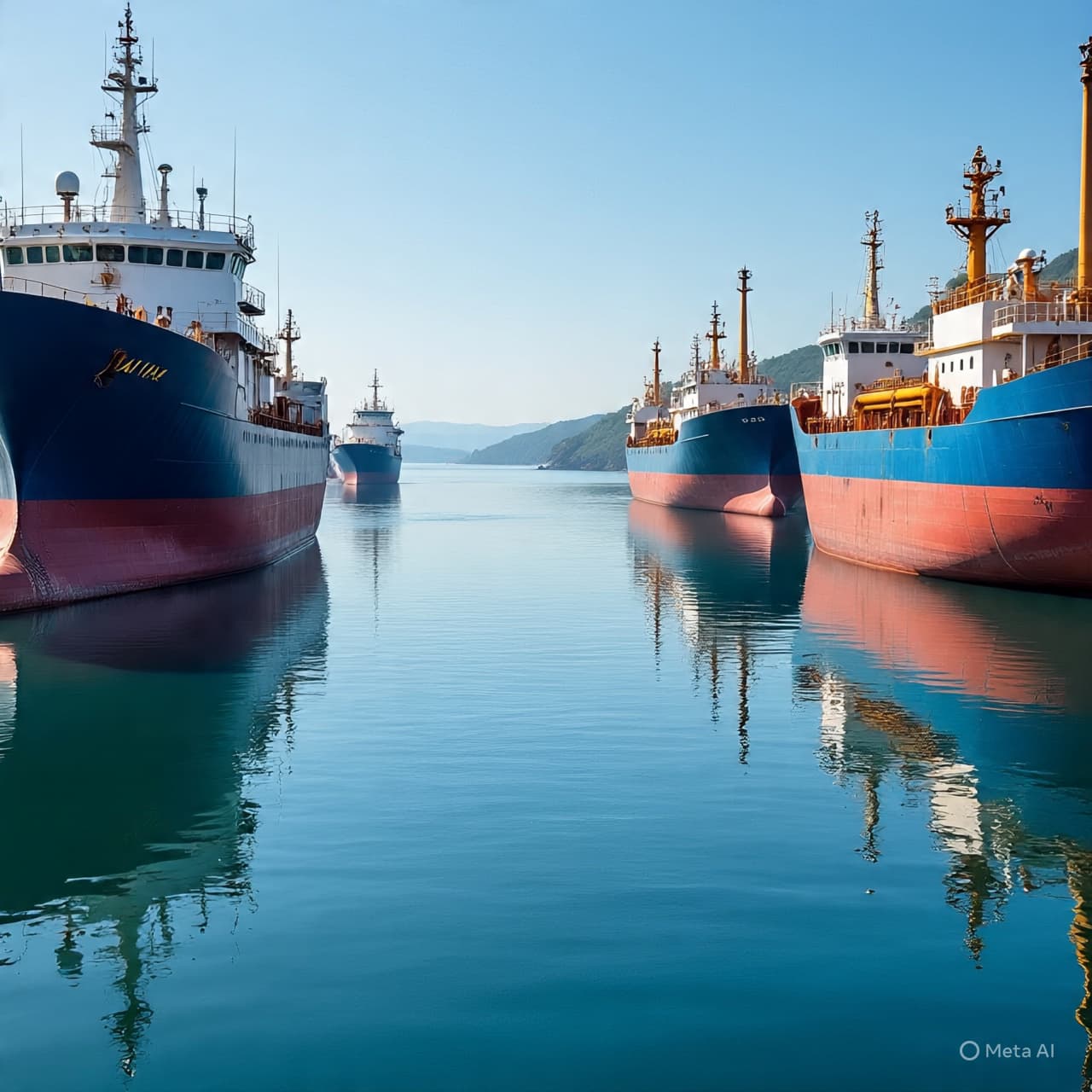
There are waterways that feel less like geography and more like conversation. The Strait of Hormuz is one of them—a place where ships do not simply pass, but participate in a quiet exchange shaped by power, caution, and intent. In such a setting, even the act of movement carries meaning.
In recent developments, Iran has indicated that vessels seeking to pass through the strait may be required to provide detailed information about their crews and cargo. The request, measured in tone yet significant in implication, adds another layer to a passage already defined by careful navigation.
The Strait of Hormuz has long held a unique position in global trade. A substantial portion of the world’s oil supply moves through this narrow corridor, making its stability a matter of shared interest across regions. When conditions shift, even slightly, the effects tend to travel far beyond the water itself.
By asking for additional details, Iran appears to be introducing a form of oversight that blends security considerations with strategic signaling. The requirement does not close the passage, but it reshapes how access is understood—less automatic, more contingent.
For shipping companies, the change introduces new calculations. Transparency, while not unfamiliar in international shipping, takes on a different weight when tied directly to permission of passage. Decisions about routes, timing, and compliance may now involve considerations that extend beyond logistics.
At the same time, the request reflects a broader environment in which maritime security has become increasingly complex. Incidents, tensions, and shifting alliances have all contributed to a landscape where control over key routes carries both practical and symbolic importance.
There is also an interpretive element to such measures. Terms like “required information” and “non-hostile intent” leave room for judgment, and in that space, uncertainty can emerge. Ships approaching the strait may find themselves navigating not only physical waters, but also evolving expectations.
Yet, the flow of global trade depends on continuity. Even as conditions change, there remains a shared interest in keeping routes open, if only under adjusted terms. The balance between openness and control becomes a central theme, shaping how policies are applied and understood.
As the situation develops, authorities in Iran have indicated that vessels providing the requested crew and cargo details may be allowed to transit the Strait of Hormuz, with further clarifications expected as maritime operations continue under these updated conditions.
AI Image Disclaimer Images in this article are AI-generated illustrations, meant for concept only.
Sources Reuters Bloomberg BBC News Al Jazeera Financial Times
Published by Banx Network. This article is part of the Banx decentralized media programme, powered by the BXE token on the XRP Ledger.


