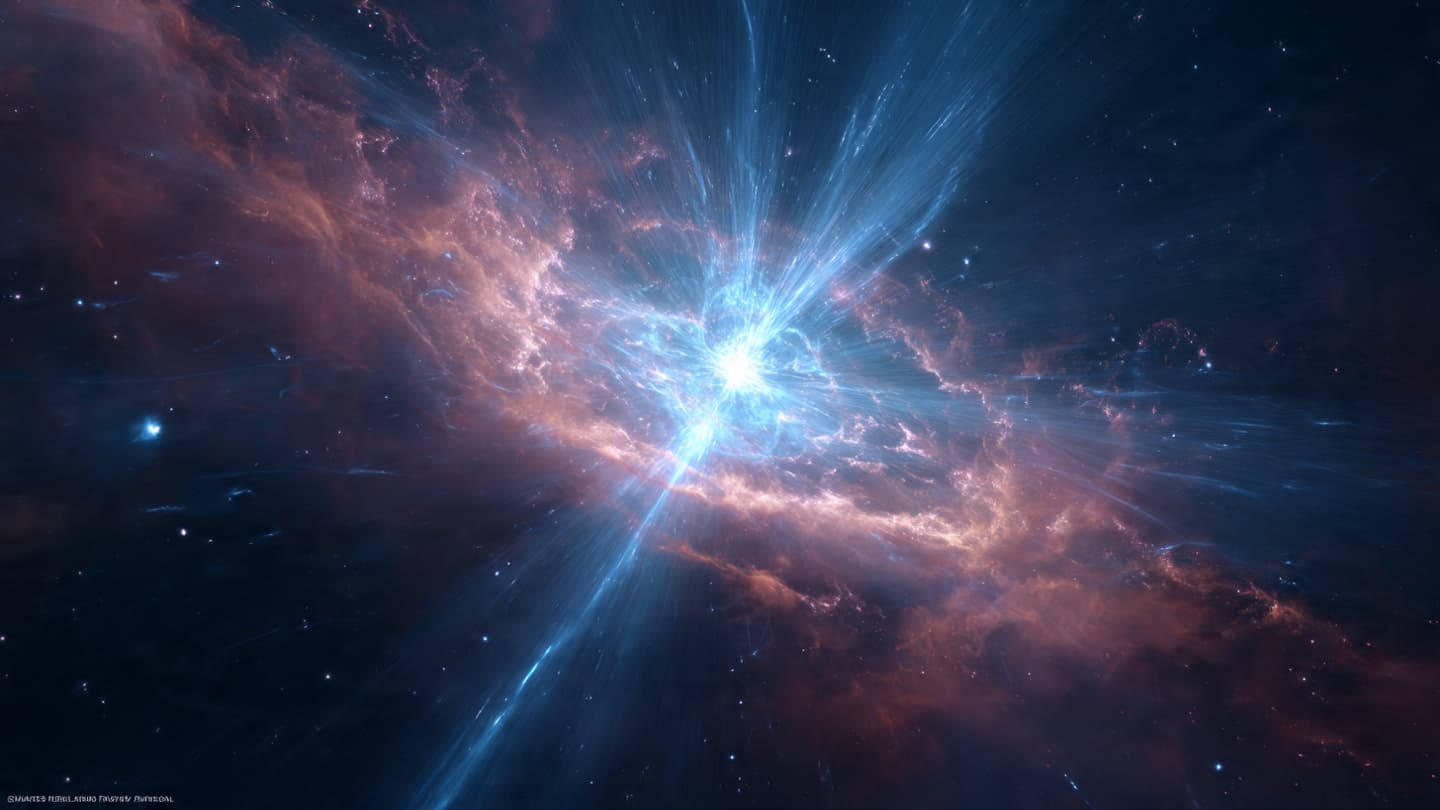
In the delicate balance between theory and observation, science often finds its most meaningful progress. For decades, astrophysicists have built models to explain how particles accelerate to extreme energies in the universe. Yet, every so often, a new observation quietly presses against those boundaries, suggesting that nature may be more inventive than expected.
A recently studied phenomenon, informally referred to as the “Aquila Booster,” has drawn attention for its apparent ability to accelerate particles beyond previously accepted theoretical limits. The observation is linked to a pulsar wind nebula, a region powered by the intense magnetic fields and rapid rotation of a neutron star.
Pulsar wind nebulae are already known as efficient particle accelerators, capable of pushing electrons to near-light speeds. However, the energies associated with the Aquila Booster appear to exceed what standard models predict for these environments.
The discrepancy has prompted researchers to revisit assumptions about magnetic field structures and energy transfer processes within these nebulae. It is possible that localized conditions—such as turbulence or magnetic reconnection—play a more significant role than previously thought.
Observations across multiple wavelengths, including X-ray and gamma-ray data, have been essential in identifying this anomaly. Each wavelength provides a different perspective on the behavior of high-energy particles.
Scientists are careful to frame the finding as a challenge rather than a contradiction. Theoretical frameworks in astrophysics are designed to evolve, incorporating new data as it becomes available.
If confirmed, the Aquila Booster could have broader implications for understanding cosmic rays, some of the most energetic particles observed reaching Earth. It may also influence how researchers interpret emissions from other high-energy astrophysical sources.
The process of reconciling theory with observation is ongoing, requiring both improved measurements and refined models. In this sense, the discovery serves as a point of dialogue between what is known and what remains uncertain.
As studies continue, the Aquila Booster stands as a reminder that even well-established theories can be gently reshaped by new evidence, guiding science toward a more complete understanding of the universe.
AI Image Disclaimer: Images used here are AI-generated interpretations designed to visualize astrophysical concepts and may not depict actual data.
Sources: NASA European Space Agency (ESA) Physical Review Letters The Astrophysical Journal
Published by Banx Network. This article is part of the Banx decentralized media programme, powered by the BXE token on the XRP Ledger.