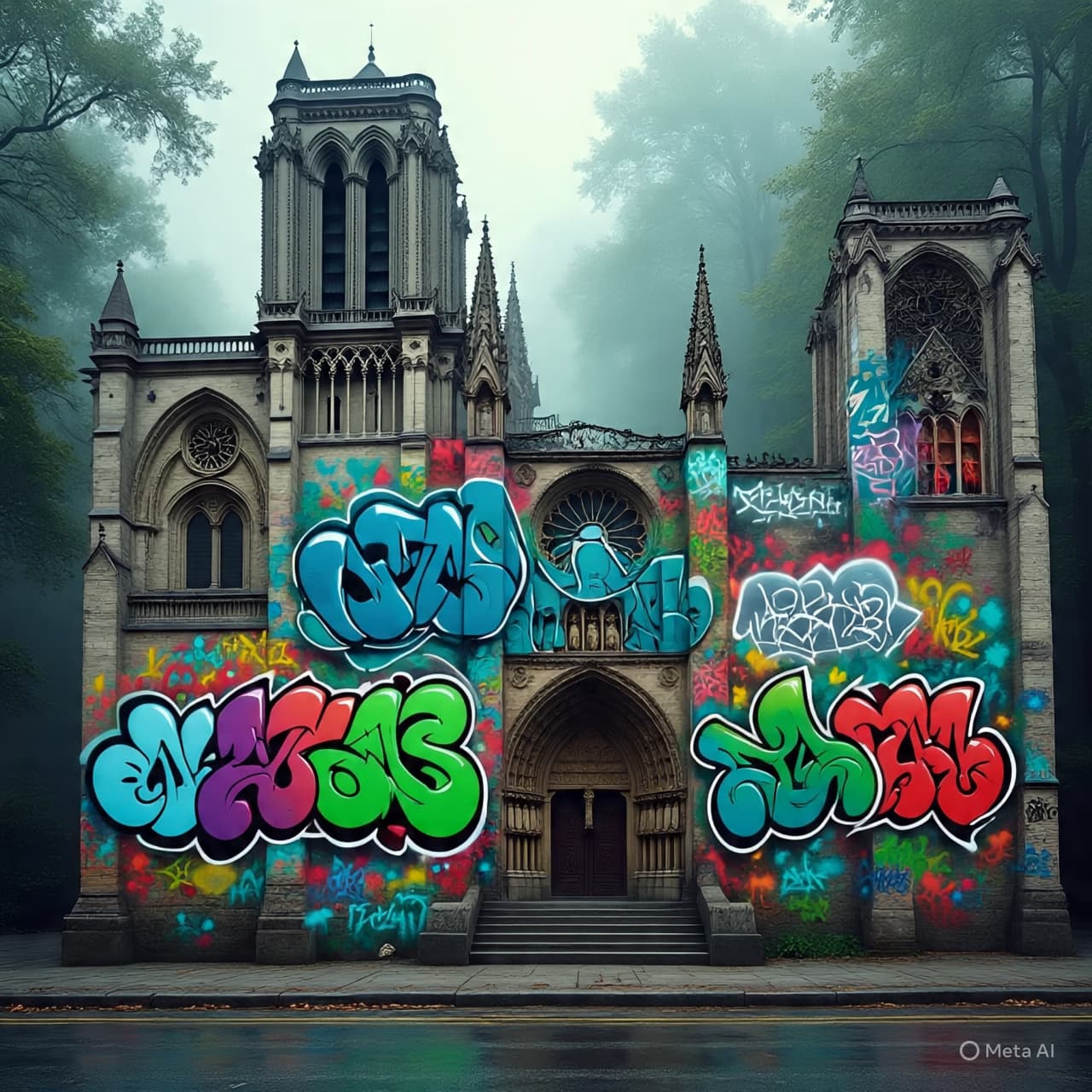
In the quiet sanctum of Canterbury Cathedral, where centuries of devotion have carved their own eloquence into stone, a new kind of color has arrived—loud, bold, and defiantly modern. The graffiti-style installation, with sweeping decals splashed across ancient pillars, has turned the hush of worship into a murmur of debate. Some see it as an intrusion on sacred ground, a clash between reverence and rebellion. Others find in it a dialogue—between past and present, faith and freedom, stone and spray.
Visitors have described the sight as jarring, even “sacrilegious,” their words echoing through social media and the cathedral’s visitor book alike. For many, the sight of graffiti in a space of prayer felt like a transgression against time itself—a rewriting of what should remain untouched.
Yet the Dean of Canterbury stood by the installation, calling it “an act of creative courage” and “a bridge between cultures.” The artwork, he said, was never meant to deface but to engage, to draw new eyes to old walls. To him, this was not vandalism, but conversation.
Still, questions linger—can art meant to provoke coexist with a space meant to console? Or must one fade for the other to breathe?
In official statements, the cathedral leadership confirmed that the artwork was temporary and fully reversible. They emphasized that the project had received internal approval and was intended to explore the intersection of sacred heritage and modern creativity. Public reactions, however, remain sharply divided
.Visual Disclaimer: Images in this article are AI-generated illustrations, meant for concept only.
Sources: BBC News The Guardian Reuters The Independent Associated Press
Published by Banx Network. This article is part of the Banx decentralized media programme, powered by the BXE token on the XRP Ledger.