
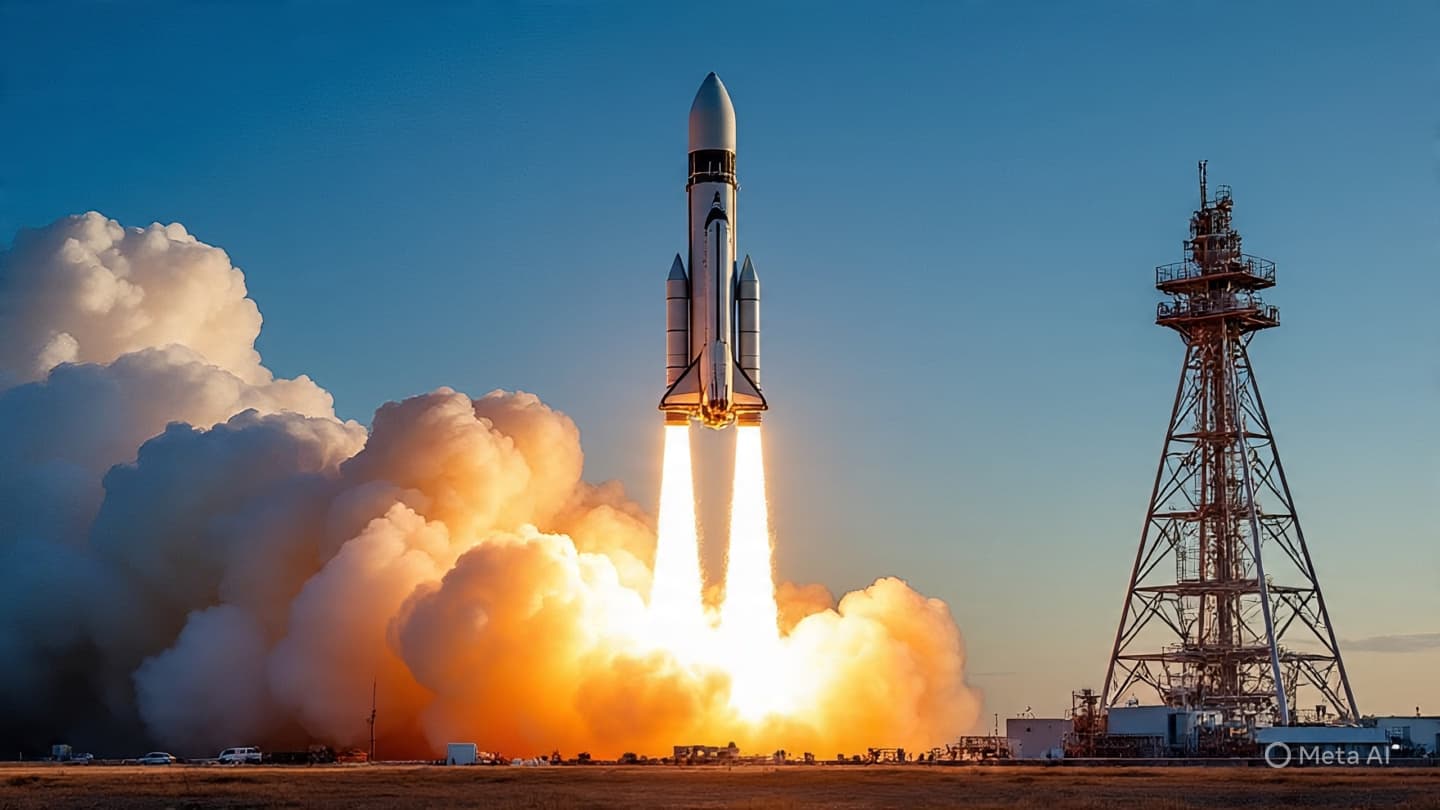
In the vast quiet of space, progress often unfolds in measured steps—each launch a careful note in a longer symphony of ambition. Success and setback, though contrasting in the moment, together shape the rhythm of exploration beyond Earth’s horizon.
Amazon has taken another step forward in its satellite initiative as a launch aboard the Atlas V rocket successfully deployed additional units into orbit. The mission is part of Project Kuiper, the company’s effort to build a global broadband network from space.
The launch, conducted in partnership with United Launch Alliance, represents a continuation of Amazon’s long-term strategy to compete in the growing satellite internet sector. The initiative aims to provide connectivity to underserved and remote regions around the world.
At the same time, a separate mission involving SpaceX encountered difficulties, with its Falcon Heavy rocket experiencing a setback during operations. While details remain under review, the event underscores the inherent complexity of spaceflight.
The contrast between the two developments highlights the competitive and evolving nature of the commercial space industry. Companies are pursuing similar goals through different approaches, each facing technical and logistical challenges along the way.
Satellite constellations, once a distant concept, are becoming central to modern communication infrastructure. Governments and private enterprises alike view space-based connectivity as a critical component of digital inclusion.
Despite occasional setbacks, the pace of launches has accelerated in recent years, reflecting both technological advancements and increased investment. Each mission contributes to a broader ecosystem that extends far beyond individual companies.
The latest developments illustrate how progress in space exploration is rarely linear. Instead, it is shaped by persistence, iteration, and the willingness to navigate uncertainty.
Industry observers will continue to monitor upcoming launches as companies refine their technologies and expand their presence in orbit.
AI Image Disclaimer: Some images accompanying this article are AI-generated to illustrate space and launch scenarios.
Sources: Reuters, Bloomberg, CNBC, The Verge
Published by Banx Network. This article is part of the Banx decentralized media programme, powered by the BXE token on the XRP Ledger.



