Opening
There is something quietly remarkable about returning to what we thought we already understood. A second look, a slower reading, a deeper patience—these are often where new discoveries begin. Not always in distant frontiers, but in the familiar, waiting to be seen differently.
In the vast archive of space exploration, where data travels across unimaginable distances to reach us, it seems that even what has already arrived may still hold secrets—unnoticed, uncounted, quietly present all along.
---
Body
Scientists analyzing data from NASA Kepler Space Telescope have identified around 100 previously undetected exoplanets, adding to the growing catalog of worlds beyond our solar system. The findings highlight how advances in analysis techniques can continue to reveal new insights from existing observations.
The Kepler mission, launched by NASA, was designed to search for planets orbiting distant stars by detecting the slight dimming that occurs when a planet passes in front of its host star. Over its operational years, it gathered an immense dataset—one that scientists are still exploring.
What makes this discovery notable is not only the number of planets identified, but the method by which they were found. Rather than relying on new observations, researchers revisited archived data using updated algorithms and refined techniques, allowing them to detect signals that may have previously been too subtle or obscured.
In this sense, the discovery is as much about progress in interpretation as it is about observation. As tools improve, so too does the ability to see patterns within complexity—turning what once appeared as noise into meaningful signals.
Exoplanets themselves vary widely, from gas giants larger than Jupiter to smaller, rocky worlds that may resemble Earth in size or composition. While the newly identified planets span different categories, each contributes to a broader understanding of how planetary systems form and evolve.
The search for exoplanets has, over time, reshaped humanity’s sense of place in the universe. Once considered rare or speculative, planets beyond our solar system are now known to be abundant, with thousands confirmed and many more candidates awaiting verification.
Yet discoveries like this suggest that the count is not fixed. It grows not only with new missions, but with renewed attention to what has already been observed. The universe, it seems, does not reveal itself all at once. It unfolds gradually, often in response to how carefully we look.
Researchers emphasize that continued analysis of archival data will likely yield further findings, especially as computational methods become more sophisticated. In this way, the legacy of missions like Kepler extends beyond their operational lifespan, continuing to contribute to discovery long after their primary work has concluded.
---
Closing
The addition of these newly identified exoplanets marks another step in the ongoing effort to map the universe beyond our solar system. Scientists are expected to continue refining their methods, with the potential for further discoveries still hidden within existing data.
For now, the findings serve as a reminder that exploration is not always about going farther—it is sometimes about seeing more clearly what has already been found.
AI Image Disclaimer
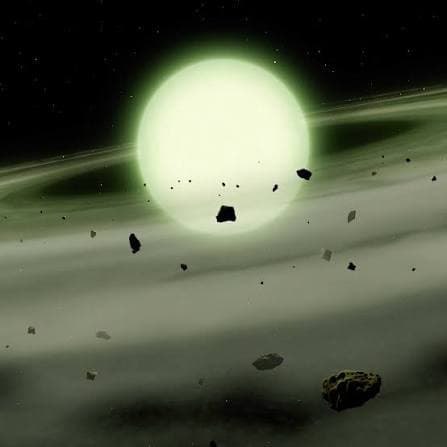
Visuals are created with AI tools and are not real photographs.
Source Check
Here are credible sources available for this topic:
1. NASA 2. Reuters 3. BBC News 4. Space.com 5. Scientific American
Published by Banx Network. This article is part of the Banx decentralized media programme, powered by the BXE token on the XRP Ledger.