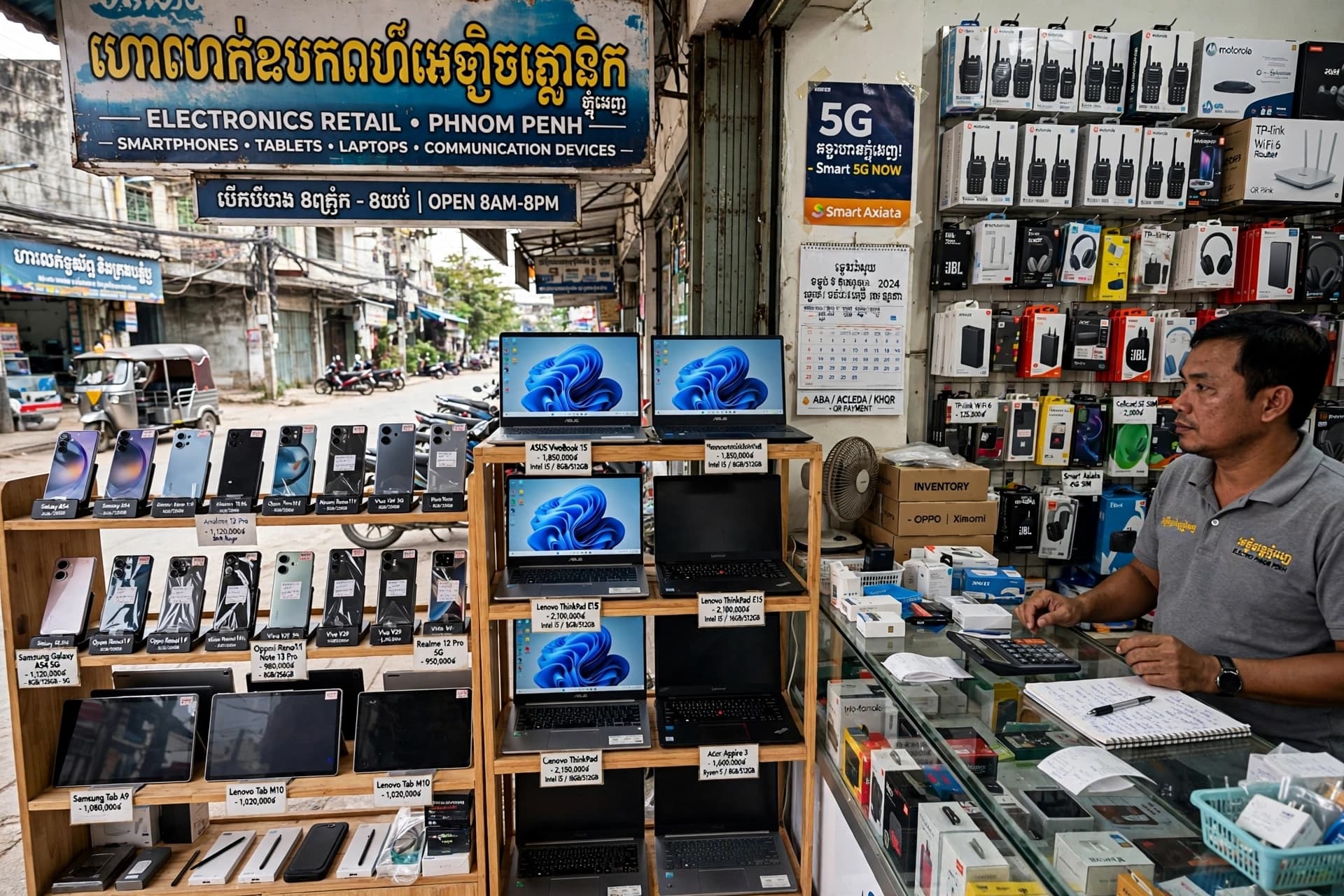
A phone can carry more than the signals that connect one person to another. Inside its casing are batteries, frequencies, software, and components designed for a particular environment. When those devices cross borders without clear certification, their journey can become part of a larger question about safety and control. In Cambodia, authorities have now drawn a new line around that movement.
Cambodia’s Telecommunications Regulator has announced a ban on the import, sale, and distribution of second-hand or counterfeit telecommunications equipment. The notice, issued on Sept. 22, covers mobile phones, tablets, computers, walkie-talkies, and other telecommunications equipment.
The regulator said the decision was linked to several concerns, including the possible use of such equipment in online scams, risks to public safety and health, environmental damage, and potential disruption to critical services. Authorities also said they had observed these products being offered through websites and social media platforms.
A particular concern involves devices that do not have the required Qualified Agent or Type Approval certificates, or the necessary import permits. According to the regulator, equipment without those approvals can violate Cambodia’s telecommunications regulations and may not have been properly assessed for use within the country.
The issue becomes more significant when devices operate on radio frequencies. Walkie-talkies and certain communications equipment, for example, can interfere with frequencies used by emergency services, aviation, navigation, public safety, and other critical communications if they do not meet applicable technical requirements.
There are also more ordinary risks hidden inside aging or uncertified electronics. The regulator pointed to unsafe batteries and charging systems, electrical problems, overheating, and electromagnetic compatibility concerns. Devices originally designed for another market may also contain modified hardware or software that affects performance after being brought into Cambodia.
The environmental dimension follows the same path. A device that enters the market cheaply can eventually become electronic waste, particularly when its quality or compatibility makes repair difficult. For authorities, the question therefore extends beyond the moment of sale and into what happens when the device reaches the end of its useful life.
Businesses affected by the announcement have been given up to 60 days from the date of the notice to apply for a Qualified Agent certificate if they want to legally import, supply, or distribute telecommunications equipment. The regulator also instructed businesses to source new equipment through legitimate and certified channels.
The new rules arrive as Cambodia’s digital economy continues to expand, creating a landscape where more devices, platforms, and communications systems are woven into everyday life. Authorities have warned that businesses continuing to deal in prohibited equipment could face measures including seizure of devices, fines, website closures, and other actions under existing regulations.
Image Disclaimer The visuals are AI-generated conceptual illustrations and are not photographs of the reported events.
Sources The Star The Phnom Penh Post Telecommunications Regulator of Cambodia
Published by Banx Network. This article is part of the Banx decentralized media programme, powered by the BXE token on the XRP Ledger.