Orders in war are meant to move swiftly, without hesitation. They rely on hierarchy, discipline, and the assumption that commands will be carried out as given. On that day, the instruction was unambiguous: kill them all. No exceptions. No delays. No debate.
And yet, the order stopped.
It did not collapse under force, nor was it overturned by a superior. It ended because one general chose not to obey.
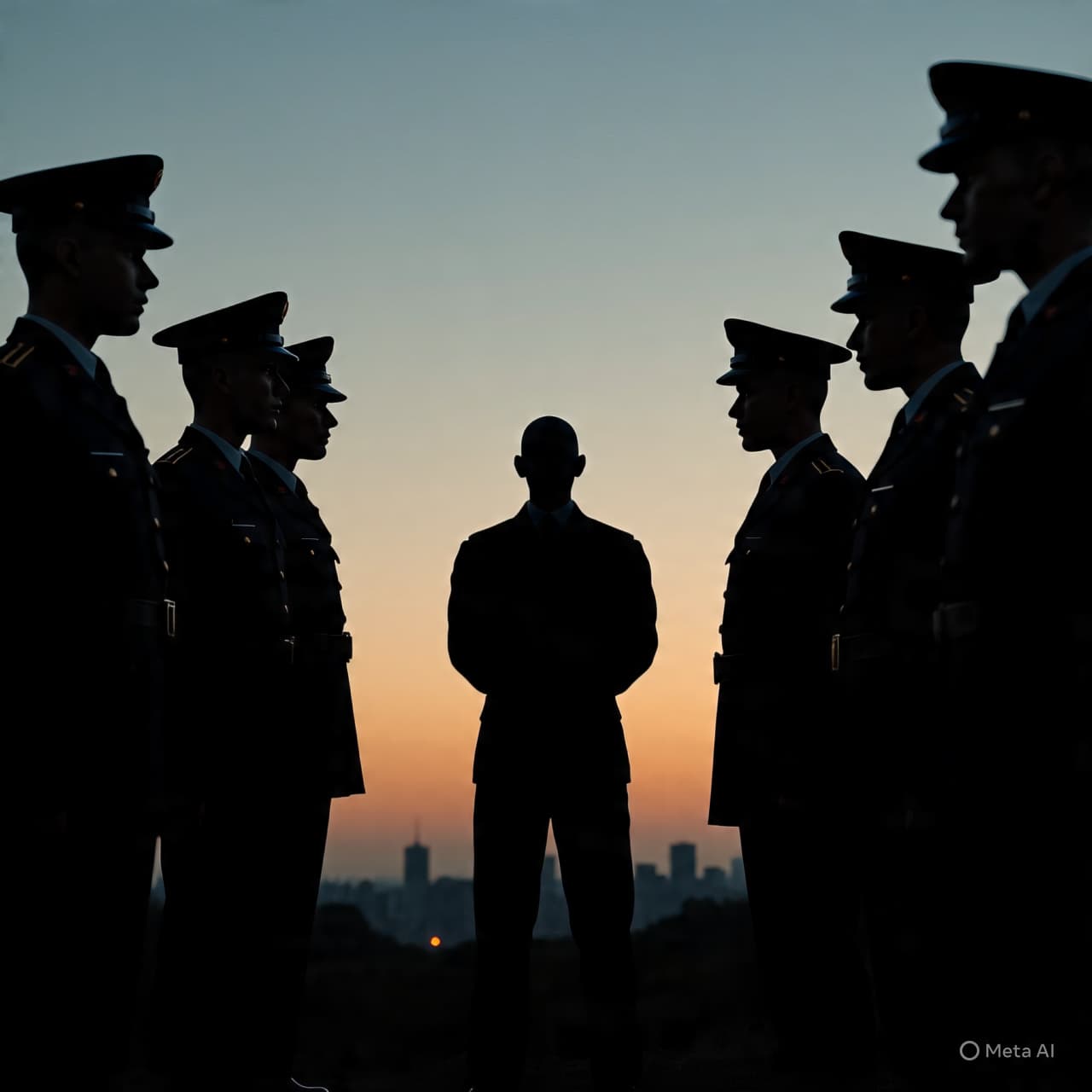
History records many moments of atrocity justified by obedience. Far fewer moments capture the opposite—the instant when a senior officer recognizes that legality, morality, and humanity have parted ways from command. In this case, the general understood that compliance would not merely follow orders; it would erase the last barrier between authority and mass murder.
Refusal in such circumstances is not theatrical. It is lonely. It happens without applause, often without witnesses. The general knew the risks: court-martial, imprisonment, disgrace, even death. Militaries are not built to reward hesitation, especially during operations framed as necessary or urgent.
What made this refusal remarkable was not confusion or ambiguity. The order was explicit. The targets were clear. The machinery was already in place. The only missing component was consent at the top of the execution chain.
Instead of compliance, the general delayed. He questioned. He reinterpreted. He absorbed responsibility upward, ensuring that no subordinate would carry out an act that could not be undone. In doing so, he disrupted a system designed to eliminate friction.
Such moments force an uncomfortable truth into view: war crimes do not occur because rules are absent, but because someone decides rules no longer apply. Just as often, their prevention hinges on one individual deciding they still do.
In later years, analysts would debate his motives. Was it legal caution? Moral conviction? Strategic concern? These distinctions matter less than the outcome. Lives were spared. A precedent was set, even if quietly, that command does not absolve conscience.
The general did not stop the war. He did not reverse the campaign. He did not become a symbol in his own time. His act altered only one outcome, in one place, on one day. But history is shaped by such margins.
Military ethics often focus on heroism under fire. This was a different kind of courage—the refusal to transform authority into annihilation. It reminds us that even in the most rigid systems, choice survives.
When the order came to kill them all, the general said no. And in that refusal, the limits of power were briefly, but decisively, drawn.
Published by Banx Network. This article is part of the Banx decentralized media programme, powered by the BXE token on the XRP Ledger.