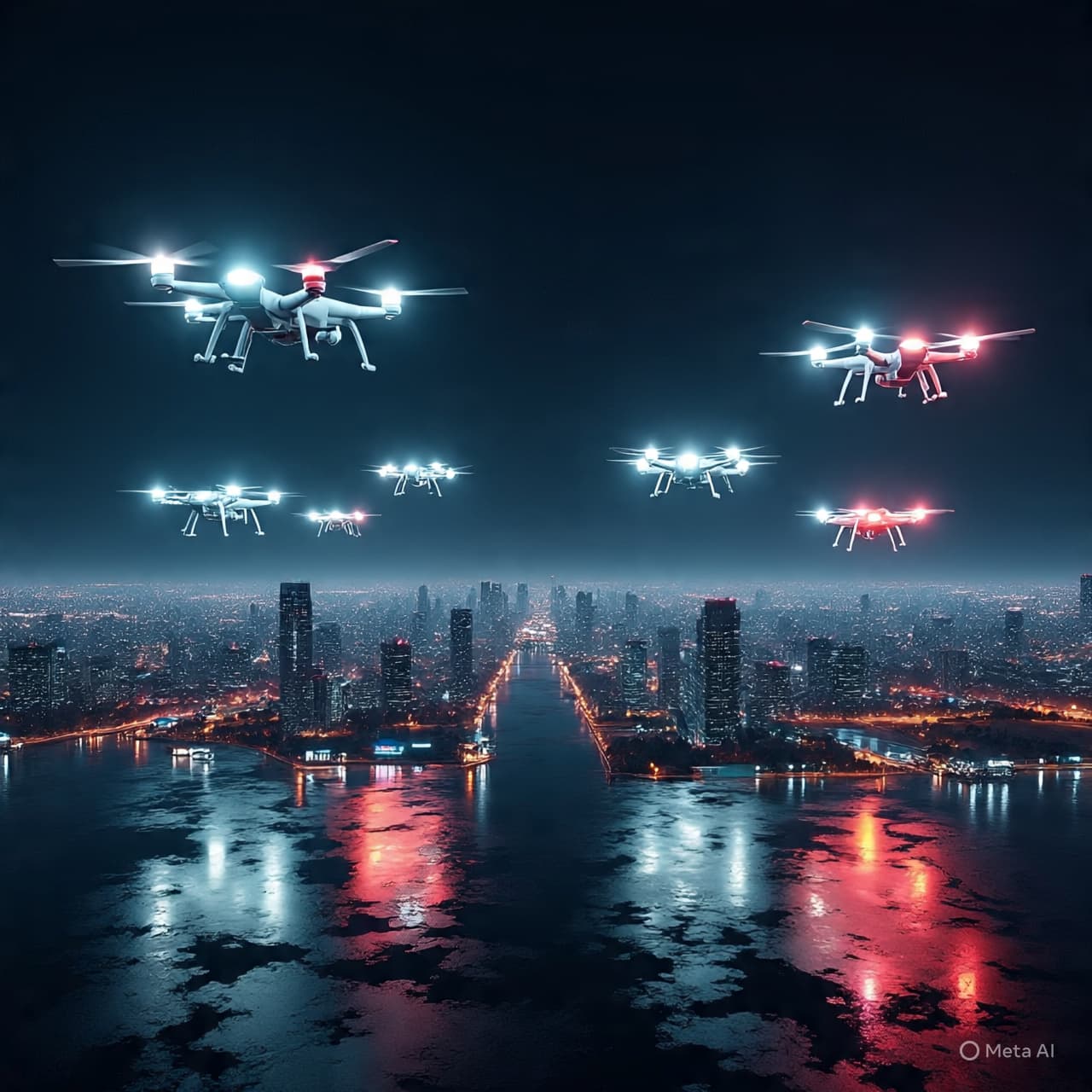
There are moments in conflict when the sky itself seems to carry the story—no longer a quiet expanse, but a contested space where movement replaces stillness and sound interrupts silence. In the ongoing war between Russia and Ukraine, that sky has increasingly become a domain of exchange, where distance is bridged not by words, but by trajectories.
Recent reports from Russia indicate that nearly 400 Ukrainian drones were shot down in what appears to be one of the more extensive aerial defense efforts in recent weeks. The scale alone invites attention—not only for its numerical weight, but for what it suggests about the evolving nature of the conflict. Drone warfare, once a supporting element, has grown into a central feature, shaping how both sides engage across vast stretches of territory.
These developments reflect a broader escalation in aerial barrages between Moscow and Kyiv. What was once defined primarily by ground movements has, over time, expanded into a layered conflict where the air plays an increasingly significant role. Drones, with their range and relative flexibility, have introduced a new rhythm—one marked by frequency, adaptation, and a constant testing of defenses.
For Russia, the reported interception of such a large number of drones underscores the capacity and readiness of its air defense systems. It also highlights the persistent nature of Ukrainian efforts to project reach beyond immediate frontlines. Each intercepted drone represents both a technical outcome and a moment within a larger pattern of engagement, where actions and counteractions unfold in rapid succession.
From Ukraine’s perspective, the use of drones serves multiple purposes. They can target infrastructure, disrupt logistics, and signal capability. In a conflict where asymmetry often shapes strategy, such tools offer a way to extend influence beyond conventional limitations. Yet their use also invites response, contributing to a cycle that gradually intensifies the aerial dimension of the war.
Beyond the immediate military implications, there is a broader narrative of adaptation. Both sides continue to refine their approaches, responding not only to each other’s actions but also to the changing possibilities of technology. Air defense systems evolve, drone designs are adjusted, and strategies are recalibrated. The result is a dynamic environment where the balance is continually being tested.
For civilians, particularly those living near areas of engagement, the experience is more immediate. The sound of drones, the activation of defense systems, and the uncertainty that accompanies each alert become part of daily life. While official reports often focus on numbers and outcomes, these quieter realities remain an essential part of the story.
Internationally, such developments are followed with close attention. The scale of reported interceptions may influence perceptions of capability, resilience, and the overall trajectory of the conflict. At the same time, global actors continue to emphasize the importance of restraint and the search for pathways that might reduce intensity, even as the situation on the ground—and in the air—remains fluid.
There is also a subtle shift in how conflict is understood. The prominence of drones reflects a broader transformation in warfare, where technology extends reach and alters tempo. The sky, once a secondary domain for many conflicts, now becomes central—an arena where visibility and unpredictability coexist.
As the situation continues to evolve, the reported events form part of an ongoing pattern rather than a singular turning point. Russia’s claim of intercepting nearly 400 drones highlights the scale of current engagements, while also pointing to the persistence of Ukrainian operations. For now, both sides appear engaged in a sustained aerial exchange, one that reflects the broader dynamics of a conflict still very much in motion.
In the steady unfolding of events, clarity often comes gradually. Reports are assessed, responses are shaped, and the broader picture takes form over time. What remains evident is that the aerial dimension of the war continues to expand, adding new layers to a conflict already defined by its complexity.
AI Image Disclaimer Graphics are AI-generated and intended for representation, not reality.
Source Check (Credible Media Outlets):
Reuters BBC News Associated Press (AP News) Al Jazeera The New York Times
Published by Banx Network. This article is part of the Banx decentralized media programme, powered by the BXE token on the XRP Ledger.