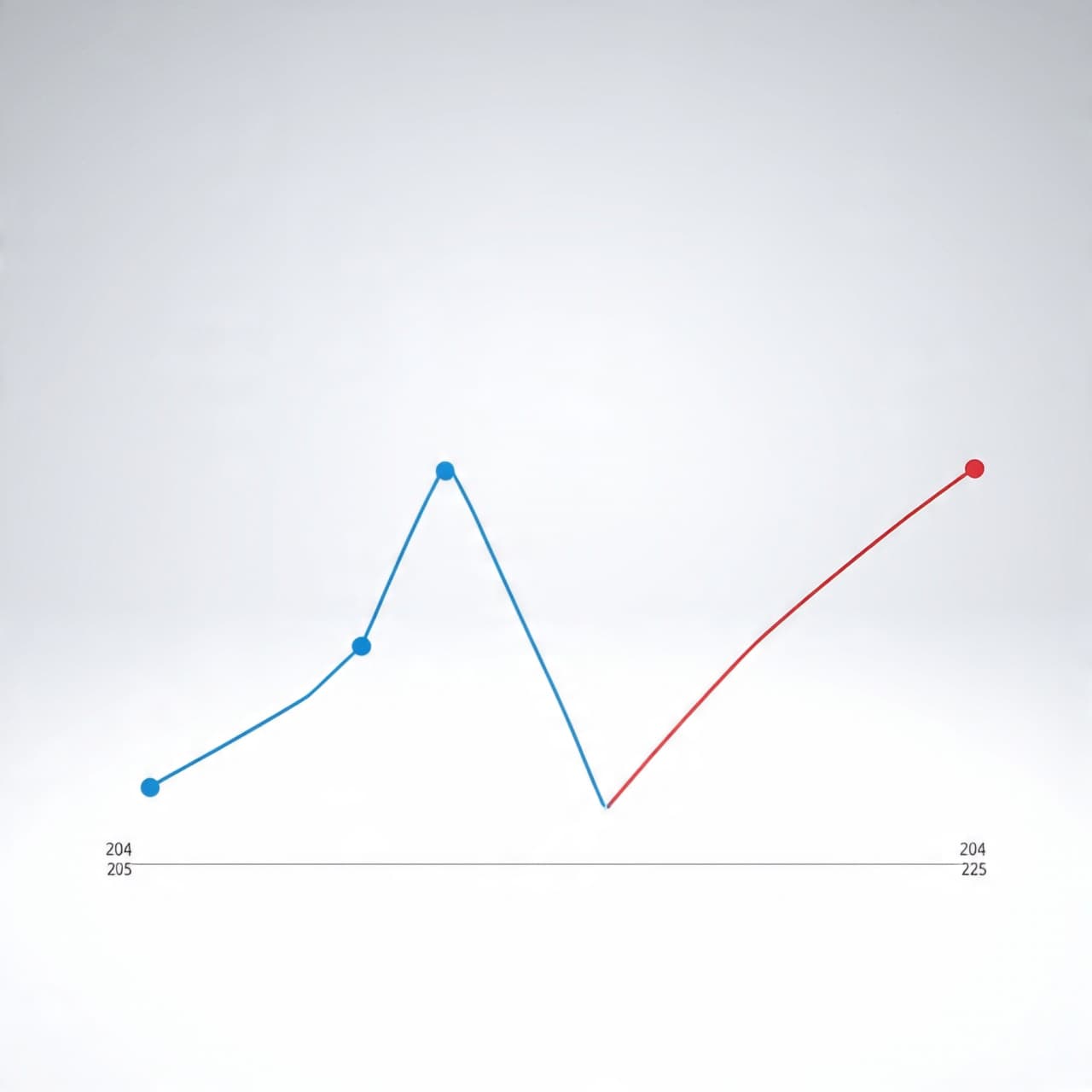
There are moments in the story of an economy when sunlight strikes a familiar path and reveals details previously hidden in shadow — subtle contours that change the way we see an entire landscape. This winter, such a moment arrived with the release of updated job figures from the U.S. Bureau of Labor Statistics (BLS), prompting reflection on what many believed about the labor market only months ago. What initially seemed like steady, if modest, job creation over the past year has now been recast by the government’s annual benchmark revisions, which have revealed that job growth last year was much weaker than earlier reported.
The newly revised statistics suggest that, rather than adding roughly 584,000 jobs in 2025 as first estimated, the economy may have added only about 181,000 jobs for the whole year — a stark contrast that paints the labor market in a far softer light. This dramatic downward adjustment represents one of the largest revisions on record and suggests that job creation was not only subdued but almost stalled by historical standards outside of a recession.
Behind these changes are two primary mechanisms that statisticians use to refine employment data. The first is the annual benchmark revision, which incorporates more complete payroll records reported by states and the Quarterly Census of Employment and Wages (QCEW). Because monthly jobs reports are based on surveys that are faster but less complete, the benchmark process provides a chance to correct earlier tallies and align them with actual tax and administrative records. In this year’s revision, that process revealed hundreds of thousands of jobs that the initial estimates had overstated.
A second factor has been adjustments to the birth-death model, a statistical method the BLS uses to estimate job gains from new business formation. In recent years, this model has tended to overstate job creation from startups and new enterprises, and as those overestimates were reconciled with hard payroll data, the result was a lower overall tally of net employment growth.
Economists say these revisions do not change the fact that hiring trends can fluctuate month to month, but they do illustrate that the labor market’s momentum is thinner than it appeared. Much of the modest growth that did occur last year was concentrated in sectors like health care and social assistance, while broader hiring outside those pockets was weak or flat. This kind of narrow job creation suggests structural softness in parts of the economy that are more sensitive to consumer demand and business investment patterns.
For everyday observers and policymakers alike, these new figures have a particular poignancy because they upend a widely held narrative of steady recovery. Last year, many analysts described the labor market as “resilient” in the face of high interest rates and other economic headwinds. But the revised numbers suggest that this resilience was less robust than believed, and that the economy may have been adding jobs at a much slower pace for much of the year.
This recalibration also helps explain why other indicators — such as stagnant wage growth in some sectors, higher long-term unemployment, and declining job openings — have seemed at odds with the positive headlines in monthly employment reports. When viewed in the light of more accurate annual data, those patterns appear far more consistent with a labor market grappling with weak demand and shifting business sentiment.
Still, the story is not entirely one of gloom. Recent January 2026 data showed a surprisingly strong gain of 130,000 jobs, giving some hope that the job market might be regaining footing as the year begins. Even so, that uptick exists alongside the broader context of slower annual growth, reminding watchers that short-term strength can coexist with longer-term softness.
In straight news, the Bureau of Labor Statistics’ annual benchmark revisions showed that U.S. job growth for 2025 was significantly lower than previously estimated, with total employment gains sharply reduced after the incorporation of more complete payroll data. Economists noted that while monthly reports remain useful for tracking near-term trends, the revised figures provide a more accurate view of the labor market’s underlying performance, which was weaker for much of the past year than initial data suggested.
AI Image Disclaimer Visuals are created with AI tools and are not real photographs.
Source Check — Credible Mainstream/Niche Media Wall Street Journal — analysis of revised job growth showing it was far weaker than initially thought. Reuters — detailed reporting on the U.S. job growth revision showing significantly lower job creation than earlier estimates. AP News / PBS NewsHour — context on January 2026 jobs report and revisions to 2025. NBC News — reporting that revised data showed nearly no growth in 2025. Investing.com / Reuters on benchmark revisions — economists explaining why the labor market appears weaker after data updates.
Published by Banx Network. This article is part of the Banx decentralized media programme, powered by the BXE token on the XRP Ledger.