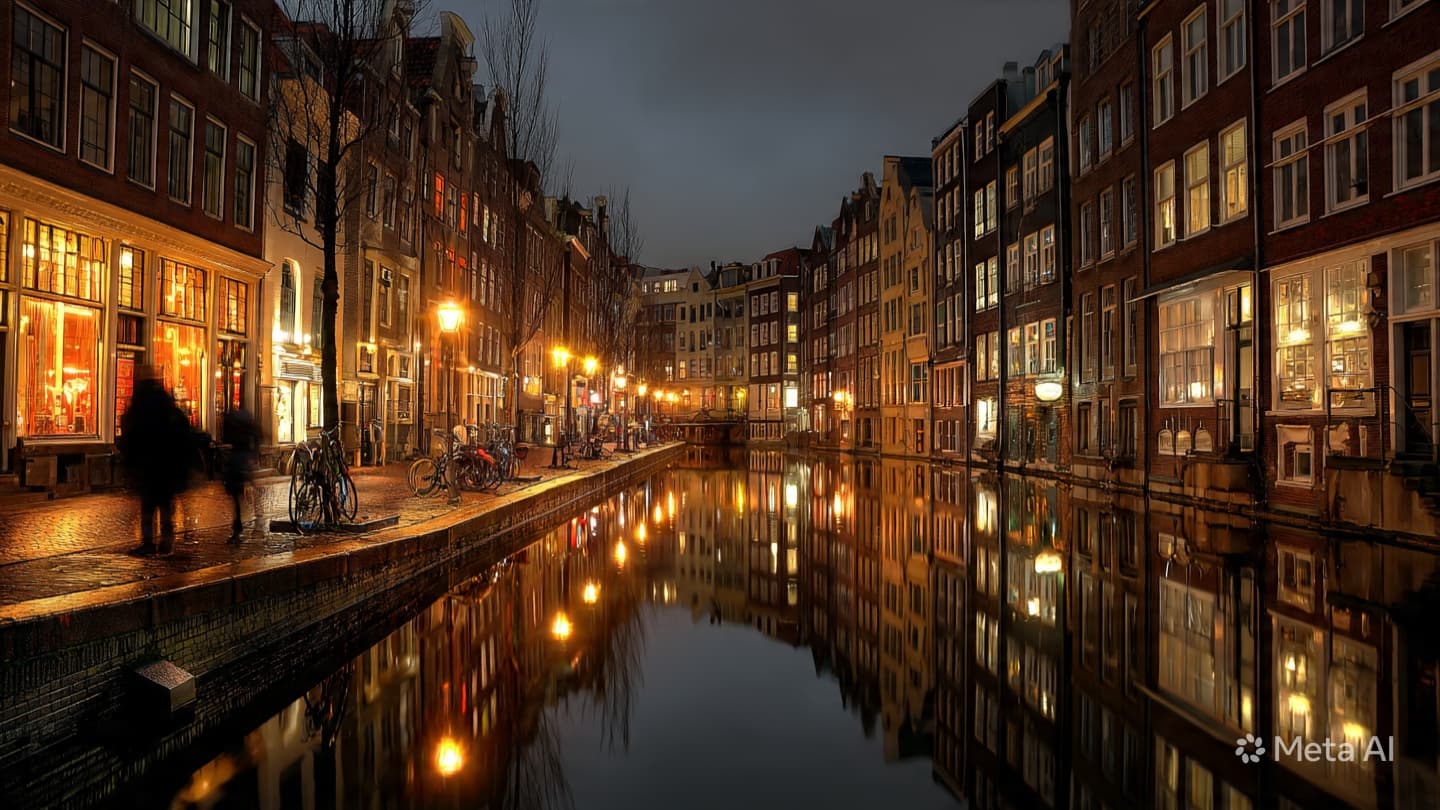
The nightlife district of Amsterdam is a breathing, fluid entity, a labyrinth of canals and cobblestones where the rhythm of the city pulses long after the sun has retreated. It is a place defined by its vibrancy, a collection of neon glows and reflected light dancing upon the dark, patient waters. Yet, within this landscape of collective movement and shared revelry, there exists a profound capacity for sudden, jarring stillness. When an encounter spirals into violence, the atmospheric shift is immediate, casting a long shadow over the very streets that usually serve as conduits for celebration.
In the aftermath of such an event, the air carries a different weight. The revelers who once populated the corners of the district find their surroundings transformed, the familiarity of the scene replaced by the stark, clinical presence of emergency boundaries. There is a sense of dislocation, as if the city itself is attempting to reconcile the brutality of the moment with the habitual peace of its nightly traditions. Investigators move with measured intent, their presence a quiet, necessary intrusion into the public space.
The nature of these encounters often defies the easy logic of the daylight hours. Within the chaotic energy of the nightlife hub, lines between interaction and confrontation can blur, dictated by the speed of the evening and the intensity of the environment. The police work of reconstruction—interviewing those who remained, reviewing the captured flickers of street-level cameras—is an act of meticulous assembly. It is a process of stitching together fractured memories to understand how a night marked by expectation turned into one of finality.
Observers within the city often grapple with the duality of these spaces. These districts are intended to be zones of liberation and social cohesion, yet they remain susceptible to the friction that inevitably arises when lives intersect in the dark. The event serves as a somber reminder of the vulnerabilities that persist, even in a city so well-versed in the management of its dense, social architecture. The silence that follows the departure of the responders is a heavy, lingering thing.
As the city returns to its standard operation, the incident remains etched into the local consciousness. It becomes part of the geography, a reference point for those who navigate these streets, a cautionary tale woven into the history of the district. The investigation provides the scaffolding for understanding, a means by which the authorities attempt to impose order on a narrative that feels inherently disordered. It is a clinical effort, focused on the accountability that must inevitably follow the loss of life.
The forensic teams operate with a detached precision, gathering physical markers that tell the story of the confrontation. Every detail, from the trajectory of the movement to the timing of the response, is analyzed to build a cohesive, undeniable record. This technical work is the necessary counterpoint to the raw, visceral experience of the event, providing the objective foundation required for the subsequent legal and social considerations that follow such incidents.
Time, in the wake of the event, seems to expand and contract. The immediate shock gives way to a period of investigation that feels both urgent and exhaustive. The neighborhood gradually reclaims its rhythm, though the memory of the encounter persists, a quiet tremor felt by those who understand the volatility inherent in the dense, late-night intersections of a major city. The city maintains its outward poise, yet the interior reality of the district is momentarily, deeply altered.
It is a sobering reality that even in the most well-regulated urban centers, the potential for discord remains a constant, silent presence. The investigation serves to bring clarity to the event, ensuring that the circumstances surrounding the death are understood with the rigor and impartiality the law demands. The focus, ultimately, is on the restoration of a baseline, a return to the normalcy that the residents and visitors of Amsterdam rightly expect, even as they carry the memory of the night’s tragedy.
Amsterdam police have confirmed the death of an individual following a violent encounter in a local nightlife district. Authorities have secured the scene and are currently conducting forensic investigations, including reviewing available surveillance footage and interviewing witnesses who were present at the time of the incident. While the investigation into the motives and circumstances of the encounter is ongoing, officials have maintained a focused presence in the area to ensure public safety and complete their collection of evidence.
Published by Banx Network. This article is part of the Banx decentralized media programme, powered by the BXE token on the XRP Ledger.
.jpg&w=3840&q=75 "Romania Passes Controversial Integrity Law for Officials to Access EU Funds")