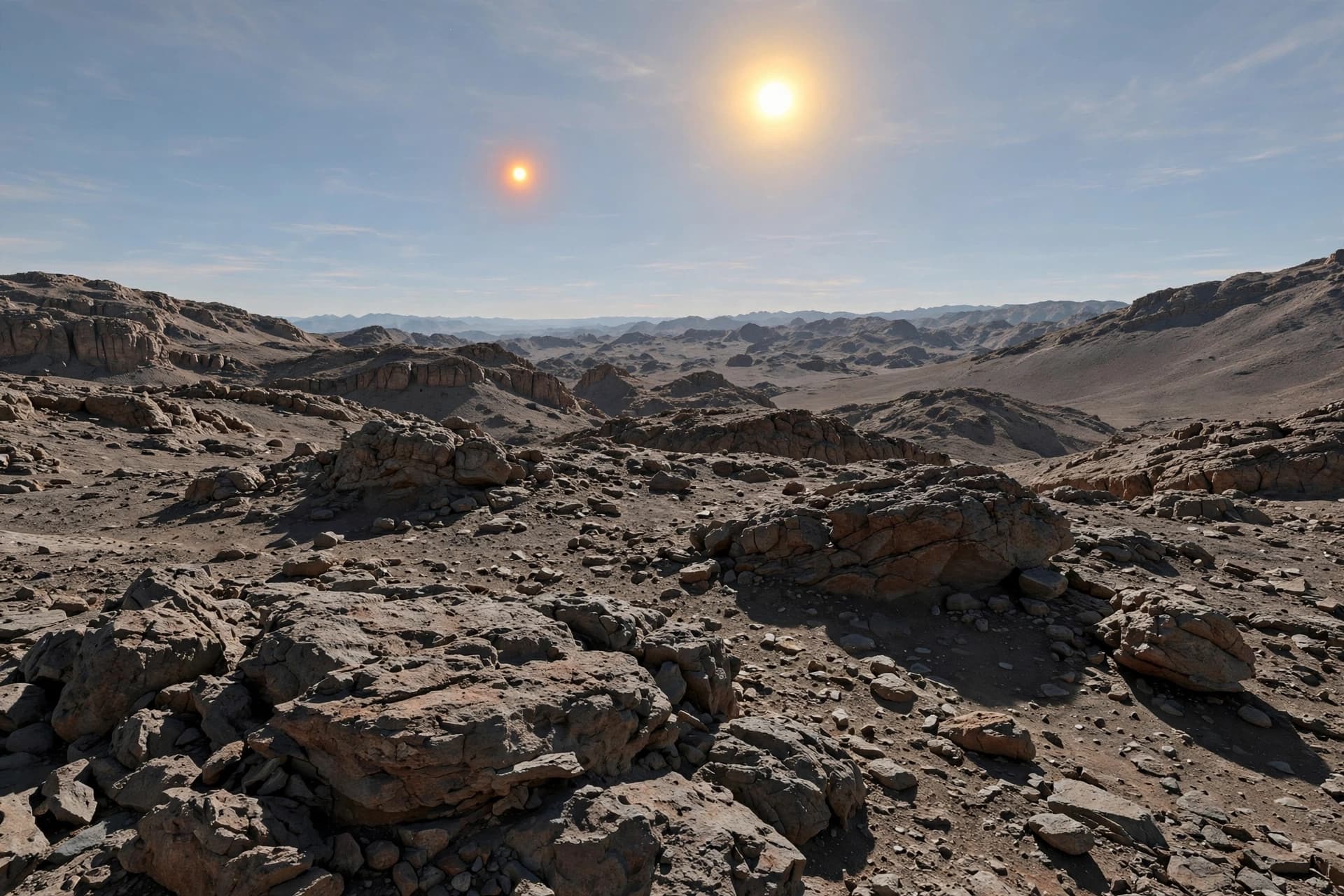
In 2025, the search for planets beyond our solar system entered a quieter yet deeper phase. Gone were the loud proclamations of discovery for discovery’s sake. In their place came something more consequential: a series of findings that subtly but decisively reshaped how scientists understand planetary systems, habitability, and cosmic diversity.
Among the most discussed was K2-18 b, a world long known but newly reinterpreted. Fresh atmospheric observations suggested the presence of complex molecules that, on Earth, are linked to biological processes. No declaration of life followed—nor was one needed. The significance lay in the reminder that habitability may not resemble Earth as neatly as once assumed.
Equally striking was TOI-2431 b, a rocky planet locked in an ultra-short orbit. Completing a full revolution around its star in just over five hours, it exists in conditions so extreme that its surface may be partially molten. Rather than an anomaly, it became a natural laboratory, offering clues about how planets survive—or fail—under relentless stellar forces.
Further out, astronomers identified TOI-4507 b, a gas giant moving along a sharply tilted orbit. Its trajectory defies classical models of planetary formation, suggesting violent past interactions or gravitational reshuffling within its system. It was a reminder that cosmic order often emerges from chaos.
Another notable discovery came with TOI-1472 c, a Neptune-class world whose density and atmospheric potential placed it squarely in the category of future study targets. Neither too large nor too small, it embodied the growing category of “in-between worlds” that challenge traditional planetary classifications.
Completing the list was HD 35843 c, a cooler exoplanet orbiting a sun-like star. Its relatively moderate environment elevated it from statistical curiosity to scientific priority, offering a rare chance to study temperate planetary climates beyond our own system.
Together, these discoveries did not offer a single dramatic revelation. Instead, they formed something quieter and more profound: a pattern. A sense that planetary systems are more diverse, more resilient, and more surprising than early models ever allowed.
In 2025, the universe did not shout. It whispered. And scientists listened.
Published by Banx Network. This article is part of the Banx decentralized media programme, powered by the BXE token on the XRP Ledger.