In the afternoon sun of late November, a residential complex in Hong Kong’s Tai Po district seemed like so many others — tall, tightly packed towers casting long shadows over life below. But behind the familiar facades and the steady rhythm of daily living, a series of oversights and longstanding practices quietly converged. When fire broke out at Wang Fuk Court, the ensuing inferno would become one of the deadliest residential blazes in the city’s history, and the questions that followed were not only about the blaze itself, but how a catastrophe of such scale could take hold.
In the years before the tragedy, the eight 31-storey towers at Wang Fuk Court — home to thousands — were placed under a citywide renovation programme aimed at bringing aging public housing up to modern standards. Like many older estates across Hong Kong, these buildings had grown familiar with the routines of maintenance, scaffolding, and protective mesh that now define so much of the city’s skyline. Yet this pattern of patchwork repairs carried hidden risks.
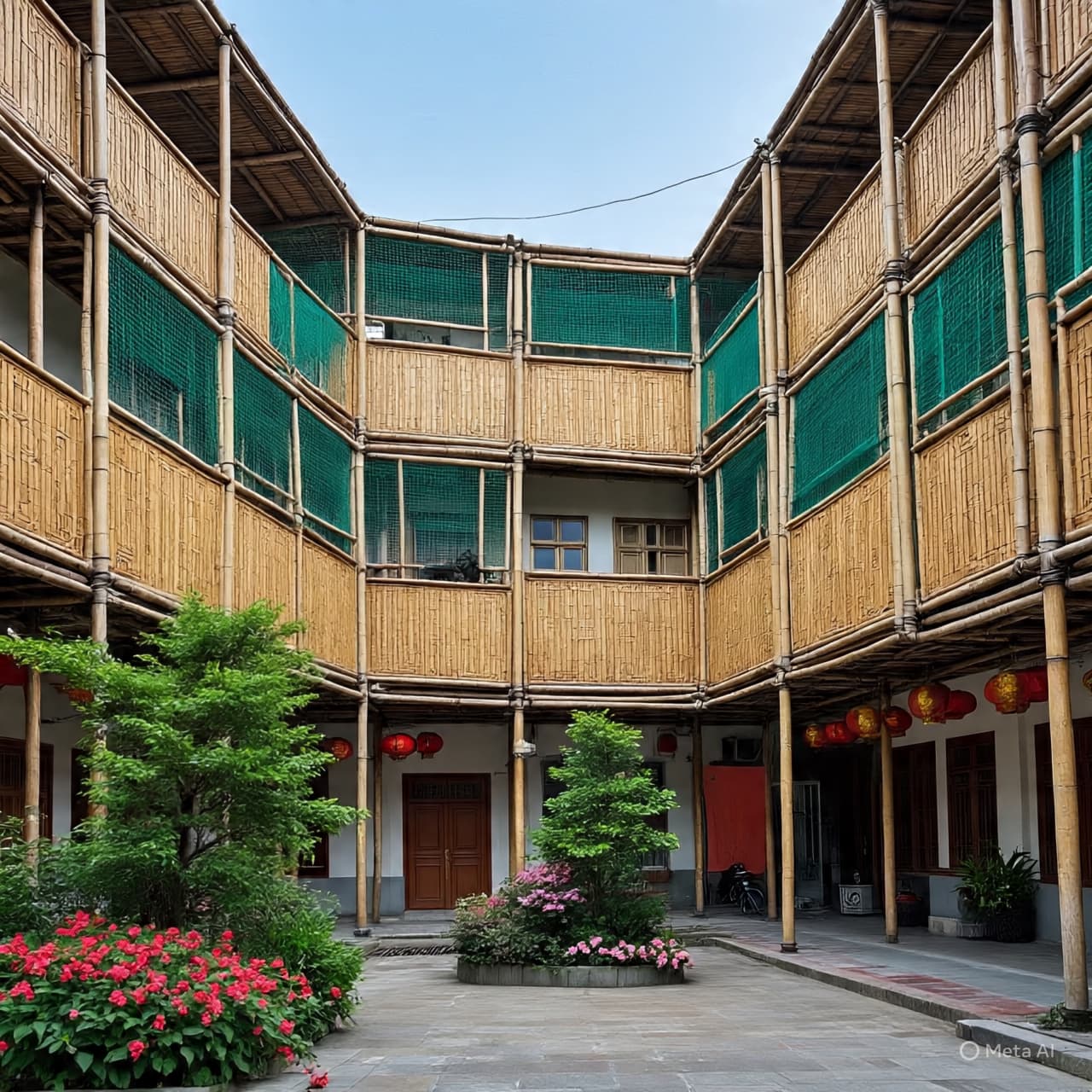
When contractors erected bamboo scaffolding wrapped in green mesh and aided by polystyrene boards, they followed long-entrenched methods — and one that, for decades, shaped the way construction and repair works were done in the city. Bamboo, praised for its light weight, flexibility, and low cost, has been a staple on Hong Kong job sites, even on high-rise towers. But while it has its virtues, critics have long cautioned that such traditional materials — particularly when combined with other flammable coverings — can accelerate the spread of fire under certain conditions.
Residents’ own worries foreshadowed the tragedy. Some questioned the choice of materials and raised concerns about the type of mesh used; at least one person on site tested a panel and found it burned easily. Yet their concerns were met with reassurances that the netting and scaffolding were compliant with existing rules, and that risk remained low. Regulatory authorities — responsible for overseeing building and worker safety — responded to complaints in ways many now acknowledge as unclear or inadequate.
Beyond the choice of scaffolding and materials, other gaps emerged. Alarm systems across the eight blocks reportedly failed to function when fire erupted, robbing residents of early warning and valuable evacuation time. Investigators also noted that protective nets and other coverings did not meet the required fire-retardant standards, and that some tests and certificates about material safety may have been falsified.
These technical failures were compounded by organisational ones: oversight was fragmented across multiple departments, each with its own purview and protocols, and coordination among them was limited. In practice, this meant that concerns raised about scaffolding and materials did not lead to meaningful action before flames found their way into the towers.
When the fire began on an afternoon and rapidly climbed the scaffolding and netting, its spread was astonishing. Within hours, the blaze consumed seven of the eight residential blocks, overwhelming evacuation routes and trapping residents at upper levels. Over a period of more than 40 hours, the flames claimed well over a hundred lives and left devastation in their wake — a toll that would form a somber chapter in Hong Kong’s history.
In the immediate aftermath, authorities made arrests linked to alleged gross negligence by the construction firm overseeing the renovation. Public debate — often muted in the tightly controlled civic environment — began to circle questions long avoided: Why were potentially flammable materials permitted? Why did alarm systems fail? How did regulatory checks miss critical vulnerabilities? And most importantly, how many warnings were there before the fire, and why were they not heeded?
As Hong Kong confronts its grief, the inferno in Tai Po stands not only as a tragedy of flame and smoke, but as a reflection of systemic lapses. It is a reminder that safety in dense urban landscapes depends not just on modern standards, but on vigilance, transparent oversight, and the willingness to listen — especially to voices raised early. In looking back, the deeper questions remain about how structures meant to shelter became sites of such profound loss.
AI Image Disclaimer Visuals are AI-generated and intended for representation, not actual photographs.
Sources (News Names Only) South China Morning Post Reuters Al Jazeera ABC News Gulf News
Published by Banx Network. This article is part of the Banx decentralized media programme, powered by the BXE token on the XRP Ledger.