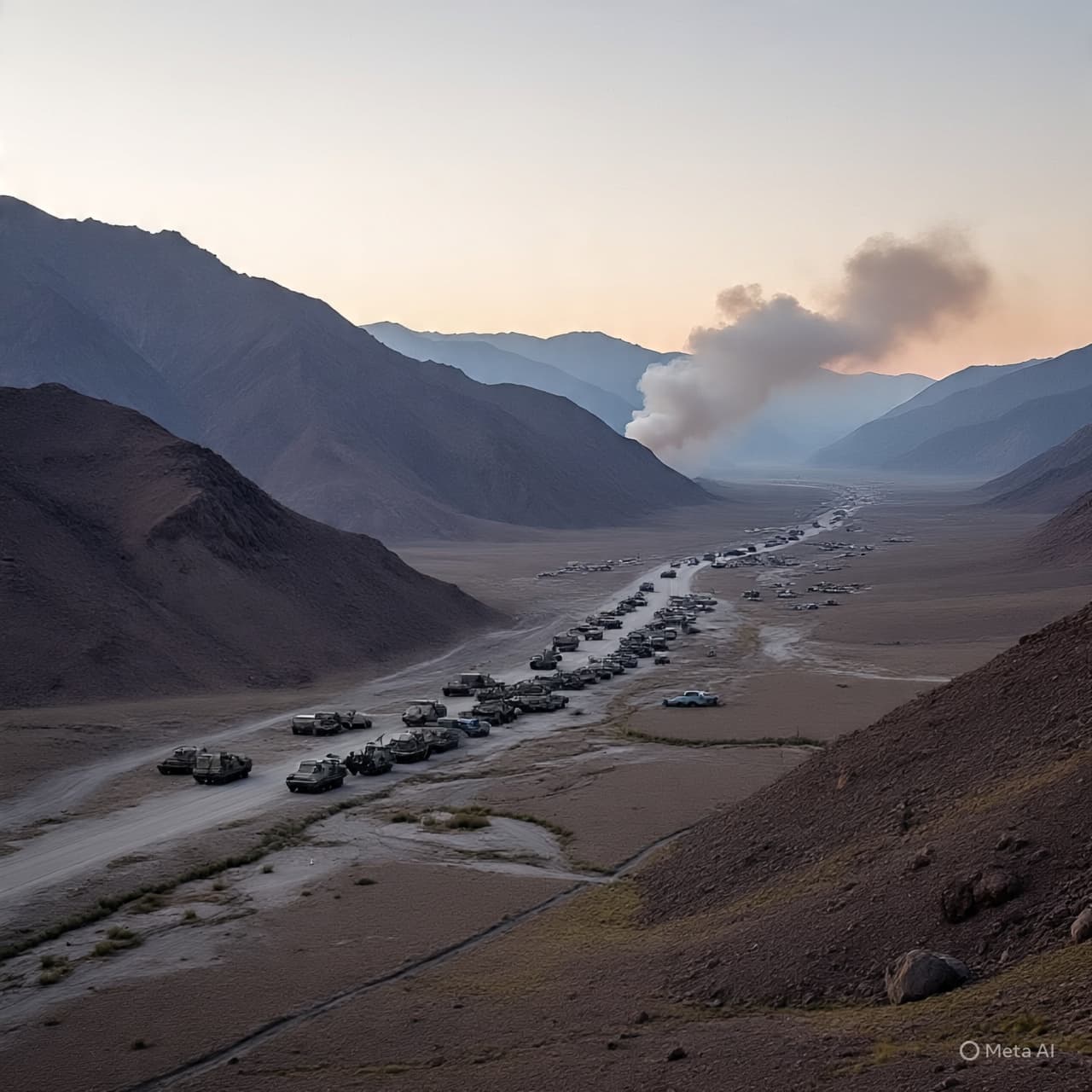
There are moments in history when borders cease to be lines on a map and instead become tremors felt in the quiet corners of ordinary lives. Mountains that once stood as silent witnesses to shifting empires now echo with the thunder of artillery. Between Pakistan and Afghanistan, a frontier long shaped by memory, mistrust, and shared bloodlines has again become the stage for uneasy headlines. Pakistan’s reported strikes on 22 locations across Afghanistan mark a serious escalation in a relationship already strained by years of tension. According to officials in Islamabad, the operations targeted militant hideouts believed to be responsible for cross-border attacks. Yet amid the smoke and statements, at least 12 Pakistani soldiers have reportedly lost their lives — a reminder that military calculus rarely shields those on the front lines from sacrifice. The geography between the two nations is rugged, but the politics are even more so. Since the return of the Taliban to power in Kabul in 2021, Islamabad has voiced repeated concerns over militant groups allegedly operating from Afghan territory. Pakistani officials argue that armed factions use the porous border as a corridor for planning and launching attacks. Kabul, for its part, has often denied harboring such elements, urging dialogue instead of force. In recent months, violence along the frontier has intensified. Each incident seems to layer fresh distrust upon old grievances. Pakistan’s security establishment views decisive action as necessary to deter further incursions. Afghanistan’s leadership, navigating its own fragile domestic order, faces pressure to assert sovereignty while managing complex internal dynamics. The tragedy of the 12 soldiers lost underscores a central paradox: operations meant to reinforce security can deepen instability if not accompanied by diplomacy. Military action may quiet one valley, yet stir unease in another. Civilians living near the border — farmers, traders, families with relatives on both sides — often become silent stakeholders in decisions made far from their homes. For Islamabad, the strikes signal resolve. For Kabul, they raise questions of territorial integrity. For the wider region, they evoke concerns about a cycle that has proven difficult to break. The international community has long watched the Afghanistan-Pakistan frontier as both a fault line and a bridge — a place where cooperation is possible, yet confrontation too easily ignited. Still, even amid hardened rhetoric, channels of communication have not entirely closed. History suggests that periods of sharp escalation are often followed by cautious recalibration. Both capitals understand that prolonged conflict along the border would strain already fragile economies and complicate regional diplomacy. As reports continue to emerge and details are clarified, the immediate focus remains on security assessments and diplomatic responses. What unfolds next will depend not only on strategic calculations but also on the willingness of both governments to balance firmness with restraint. In a landscape where mountains remember every echo, the choices made today may resonate far beyond this week’s headlines.
AI Image Disclaimer
Visuals are created with AI tools and are not real photographs.
SOURCE CHECK
Credible mainstream and regional media covering this development include: Reuters Al Jazeera BBC News Dawn The Associated Press
Published by Banx Network. This article is part of the Banx decentralized media programme, powered by the BXE token on the XRP Ledger.
.jpg&w=3840&q=75 "Blake Lively Awarded $400,000 in Legal Fees After Justin Baldoni Lawsuit Dismissed")