
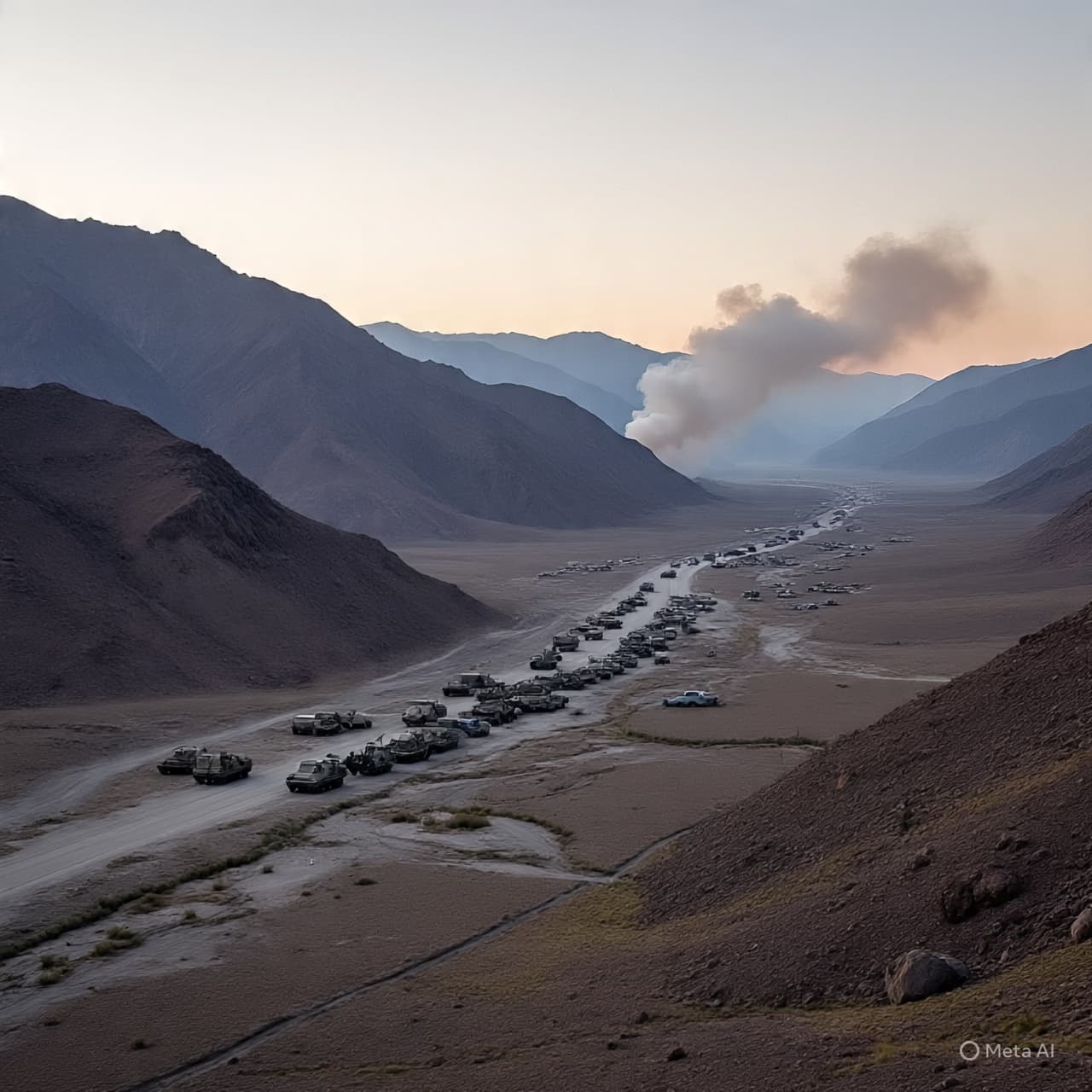
Key Highlights
- Pakistan's military strikes on 22 locations in Afghanistan mark a significant escalation in border tensions.
- At least 12 Pakistani soldiers have reportedly died amid the operations targeting militant hideouts.
- The complex relationship between Pakistan and Afghanistan continues to evolve, shaped by historical grievances and current political dynamics.
The recent military strikes by Pakistan across Afghanistan have underscored the fragile nature of the border between the two nations. On February 22, 2026, Pakistan reportedly targeted 22 locations believed to harbor militants responsible for cross-border attacks. This marked a serious escalation in a relationship already strained by years of mutual distrust and conflict. According to officials in Islamabad, the operations aimed to dismantle militant hideouts, yet the loss of at least 12 Pakistani soldiers serves as a stark reminder of the human cost of military engagements.
The rugged geography of the Afghanistan-Pakistan border has long been a battleground for various factions, with the return of the Taliban to power in Kabul in 2021 exacerbating tensions. Islamabad has repeatedly expressed concerns over militant groups allegedly operating from Afghan territory, claiming that these factions utilize the porous border to plan and execute attacks. Conversely, the Taliban leadership in Kabul has consistently denied harboring such elements, advocating for dialogue over military action.
In recent months, violence along the border has intensified, with each incident compounding existing grievances. The Pakistani security establishment views decisive military action as essential to deter further incursions, while Afghanistan's leadership grapples with its own internal challenges and the need to assert sovereignty. This precarious balance complicates the already intricate dynamics of the region.
The tragic loss of Pakistani soldiers highlights a central paradox: military operations intended to enhance security can inadvertently deepen instability if not paired with diplomatic efforts. While military action may temporarily quell unrest in one area, it can provoke anxiety in another. Civilians living near the border—farmers, traders, and families with ties across the divide—often find themselves caught in the crossfire of decisions made far from their homes.
For Islamabad, these strikes signal a commitment to national security. For Kabul, they raise critical questions about territorial integrity and sovereignty. The broader region watches with concern, aware that the cycle of violence and retaliation is difficult to break. The Afghanistan-Pakistan frontier has long been viewed as both a fault line and a potential bridge for cooperation, yet the risk of confrontation remains ever-present.
Despite the hardened rhetoric, channels of communication between the two governments have not entirely closed. Historical patterns suggest that periods of heightened tension are often followed by cautious recalibration. Both Islamabad and Kabul recognize that prolonged conflict along the border could strain their already fragile economies and complicate regional diplomatic efforts.
As new reports emerge and details are clarified, the immediate focus will likely shift to security assessments and diplomatic responses. The unfolding situation will depend not only on strategic calculations but also on the willingness of both governments to balance firmness with restraint. In a landscape where mountains bear witness to every echo of conflict, the choices made today may resonate far beyond this week's headlines.
Published by Banx Network. This article is part of the Banx decentralized media programme, powered by the BXE token on the XRP Ledger.



