High above the contours of the Andes, where the Earth exhales through fire and ash, the atmosphere quietly records each event. What appears as a localized eruption can, over time, ripple outward, touching climates far beyond its origin.
Recent scientific findings suggest that volcanic ash emitted from eruptions in the Andes may have contributed to a measurable cooling effect on global temperatures. The research points to fine particles released into the upper atmosphere, where they interact with sunlight.
When volcanic ash and sulfur dioxide reach high altitudes, they can form aerosols that reflect solar radiation back into space. This process reduces the amount of heat absorbed by the Earth’s surface, creating a temporary cooling effect.
Studies analyzing atmospheric data and climate models indicate that eruptions in the Andes have played a role in such processes, particularly during periods of increased volcanic activity. While the cooling effect is typically short-lived, its impact can be significant on a global scale.
Scientists emphasize that these natural mechanisms are part of a broader system in which volcanic activity influences climate variability. Historical examples, such as major eruptions in other parts of the world, have demonstrated similar patterns of temporary global cooling.
However, researchers caution against viewing volcanic activity as a counterbalance to long-term climate change. The cooling effects are transient and cannot offset the sustained warming driven by greenhouse gas emissions.
The Andes, stretching along the western edge of South America, remain one of the most volcanically active regions on the planet. Ongoing monitoring helps scientists better understand how eruptions influence both regional environments and global atmospheric conditions.
By examining ash dispersion and atmospheric chemistry, researchers continue to refine their understanding of how localized geological events can resonate across the planet’s climate system.
The findings highlight the complex interplay between Earth’s natural processes and global climate, offering insight into how even distant eruptions can leave a subtle imprint on planetary temperatures.
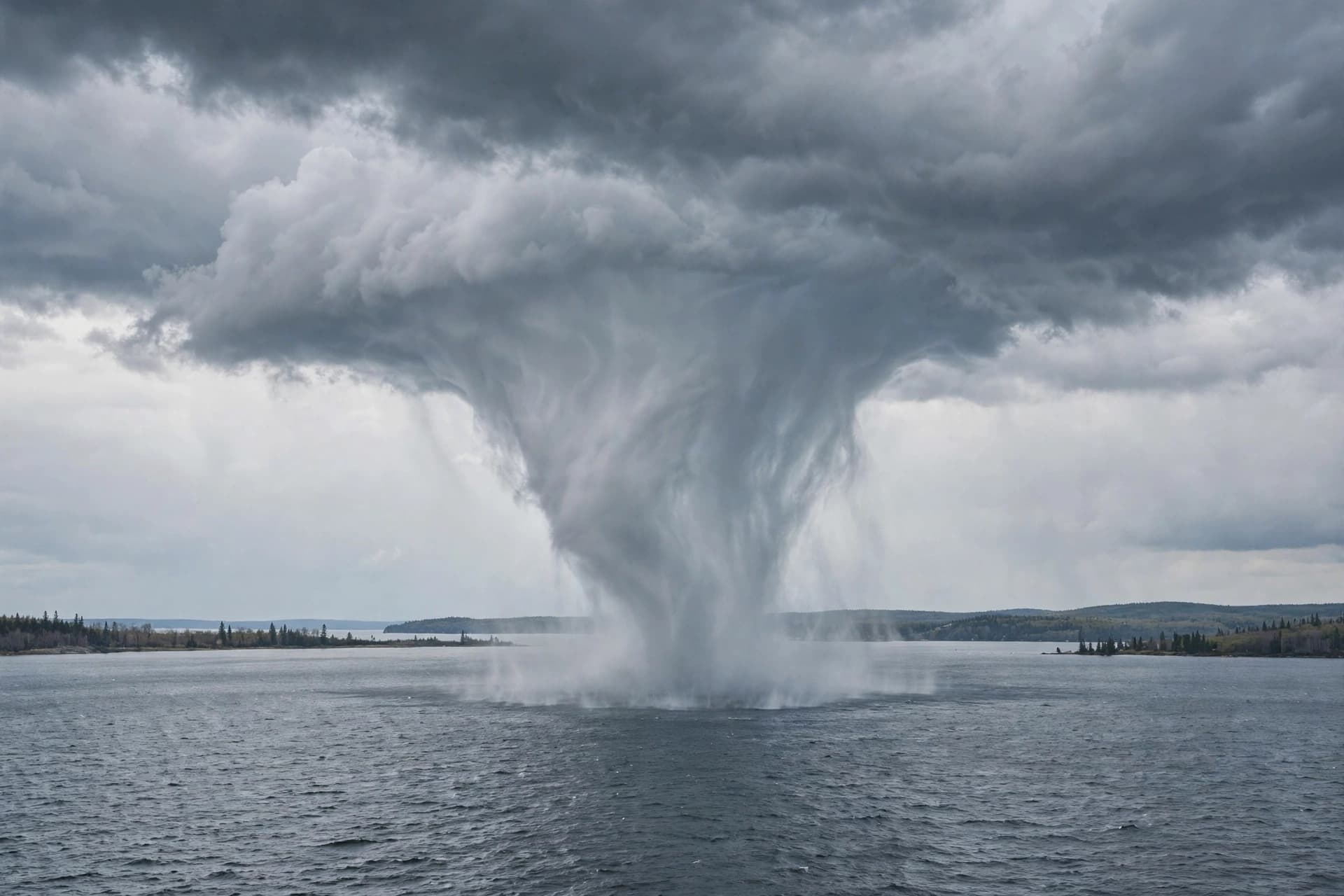
AI Image Disclaimer: These images are AI-generated representations designed to visualize the topic and may not depict actual events.
Sources: Nature NASA Scientific American
Published by Banx Network. This article is part of the Banx decentralized media programme, powered by the BXE token on the XRP Ledger.