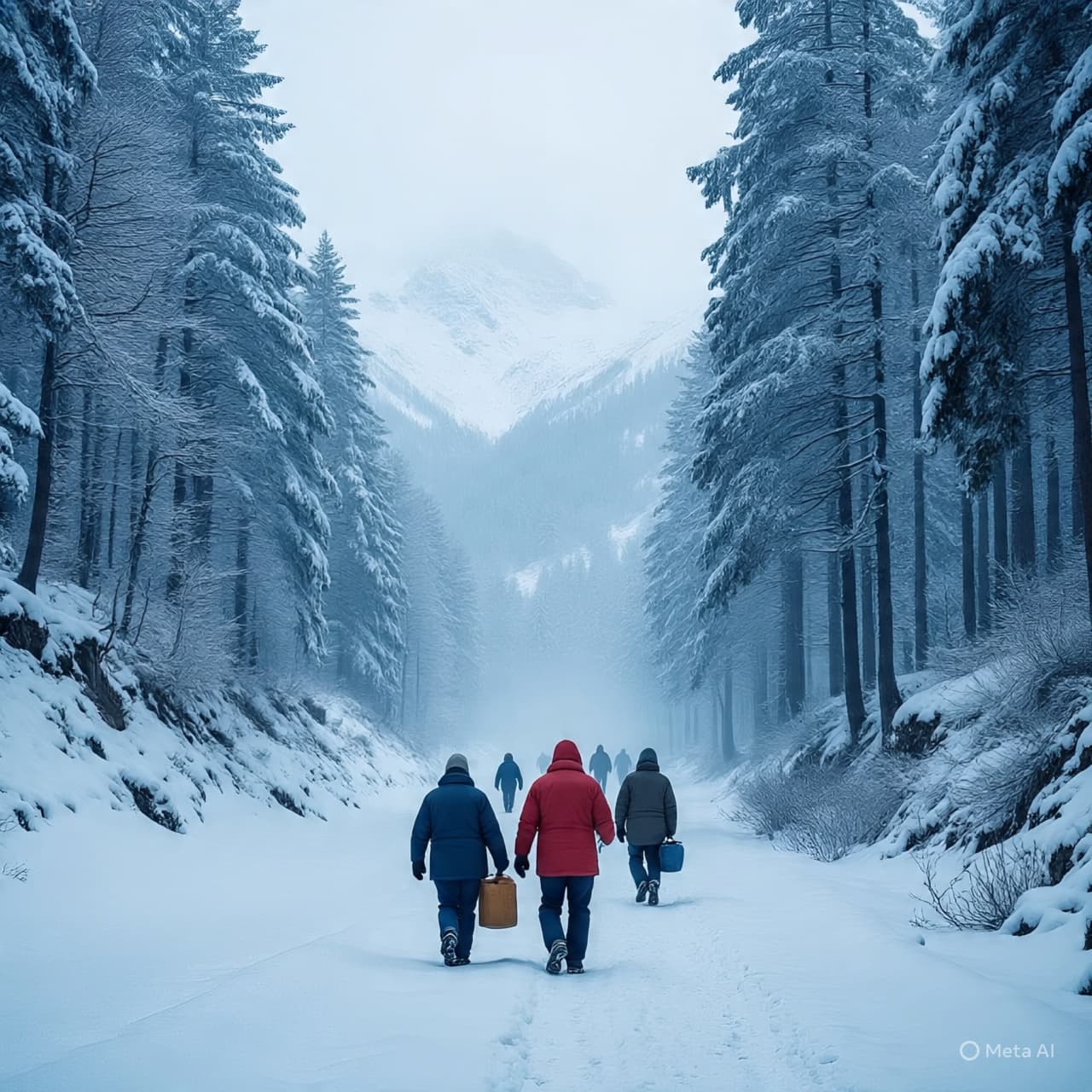
In the vast sweep of Pakistan’s northwestern hills, where ridges meet the sky and snow blankets the earth in a hush, the footprints of families tell a story of movement more than rest. The Tirah Valley, long shaped by seasons and seasonal rhythms of life, has suddenly been redrawn by another force — not merely the cold winds of winter, but the anxiety of displacement that many residents say came without invitation or clear destination. Here, the quiet narrative of departure threads through conversations, tents, and the soles of shoes trudging down snowy mountain paths.
In recent weeks, tens of thousands of people — most of them women, children, and the elderly — have left their homes in this highland region of Khyber Pakhtunkhwa, seeking shelter and support in towns like Bara and Peshawar after announcements from local mosques warned of possible military action against militant groups. Residents described the movement as an urgent and fraught journey through snow-covered tracks, their minds tethered between the instinct to stay among familiar walls and the need to seek safety elsewhere. These journeys unfolded against a backdrop where winter’s cold and fear of conflict converged to shape choices that many said were out of sheer necessity.
Amid this exodus, authorities in Islamabad have maintained that there is no large-scale military operation ordered or underway in Tirah. Pakistan’s Defence Minister publicly denied that army forces mobilized any broad offensive and framed the movement of families as a routine or seasonal migration driven by harsh winter conditions and local security concerns rather than by a state-led push. Local officials and federal spokespeople emphasized that only targeted, intelligence-based efforts against militants have taken place — operations they said did not require organized displacement of civilians.
This contrast of narratives — one of voluntary departure and seasonal tradition, the other of displacement sparked by fear and insecurity — has shaped public discourse across political lines. The provincial government of Khyber Pakhtunkhwa has rejected the federal framing, asserting that many families felt they had little choice but to leave in anticipation of escalation. Tribal elders, displaced parents, and community members spoke of treacherous conditions on mountain roads, children suffering from cold, and food shortages that compounded their fear — experiences that seemed to push beyond what older seasonal migration patterns might explain.
Humanitarian challenges have compounded the situation. In reception centers and temporary shelters, basic services are stretched and families wait for aid, warmth, and clarity about what comes next. Aid registration centers have struggled to keep pace with the influx, and winter’s chill adds another layer of urgency to providing blankets, food, and medical support to those who arrived weary from long walks through biting cold.
In Tirah, where mountains have long shaped both life and lore, the movement of people now marks a new chapter in the valley’s history — one that blends the age-old rhythms of this landscape with the sharper uncertainties of modern security threats and competing political narratives.
Today, officials continue to exchange statements about the nature of the displacement, and communities remain in flux, caught between the hope of return and the reality of temporary refuge. The stories of those who left weave a quiet testament to resilience and the search for safety, even when the path forward is unpaved and uncertain.
AI Image Disclaimer “Visuals are created with AI tools and are not real photographs.”
Source Reuters Dawn NewsDay AtlasPress News Khaama Press
Published by Banx Network. This article is part of the Banx decentralized media programme, powered by the BXE token on the XRP Ledger.