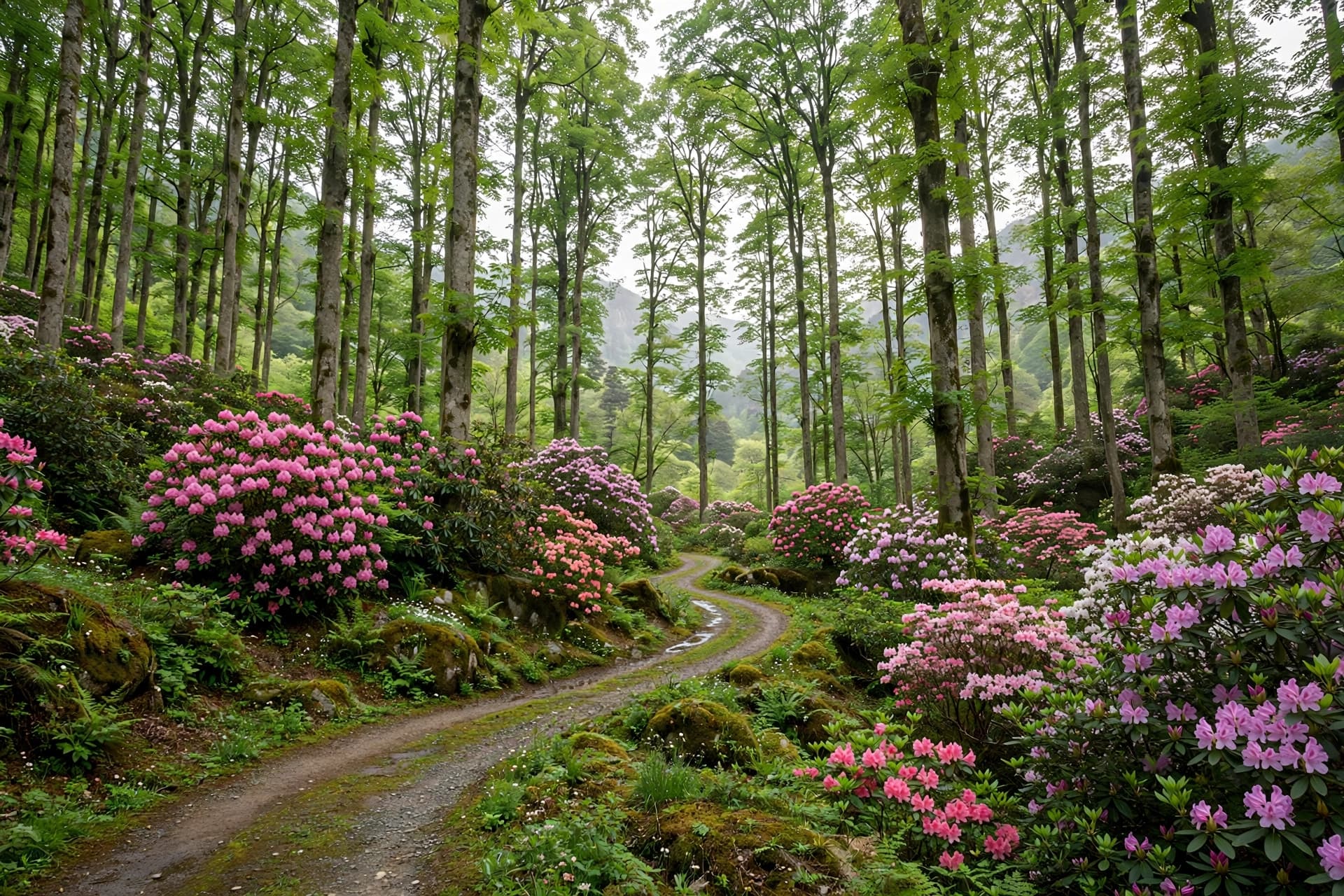
In the far north, where spruce and pine stand in long, quiet ranks beneath pale skies, change rarely announces itself loudly. The boreal forest — stretching across Canada, Scandinavia, and Siberia — moves to a slower rhythm. Yet even here, where winters are long and soil thaws cautiously each spring, the chemistry of the air is quietly rewriting the terms of growth.
As atmospheric carbon dioxide levels continue to rise, the prevailing assumption has often been simple: more CO₂ means more plant growth. After all, carbon dioxide is the raw ingredient of photosynthesis, the invisible currency plants exchange for energy. But new research suggests the story unfolding in boreal forests is more intricate. Elevated CO₂ may indeed stimulate tree growth initially — yet over time, it appears to reduce the availability of nitrogen, a nutrient essential for sustaining that growth.
Nitrogen is the quiet partner in the forest’s productivity. It shapes leaf formation, drives protein synthesis, and determines how efficiently trees can turn sunlight into biomass. In boreal ecosystems, where soils are cold and decomposition proceeds slowly, nitrogen is already scarce. The system functions like a carefully balanced ledger, with limited nutrient turnover and modest rates of renewal.
When atmospheric CO₂ increases, trees may respond by accelerating photosynthesis, drawing more carbon into their tissues. But this surge in growth can heighten demand for nitrogen — a resource that does not increase at the same pace. Over time, researchers have observed a pattern known as “progressive nitrogen limitation,” where the ecosystem’s nutrient supply struggles to keep up with carbon-driven expansion.
This imbalance has consequences. As nitrogen becomes relatively scarcer, tree growth gains may taper off. Leaves may contain lower nitrogen concentrations, potentially affecting their nutritional quality and the broader food web. Microbial communities in the soil, which help recycle organic matter into usable nutrients, may also shift in response to altered carbon and nitrogen dynamics.
The findings challenge the comforting notion that rising CO₂ will automatically strengthen forests as carbon sinks. Boreal forests currently store vast amounts of carbon in both vegetation and soil. If nitrogen availability constrains long-term growth, the capacity of these ecosystems to absorb additional atmospheric carbon could be less robust than once assumed.
Researchers emphasize that the process is gradual and complex. Soil temperature, moisture levels, fire regimes, and species composition all interact with nutrient cycles. Climate warming may accelerate microbial activity, potentially increasing nitrogen mineralization in some regions. Yet warming can also intensify drought stress or disturbances, complicating the outcome.
What emerges is not a simple reversal of benefit, but a layered narrative. Elevated CO₂ may act like a short-term boost, encouraging trees to stretch skyward. But without sufficient nitrogen to sustain that momentum, the forest’s response becomes moderated — a reminder that ecosystems operate within interconnected constraints.
For policymakers and climate scientists, these insights refine projections of the global carbon cycle. Boreal forests represent one of Earth’s largest terrestrial carbon reservoirs. Understanding how nutrient limitations influence their response to atmospheric change is critical for modeling future climate scenarios.
In the end, the boreal forest’s quiet resilience remains. The trees still rise from thawing soils, and the seasonal cycle continues. Yet beneath the canopy, subtle chemical negotiations are underway — a balancing act between carbon and nitrogen, abundance and limitation.
As atmospheric CO₂ climbs, the lesson is not one of simple gain or loss. It is a reminder that growth, in nature, depends not on one element alone, but on harmony among many.
AI Image Disclaimer Images in this article are AI-generated illustrations, meant for concept only.
Source Check — Credible Coverage Found
This topic is supported by strong scientific and mainstream reporting:
Nature Science The New York Times (Climate & Science) Scientific American BBC News
Published by Banx Network. This article is part of the Banx decentralized media programme, powered by the BXE token on the XRP Ledger.