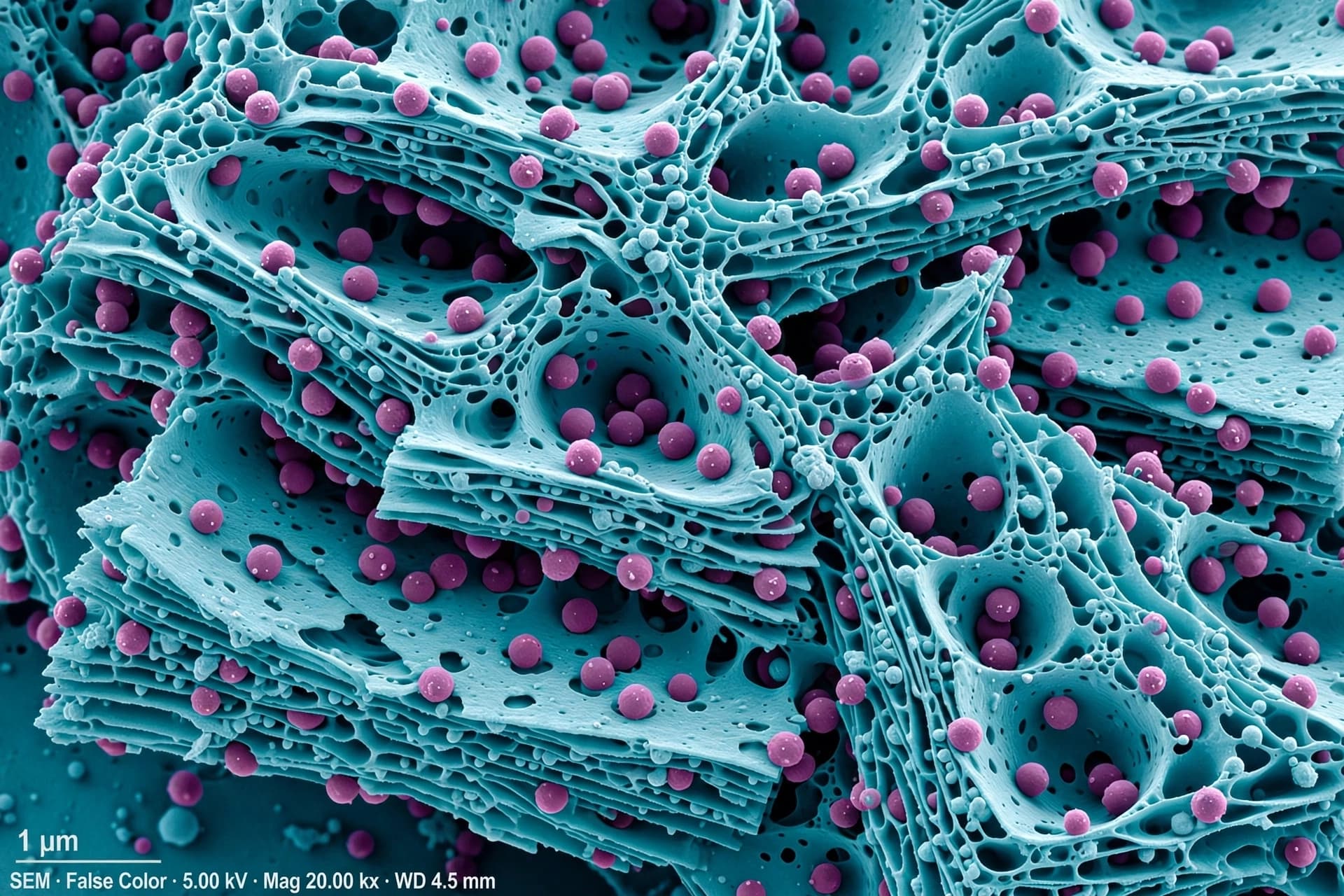
There are moments in science that unfold like the gentle opening and closing of a flower’s petals — small, rhythmical, almost mundane in appearance, yet rooted in processes essential to life itself. Researchers at The University of Osaka have brought one such moment to light in the world of nanotechnology, revealing a membrane that seems to “breathe” on its own. This isn’t poetry; it’s a carefully engineered material that opens and closes its tiniest pores through chemistry alone, echoing the dynamic behavior of biological systems that regulate flow with remarkable precision.
In living cells, ion channels — narrow passageways that let charged particles drift in and out — are vital for everything from nerve impulses to muscle contraction. These channels open and close in response to environmental cues, ensuring that the right signals pass through at the right time. Inspired by nature’s elegance, scientists led by Makusu Tsutsui and colleagues have developed a solid-state analogue that mimics this behavior at a scale approaching the subnanometer — nearly the width of a single atom.
The breakthrough lies in using tiny electrochemical reactions within a silicon nitride membrane to form ultrasmall pores that can change their state. When a negative voltage is applied, a chemical precipitate grows inside the pore, gradually blocking it and stopping the passage of ions. When a positive voltage is applied, the precipitate dissolves, reopening the pathway. This process can repeat hundreds of times, demonstrating both controllability and robustness.
The resulting “breathing” membrane behaves in ways reminiscent of biological systems. Ion currents measured across it showed spikes similar to those seen in natural ion channels — hinting that this artificial structure not only physically opens and closes but can replicate the electrical patterns associated with living cells.
One of the appealing aspects of this chemically driven mechanism is its tunability. By adjusting the composition and pH of the solutions involved, researchers were able to alter the size and behavior of the ultrasmall pores, effectively selecting which ions could pass through and under what conditions. Such flexibility points to potential applications far beyond basic research, including ultra-precise sensing technologies and responsive nanodevices.
For example, one of the most exciting possibilities lies in single-molecule sensing, where nanopores are already used to sequence DNA by detecting individual bases as they pass through tiny openings. A system that can self-adjust pore size or state could offer a new level of control and sensitivity. Another area of interest is neuromorphic computing, where devices emulate the electrical “spikes” of neurons; this membrane’s behavior suggests it could serve as a physical platform for mimicking synaptic activity.
Moreover, designing membranes capable of controlled pore dynamics could spur innovations in nanoreactors, where reactions occur in highly confined spaces that alter chemical pathways in useful ways. By mimicking biological gating mechanisms, such systems might achieve levels of selectivity and efficiency that static materials cannot.
While the work is still fundamentally at a proof-of-concept stage, it reflects a growing trend in materials science: drawing inspiration from nature not just in form, but in function. Biological membranes do not merely separate environments; they regulate interactions based on chemical and electrical signals. Creating artificial materials that operate on comparable principles opens a window into technologies that could bridge synthetic and living systems.
Scientists emphasize that the research was published in Nature Communications and represents a collaborative effort to expand our understanding of ion transport and confined fluids at scales where quantum and molecular forces begin to dominate. The findings are expected to influence both theoretical studies and experimental designs in nanotechnology.
In straightforward terms, researchers have developed a chemistry-powered membrane that autonomously opens and closes subnanometer pores in response to electrical stimuli, offering a solid-state analogue to biological ion channels with promising applications in sensing, computing, and reaction control.
AI IMAGE DISCLAIMER Visuals are created with AI tools and are not real photographs.
Here are the verified sources (media names only, no links):
Phys.org
Asia Research News
Nature Communications
ScienceDaily
EurekAlert
Published by Banx Network. This article is part of the Banx decentralized media programme, powered by the BXE token on the XRP Ledger.