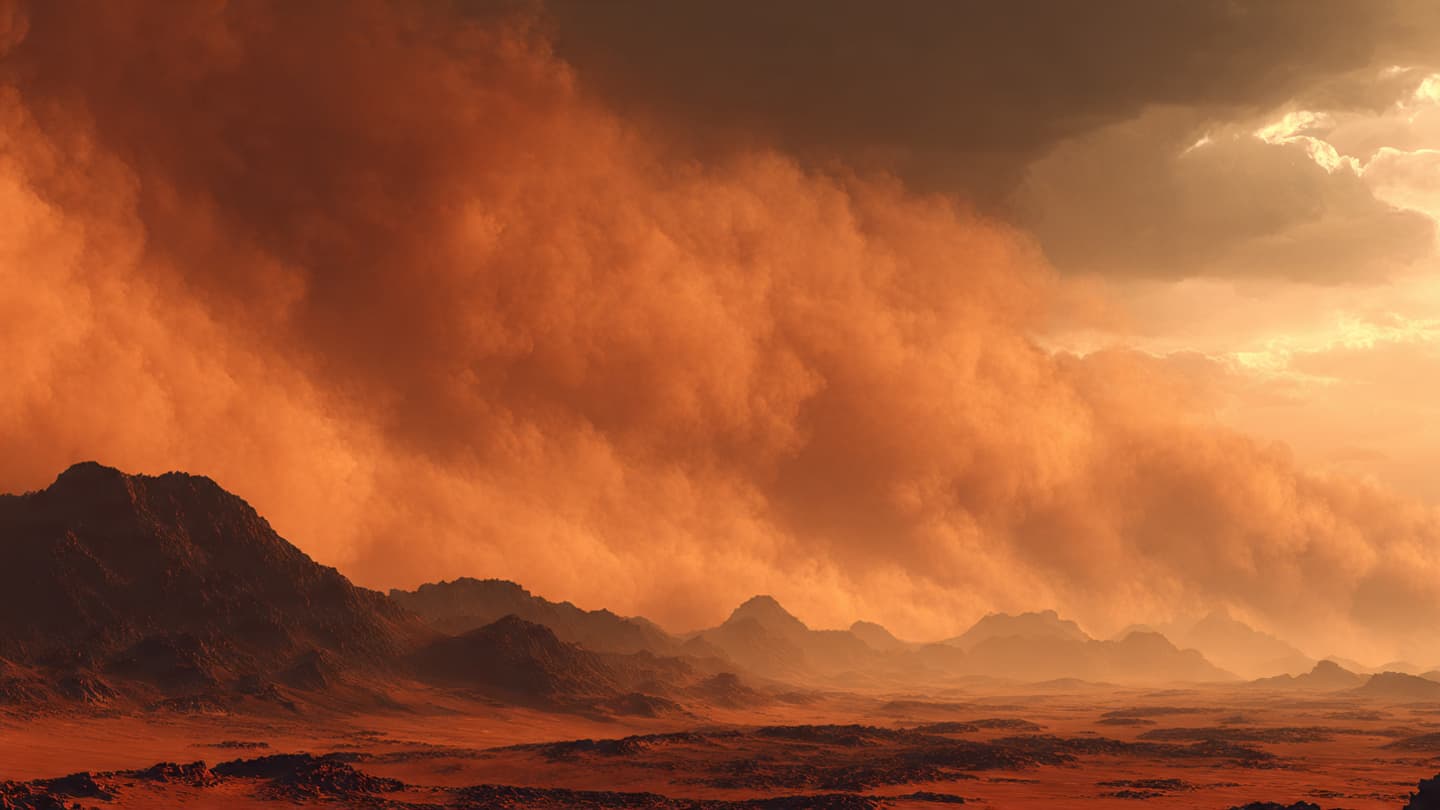
Mars has long been imagined as a quiet desert world, where winds are faint and time seems to move slowly across its rust-colored surface. Yet careful observation continues to reveal that even quiet planets are never truly still.
Recent data from NASA orbiters and rovers, reported through scientific channels such as JPL and ScienceDaily, suggest that Mars is experiencing unusual atmospheric variations. These include unexpected shifts in dust distribution, temperature gradients, and localized pressure changes.
Scientists studying Martian weather systems note that while seasonal dust storms are expected, some recent patterns appear more complex than standard models predict. These variations may be influenced by interactions between solar radiation and surface dust composition.
The Martian atmosphere, though thin compared to Earth’s, is highly sensitive to temperature differences and solar activity. This sensitivity can produce rapid changes in wind behavior and dust movement across large regions.
Researchers are particularly interested in how these patterns evolve over time, as they may help refine climate models for Mars and improve understanding of planetary atmospheres in general.
While no evidence suggests sudden or extreme planetary transformation, the data highlights that Mars remains an active system with ongoing atmospheric processes that are not yet fully understood.
Future missions and continued monitoring are expected to provide higher-resolution data that could clarify these observations.
Mars continues to offer quiet surprises, reminding scientists that even distant worlds carry rhythms and changes waiting to be decoded.
AI Image Disclaimer: Images in this article are AI-generated for editorial visualization purposes.
Sources: NASA JPL, ScienceDaily, Nature Astronomy, ESA Mars Express
Published by Banx Network. This article is part of the Banx decentralized media programme, powered by the BXE token on the XRP Ledger.