In conversations about work and the future, bold predictions often spark both excitement and unease. Recently, a senior leader at Microsoft — the company helming some of the most cutting-edge artificial intelligence development — shared a stark forecast: within roughly 18 months, AI could be capable of handling most “white-collar” work that today occupies lawyers, accountants, analysts, and many knowledge-based professionals.
This kind of projection invites reflection because it touches at the heart of how we think about work, purpose and progress. For decades, tools have reshaped particular tasks — calculators changed arithmetic, word processors replaced typewriters, and spreadsheets transformed accounting. What’s different now is scale: advanced AI systems can write reports, summarize documents, analyze data, draft code, and even generate creative content in ways that feel close to what human professionals do day to day.
When leaders talk about widespread automation of white-collar work, they are not simply imagining replacing people with machines. They are describing a world where routine tasks — those that follow patterns, rely on data and can be described in rules or examples — are increasingly handled by systems that learn from vast amounts of information. In fields like law, drafting a motion or reviewing contracts can be time-consuming; in finance, reconciling figures or generating forecasts can be repetitive. AI tools are already assisting in these areas now, and the prediction is that these capabilities will grow sharper and broader.
For workers, this future can feel personal. Many people take pride in mastering their craft, solving problems that require judgment and deep understanding. The idea that software might soon perform much of the work that once took years of training raises questions: what roles will humans play when systems can generate much of the output? Will professionals shift toward oversight, ethical decision-making, and human connection? Or will new forms of expertise emerge entirely?
History offers perspective. Past waves of automation — from agricultural machinery to factory robotics — transformed societies in ways both beneficial and challenging. New jobs emerged even as old ones faded; skills shifted; education adapted. The pace of change is often the part that feels most unsettling. When transformations unfold slowly, workers and institutions have time to adjust. When they happen quickly, the transition can feel abrupt.
Leaders who forecast rapid automation often emphasize augmentation as much as replacement: AI tools that help people do their jobs better, faster and with fewer errors. In design, medicine, journalism, and research, professionals are using AI to draft ideas, simulate scenarios, and explore more possibilities in less time. In this view, AI becomes a collaborator rather than a competitor.
Still, even collaborative automation has implications. Organizations may redesign roles, emphasize new kinds of training, and rethink how teams operate. Universities might introduce curricula focused not just on domain knowledge but on working alongside intelligent systems. Companies may invest more in human skills that computers find hard to replicate — empathy, cultural insight, and nuanced judgment.
Public policy and community conversations are part of the picture, too. If broad swaths of white-collar work become easier to automate, questions arise about income distribution, retraining opportunities, and how societies support people through periods of transition. These are not questions for technology companies alone; they involve workers, educators, employers, and governments.
At its core, the prediction about 18 months is a prompt to think about readiness rather than inevitability. It invites us to consider how we prepare — as individuals and as communities — for a future where many routine tasks are handled by machines. History suggests that humans are adaptive, creative and capable of shaping new roles in new contexts. The challenge lies in making room for those strengths even as technologies evolve.
Ultimately, conversations about AI and work are less about timelines and more about values: what we want work to look like, how we support one another through change, and how we balance innovation with shared well-being. In that sense, the journey toward tomorrow’s workplace becomes as meaningful as the destination itself.
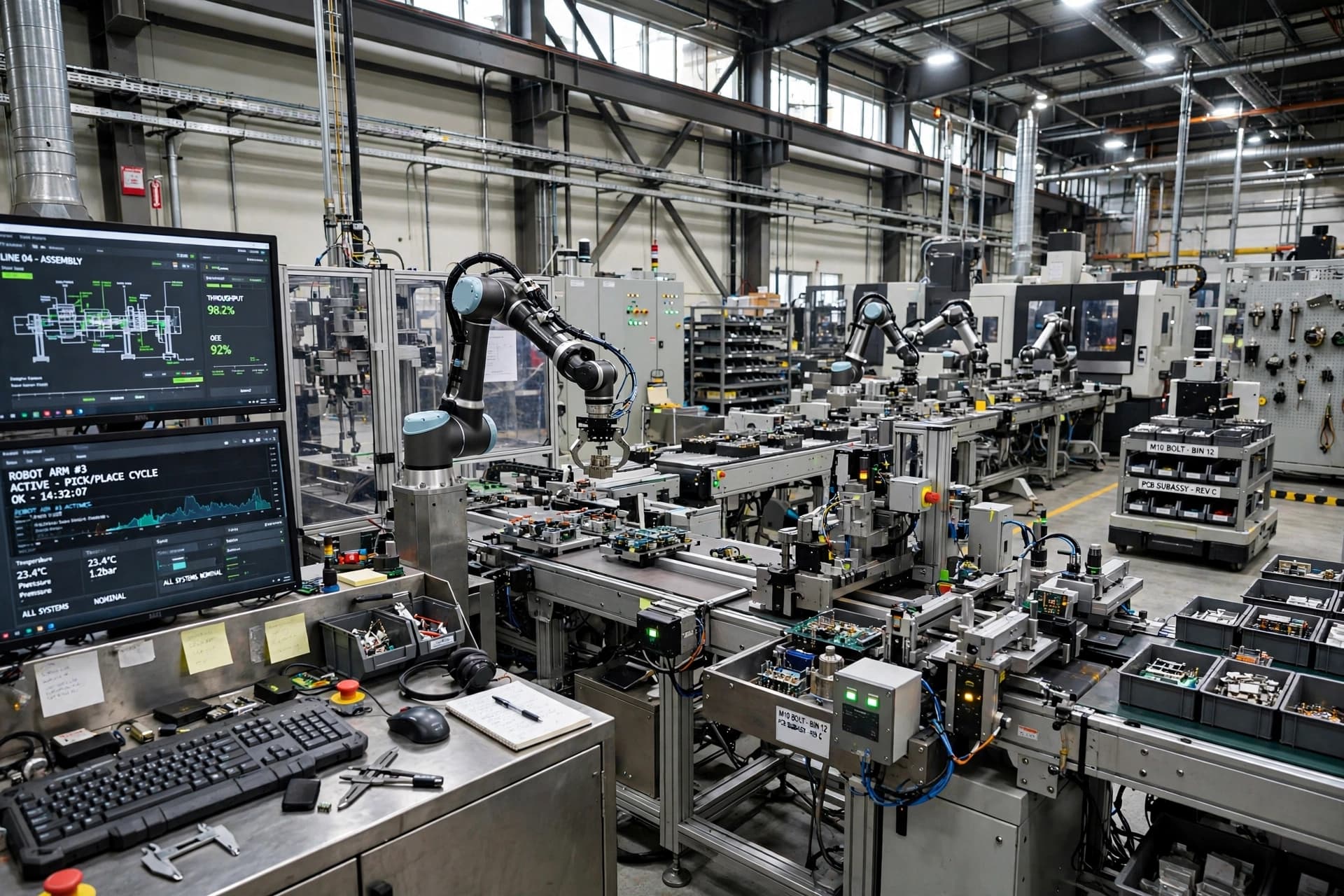
AI Image Disclaimer Illustrations are AI-generated and intended for concept only.
Sources Reporting from major technology news and interviews with AI industry leaders about predictions on automation and the future of professional work.
Published by Banx Network. This article is part of the Banx decentralized media programme, powered by the BXE token on the XRP Ledger.