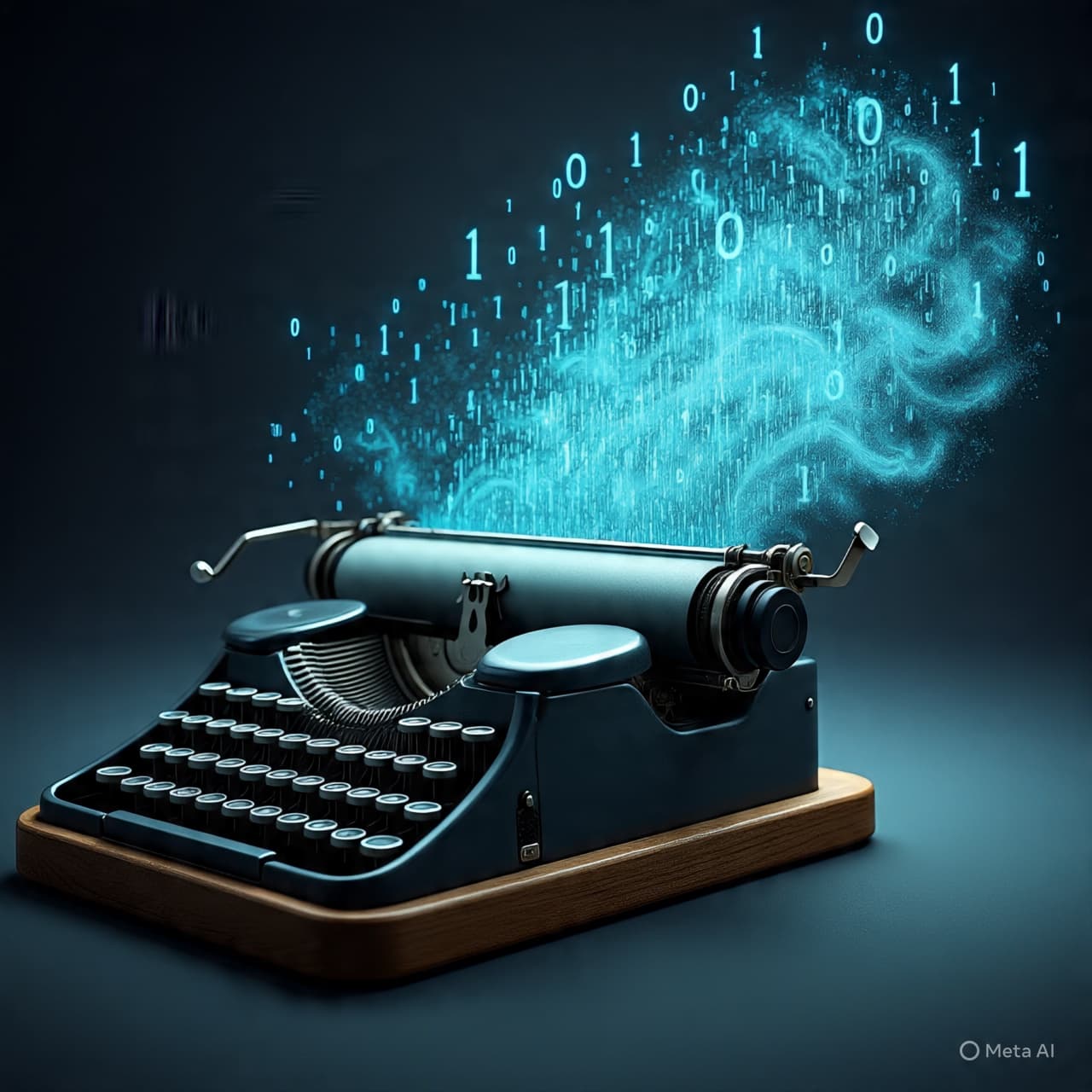
There is a strange feeling that settles over the modern internet — a kind of déjà vu, as if the words we read have been assembled from the same invisible reservoir. It makes sense once you realize the scale of the transformation: more than half of newly published articles online are now written by AI. The oldest human technology — language — is meeting its newest rival, and the collision is reshaping what it means to write, to read, and to trust.
For decades, the web grew on the backs of human storytellers: journalists, bloggers, reviewers, analysts, and countless quiet voices who carved meaning out of chaos. Their sentences carried fingerprints — familiar, flawed, unmistakably alive. But the rise of AI has introduced a different kind of authorship, one that operates at industrial speed and limitless scale. It doesn’t tire. It doesn’t hesitate. It doesn’t doubt. It simply generates.
This shift is not simply a technological milestone; it is a cultural turning point. The internet, once defined by human expression, is becoming something closer to an automated ecosystem. Many publishers now rely on AI not to replace writers but to fill the endless demand for content that algorithms reward. It is volume over nuance, speed over perspective, convenience over craft. And gradually, quietly, the digital landscape begins to feel less like a marketplace of ideas and more like a factory floor humming with synthetic voices.
Still, it would be a mistake to frame this as a doomsday for human writing. If anything, the rising tide of machine-generated text could elevate the value of the human voice. Authenticity — once taken for granted — may become a premium. Writers who can offer lived experience, emotional resonance, or investigative depth might stand out even more in a world crowded with AI-produced sentences.
The extinction risk, then, isn’t to writing itself but to the economic structures that support it. If AI can produce endless content for a fraction of the cost, publishers may choose efficiency over expertise. The challenge is not that humans have nothing left to say, but that the digital marketplace may no longer reward them for saying it.
And yet, history has a way of protecting the things that matter. Paint survived photography. Theater survived film. Books survived television. Human writing — the attempt to distill consciousness onto a page — has endured every technological upheaval so far. It may bend under the weight of automation, but it is unlikely to break.
In the end, the question isn’t whether AI will write more. It will. The question is whether readers, overwhelmed by abundance, will still seek the spark that only a human mind can leave in a sentence. The answer to that may determine what the next chapter of the internet looks like — and who gets to write it.
Published by Banx Network. This article is part of the Banx decentralized media programme, powered by the BXE token on the XRP Ledger.