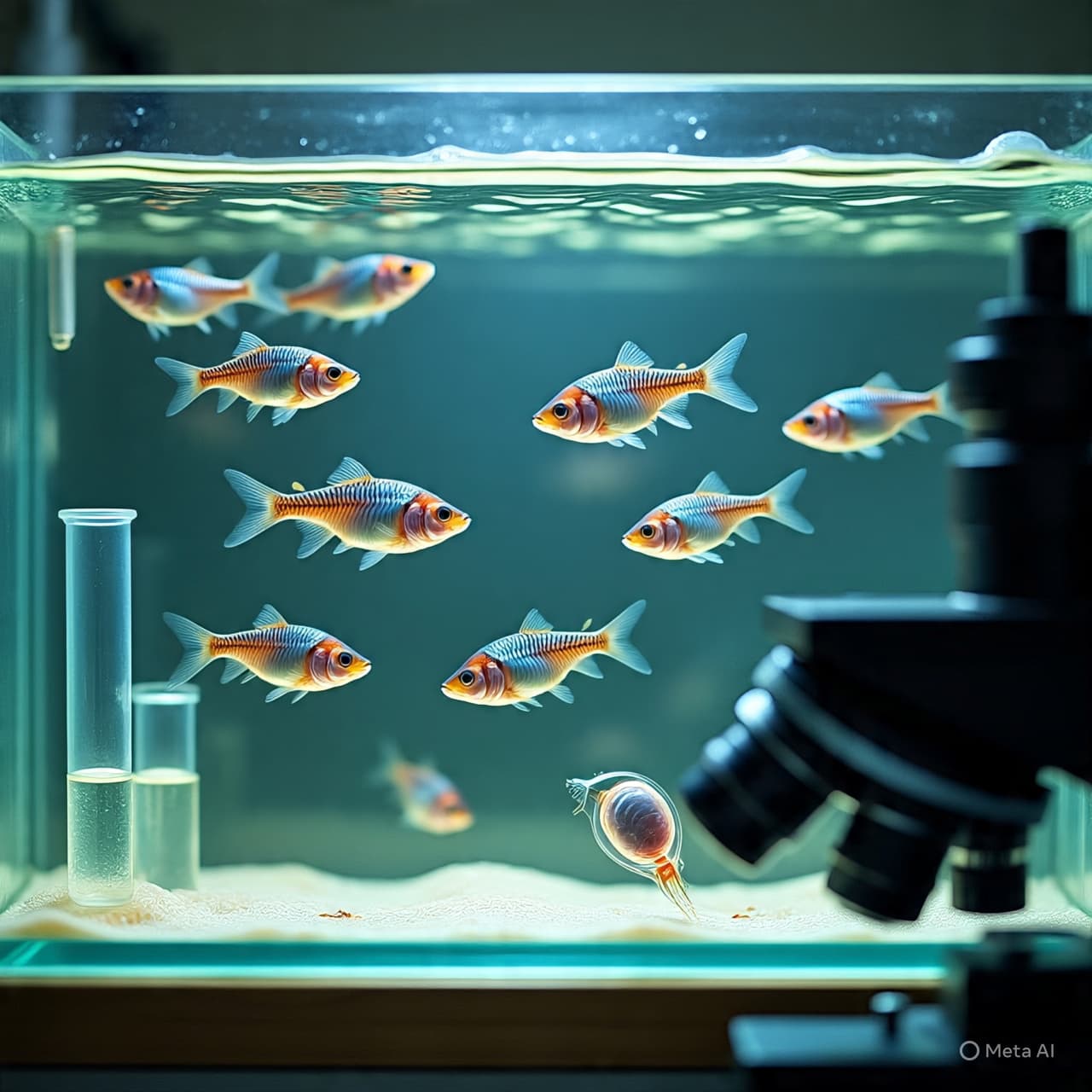
In the soft lull between early morning light and the hum of an active lab, there sits an array of clear tanks: miniature worlds where tiny striped fish swim without sound but with purpose. To the casual eye, they are peaceful, decorative echoes of a common aquarium. To scientists and families across continents, they are something different—mirrors reflecting the mystery of human life itself.
Two infants, born in distant lands yet connected by the whisper of a rare genetic variant, arrived into this world with a question no doctor could immediately answer: Would this genetic change harm their futures? The gene in question is tied to spinal muscular atrophy, a condition that can rob children of movement and life if it unfolds in its most severe form. But these babies carried versions of the gene that were, until recently, unknown to science, leaving caregivers suspended between hope and caution.
Enter the zebrafish. Not an arbitrator of fate, but an interpreter of biology. In a laboratory at Griffith University, biomedical scientist Jean Giacomotto and his team turned to these tiny vertebrates, beloved for their stripes and remarkable genetic similarity to humans. By weaving the infants’ specific gene variants into zebrafish embryos lacking the equivalent gene, researchers observed the fish grow and develop over weeks. The result was astonishing in its simplicity: the fish survived, showing the variants were unlikely to cause the severe disease feared by clinicians.
In the gently glowing light of the observation microscope, the zebrafish revealed what decades of human uncertainty could not: these particular genetic quirks would not lead to the debilitating condition known as spinal muscular atrophy. This clarity allowed doctors to step back from treatments that carry their own risks and costs, and families to breathe a little easier.
It’s not just a story of science; it is a testament to the quiet ways research can redefine decisions for parents and clinicians alike. In an age when genomic sequencing finds more variants every year, physicians around the world are encountering “variants of uncertain significance” more often. The work with zebrafish offers not only specific answers but a gentle, promising roadmap for future cases.
The children at the center of this research, now growing past their second birthdays, are developing normally—lives unfolding without the shadow of a feared diagnosis. And in the rippling movement of tiny zebrafish tails, science found a way to transform uncertainty into understanding
AI Image Disclaimer (Rotated Wording) Visuals are created with AI tools and are not real photographs.
Sources:
ABC News Griffith University research reporting EMBO Molecular Medicine (study publication) University of NSW commentary Background reports on zebrafish in genetic research
Published by Banx Network. This article is part of the Banx decentralized media programme, powered by the BXE token on the XRP Ledger.