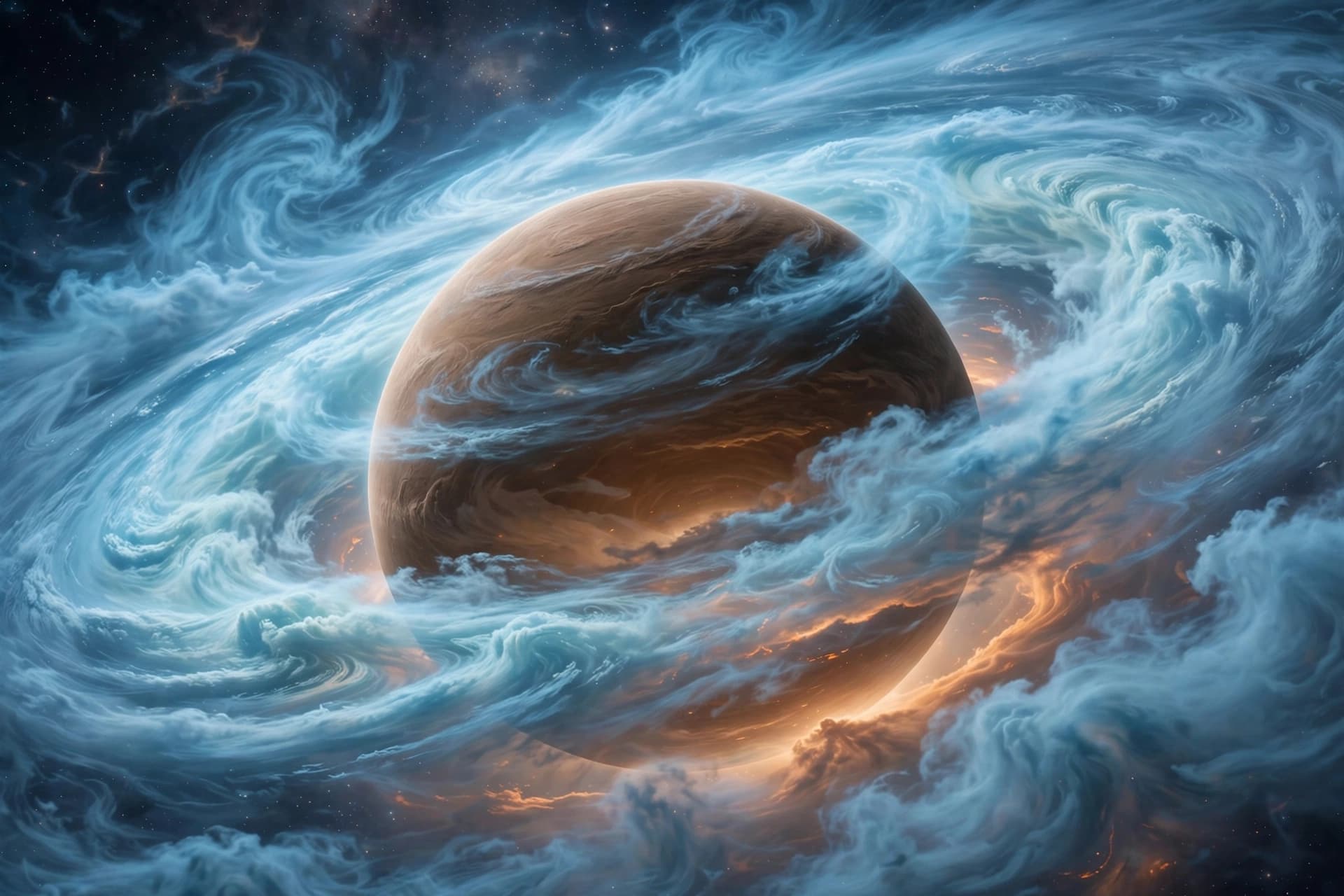
There are nights whens upward, feeling as if the universe is whough shimmering lights that have journeyed billions of years before gracing our skies. the cosmos feels not so much distant as deeply interwoven with our sense of time and wonder. Recently, astronomers have observed a celestial curiosity that feels like a cosmic echo — a pair of supernovas whose light has both arrived and not yet arrived on Earth, as if bending time itself to tell its tale.
Light, that subtle messenger of the stars, travels across the vastness of space at a steady pace. Yet, under the influence of gravity and the bending of spacetime itself, that light can embark on paths that twist and curve in ways that challenge our intuition. When massive galaxy clusters lie between us and a distant supernova explosion, their tremendous gravity acts as a sort of natural lens, bending and splitting the light. In some extraordinary cases, this gravitational lensing doesn’t just brighten faraway objects — it delays the arrival of pieces of their light by years, even decades.
In a way, it’s as if the universe has carved multiple pathways for the echoes of these stellar deaths to reach us. One image of the supernova has already been captured by telescopes, and yet thanks to the warped curvature of spacetime, other images — other moments of the same event — are still making their journey toward us. Some will grace our instruments in the next few years, while others may not be seen until decades into the future. This remarkable phenomenon offers a natural cosmic experiment, allowing scientists to measure how long the light takes along different routes and to refine our understanding of the universe’s expansion history.
This is not merely an abstract curiosity. These time-warped supernovas can help probe one of cosmology’s most persistent puzzles: the precise rate at which the universe is expanding. By comparing when delayed images of the same explosion arrive, astronomers can measure distances and the behavior of spacetime itself in a way that is distinct from other methods — like the study of standard candles or the cosmic microwave background.
It’s as though the universe has written a story in light, with chapters that unfold on their own schedule — sometimes within our lifetimes, sometimes stretching beyond them. Each arrival of delayed light carries with it a lesson about gravity, time, and the grand architecture of the cosmos.
In observing these time-warped lights, astronomers remind us that the universe is not static but alive with phenomena that invite patience, curiosity, and humility. And though these supernovas are far too distant to influence life on Earth directly, their light’s long and winding odyssey helps illuminate fundamental questions about the nature of space and time itself.
In the coming years and decades, as those delayed flashes of ancient explosions finally arrive, scientists will continue to watch and listen — not for sound, but for the subtle language of light that has woven its path across the cosmic tapestry.
AI Image Disclaimer Visuals are created with AI tools and are not real photographs.
SOURCE CHECK — credible media/institutional outlets found:
• Live Science (science news)
• Universe Today (astronomy reporting)
• NASA/space science context on time-delayed light and lensing (general background)
Published by Banx Network. This article is part of the Banx decentralized media programme, powered by the BXE token on the XRP Ledger.