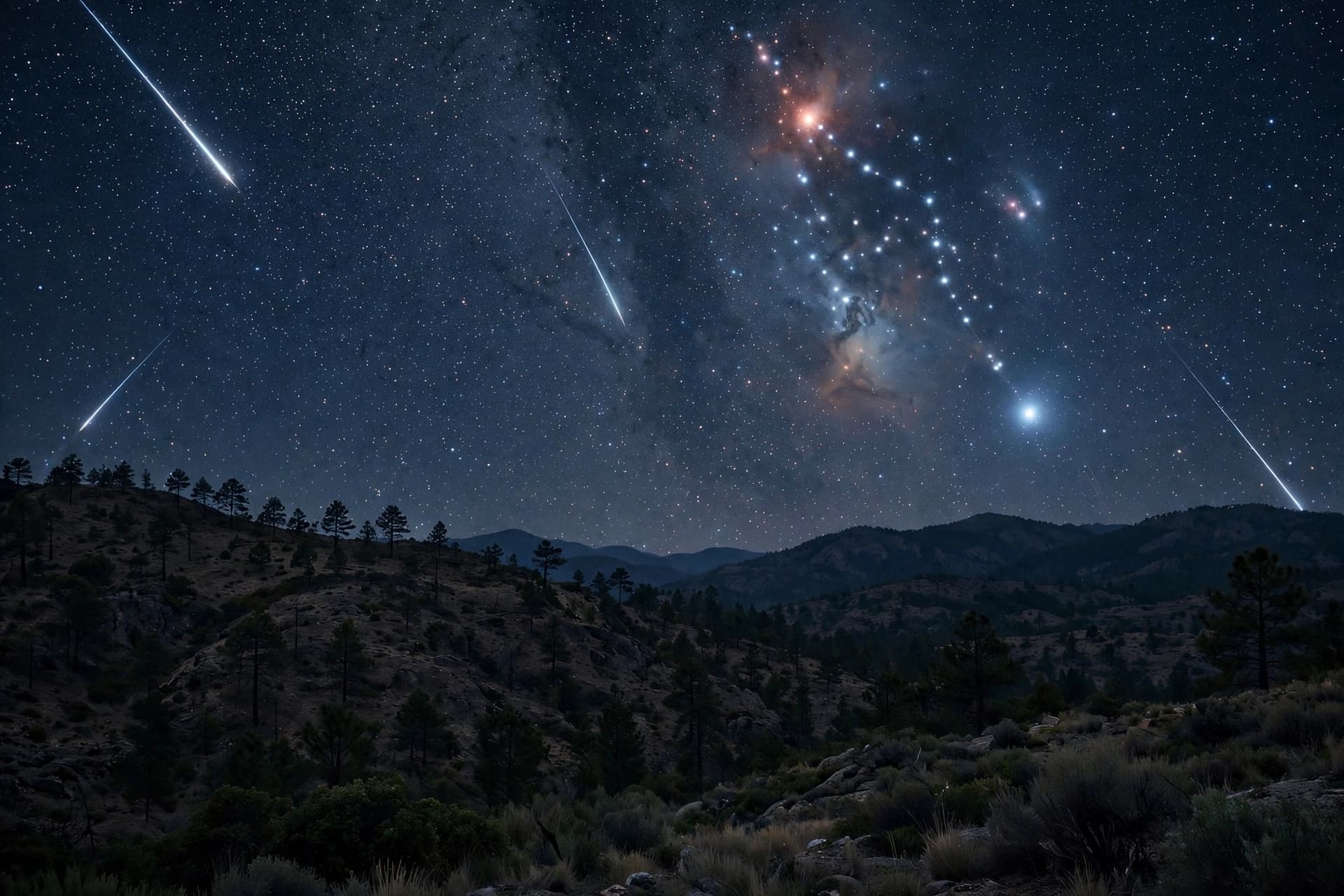
In the pale hush of a southern sky before sunrise, when dawn seems to linger on the horizon like a promise yet unfulfilled, one might imagine the quiet rhythms of distant worlds. There, in velvet darkness, stars hold their steadfast glow, and around them unseen companions trace endless loops of motion. It is in this kind of stillness, where light bends imperceptibly and shadows mingle with the faintest hum of the cosmos, that astronomers have found the whisper of a new world — a super‑Earth circling a nearby star not far beyond our solar neighborhood.
This world, revealed through the meticulous gaze of NASA’s Transiting Exoplanet Survey Satellite (TESS), is a planet a little larger than our own, caught as it crosses in front of its host star and causing a delicate, periodic dimming of light. The method is subtle, reliant on the recorded rhythm of starlight itself: the tiny ebb and flow that betrays the presence of a silent traveler. In such a transit, one sees not merely data, but motion — the quiet testament of orbit, the patient, circular dance that has persisted unseen until now. The existence of this super‑Earth, identified through repeated patterns in TESS’s observations, speaks to the steady patience of scientific listeners who tune their instruments to the faint melodies of light.
The star it orbits lies some 83 light‑years from our sun, a distance that in cosmic terms is like a gentle ripple across the vast pond of interstellar space. Here, time unfolds differently; a single year for this planet lasts less than four days, a swift circuit that draws it close to its star’s warmth, intimate but not inhospitable in the language of astrophysics. Its size and orbit place it within the family of worlds called super‑Earths, planets more substantial than our own but smaller than the ice giants that hover at the edges of our solar system’s grand architecture. These worlds, neither small nor enormous, occupy a middle realm — a place of variation, of diversity, and perhaps of lessons on planetary formation itself.
To the eye of a distant observer, this discovery is not a flash of revelation but a soft bloom of understanding. It adds another chapter to the quiet chronicle of planets that orbit stars beyond our own, worlds each with their own rhythms and seasons, unseen yet hinted at through the dance of light and shadow. TESS, in its wide‑field survey of the sky, has enriched this catalogue more than six hundred times over, identifying planets close and far, large and small, each holding a piece of the greater story of cosmic creation.
In this unfolding story, not every world promises conditions for life as we know it, and this newly found super‑Earth, with its swift orbit and near embrace of its host star, may prove to be a place quite unlike our own in temperature and surface conditions. Yet its discovery underscores the richness and variety of planetary systems scattered throughout our galaxy. Each new detection adds texture to the grand design, revealing not just how many planets there are, but hinting at how they form, evolve, and persist through eons.
In recent reporting, scientists have detailed the observation of this super‑Earth and the patterns in brightness that signal its transit. As follow‑up observations continue and as future observatories join the quest, our understanding of these distant worlds will sharpen, bringing clarity to the motions and compositions of planets that, until recently, existed only in the soft glow of imagination.
AI Image Disclaimer
Illustrations were created using AI tools and are not real photographs.
Sources
Phys.org Earth.com
Published by Banx Network. This article is part of the Banx decentralized media programme, powered by the BXE token on the XRP Ledger.