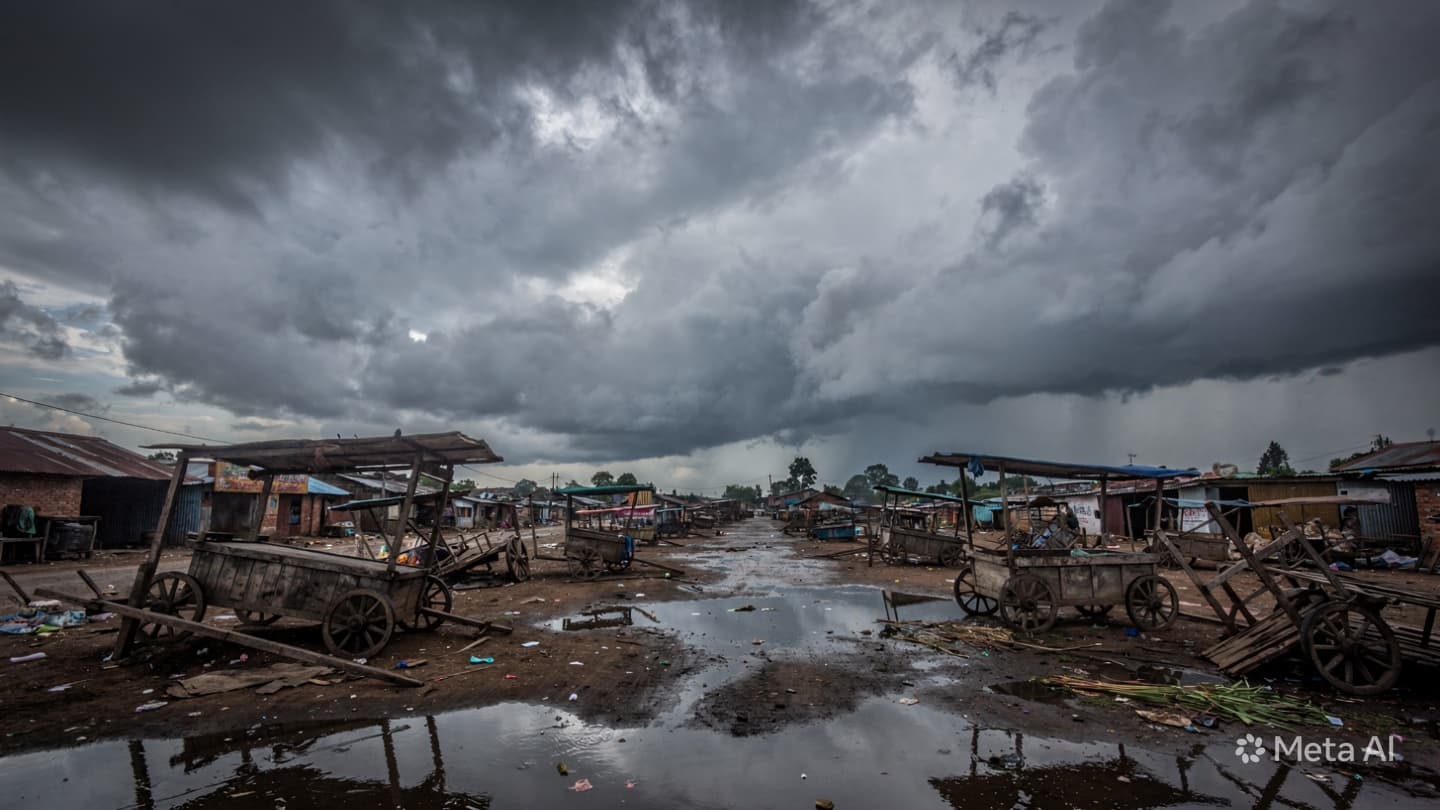
The morning at the open-air community market had commenced with its usual tapestry of small human transactions, the air damp with the promise of rain and thick with the scent of fresh river fish. In the low-lying plains, where the horizon stretches uninterrupted to meet an expansive sky, seasonal atmospheric changes announce themselves with a profound shift in barometric weight. Sellers and buyers had gathered under the light canvas awnings, trading words and produce in a comfortable, multi-generational dance that forms the social spine of the district. It is a setting where the reliance on open terrain leaves communities deeply tied to, and exposed to, the erratic temperaments of the troposphere.
As the late morning progressed, the gentle gray horizon hardened into a deep, bruised charcoal, casting a premature twilight over the rows of woven baskets and wooden stalls. The air grew perfectly still, a quiet absence of wind that veterans of the landscape recognize as a prelude to severe convective activity. Within these rural centers, the transition from a standard seasonal shower to a state of extreme atmospheric instability can occur in the time it takes to secure a tarp. The immense electrical potential building between the clouds and the saturated earth remained completely invisible, a silent tension searching for an immediate path of discharge.
A single, violent equalization of energy tore through the humid air without the traditional warning of distant, rumbling thunders. The discharge struck with a blinding, immediate brilliance, mapping a jagged path of light directly into the center of the crowded thoroughfare where merchants were tending to their wares. The sheer physical concussiveness of the strike rippled outward across the mud-slick paths, throwing bystanders backward and scorching the immediate ground. For a long, suspended second, the vibrant hum of the market was replaced by an absolute, stunned silence as the smell of ozone filled the air.
There is a distinct, heavy bewilderment that settles over a rural community when an ordinary Tuesday market becomes the site of a sudden, natural tragedy. The abrupt loss of four lives on the wet earth of the communal square has left an indelible mark on the collective consciousness of a neighborhood where safety is often assumed within the crowd. This sorrow is not loud or dramatic; it lingers instead in the abandoned piles of vegetables, the overturned scales, and the low, hushed tones of neighbors gathered at the periphery. The fragility of rural commerce is suddenly illuminated when the elements intervene so decisively in the middle of a working day.
In the immediate aftermath of the strike, the market area presented a stark, somber tableau, with rain beginning to fall softly over abandoned umbrellas and scattered coins. Emergency responders and local volunteers moved methodically through the lanes, checking on the dazed survivors and cordoning off the immediate impact zone. The local clinic quickly became a focal point for frantic families, while older villagers stood in quiet circles near the market gates, quietly debating the unusual intensity of the season's electrical storms.
The formal accounts transitioning from the administrative offices confirm that the catastrophic lightning strike claimed four victims immediately upon impact within the open-air compound. Local medical staff and municipal authorities have completed the initial identification process, working closely with village leaders to ensure the remains are returned to their respective families. Financial assistance programs have been activated by regional authorities to help cover the sudden funeral expenses and provide basic support to the households affected by the loss.
Published by Banx Network. This article is part of the Banx decentralized media programme, powered by the BXE token on the XRP Ledger.