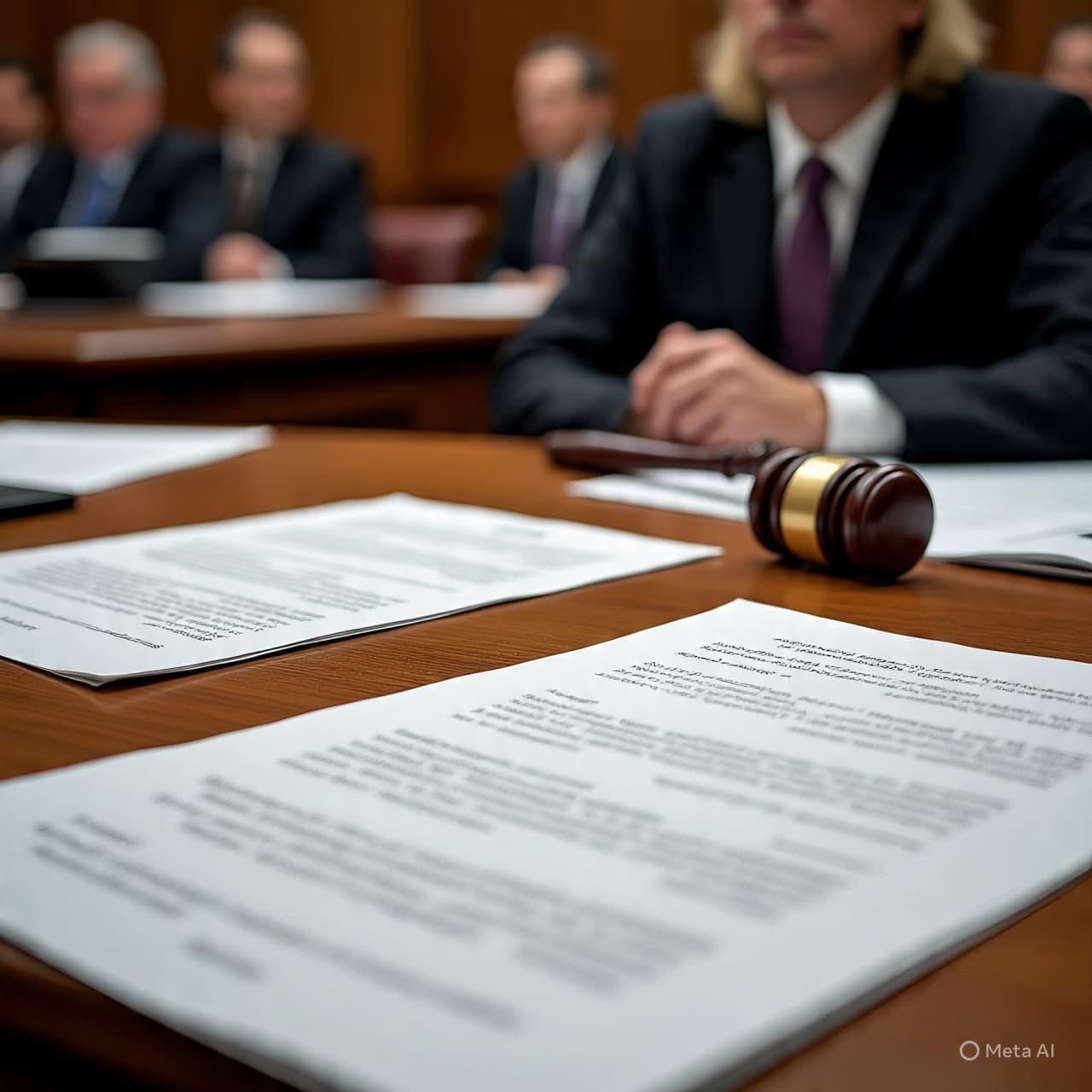
In the quiet corridors of legal filings and financial disclosure, there are moments that resemble the slow reveal of a painting long obscured by time. What once was whispered in hypotheticals now stands acknowledged in black-and-white filings, an official chapter in the ongoing story between one of the world’s largest banks and a former president whose name has remained a constant in America’s political life. This week, JPMorgan Chase, a financial institution woven into the country’s economic fabric, affirmed in court documents something long speculated but never formally confirmed: that it closed the banking accounts of Donald J. Trump and several of his associated businesses in the months following the January 6, 2021 attack on the U.S. Capitol.
For years, the subject of “debanking” — when banks sever relationships and close accounts — has hovered at the intersection of finance and politics, a concept discussed more often in opinion columns than in judicial declarations. The new filings, part of a $5 billion lawsuit filed by Trump against JPMorgan Chase and its Chief Executive Officer Jamie Dimon, paint a more concrete picture. In February 2021, roughly a month after the Capitol attack, the bank informed Trump’s legal entities that their accounts would be closed. The letters did not specify an explicit reason but noted that the relationships were being ended when they were deemed no longer in the bank’s interest to maintain.
Until this filing, JPMorgan had declined to say definitively that it had taken such action, instead speaking in broad terms about its discretion to close accounts under certain circumstances. Now, with the disclosures entered into the legal record, that acknowledgment has become an undeniable part of the public domain. Trump’s attorneys have characterized this as validation of their claims that the closure was politically motivated and harmful to his business operations.
JPMorgan, for its part, disputes the underlying allegations and is taking steps to move the lawsuit from Florida state courts to federal court in New York, where the bank’s headquarters and the relevant account operations are based. In filings opposing the claims, the bank has maintained that it does not close accounts based on political views or affiliations and that decisions about client relationships are grounded in business considerations and risk assessments.
This development emerges amid broader debates over the role of major financial institutions in public life and the parameters of lawful service denial. For some, the case illustrates how questions of reputation and risk have become entwined with political narratives. For others, the unfolding court battle is emblematic of a former president continuing to leverage legal channels to contest perceived slights and institutional decisions made in the earlier years of a fraught national moment.
As the matter weaves through procedural motions and factual claims, the factual heart of the story — that JPMorgan formally acknowledged it closed accounts tied to Trump in the wake of January 6 — now stands on the public record. Whether the courts ultimately find for one side or the other, this chapter alone adds texture to the ongoing national conversation about political influence, corporate discretion, and the nature of financial relationships in a polarized age.
AI Image Disclaimer (Rotated Wording) “Graphics are AI-generated and intended for representation, not reality.”
Source Check — Credible News Outlets Reporting This:
Reuters Associated Press AP via Yahoo/WSLS Reuters via other outlets Action News Jax
Published by Banx Network. This article is part of the Banx decentralized media programme, powered by the BXE token on the XRP Ledger.