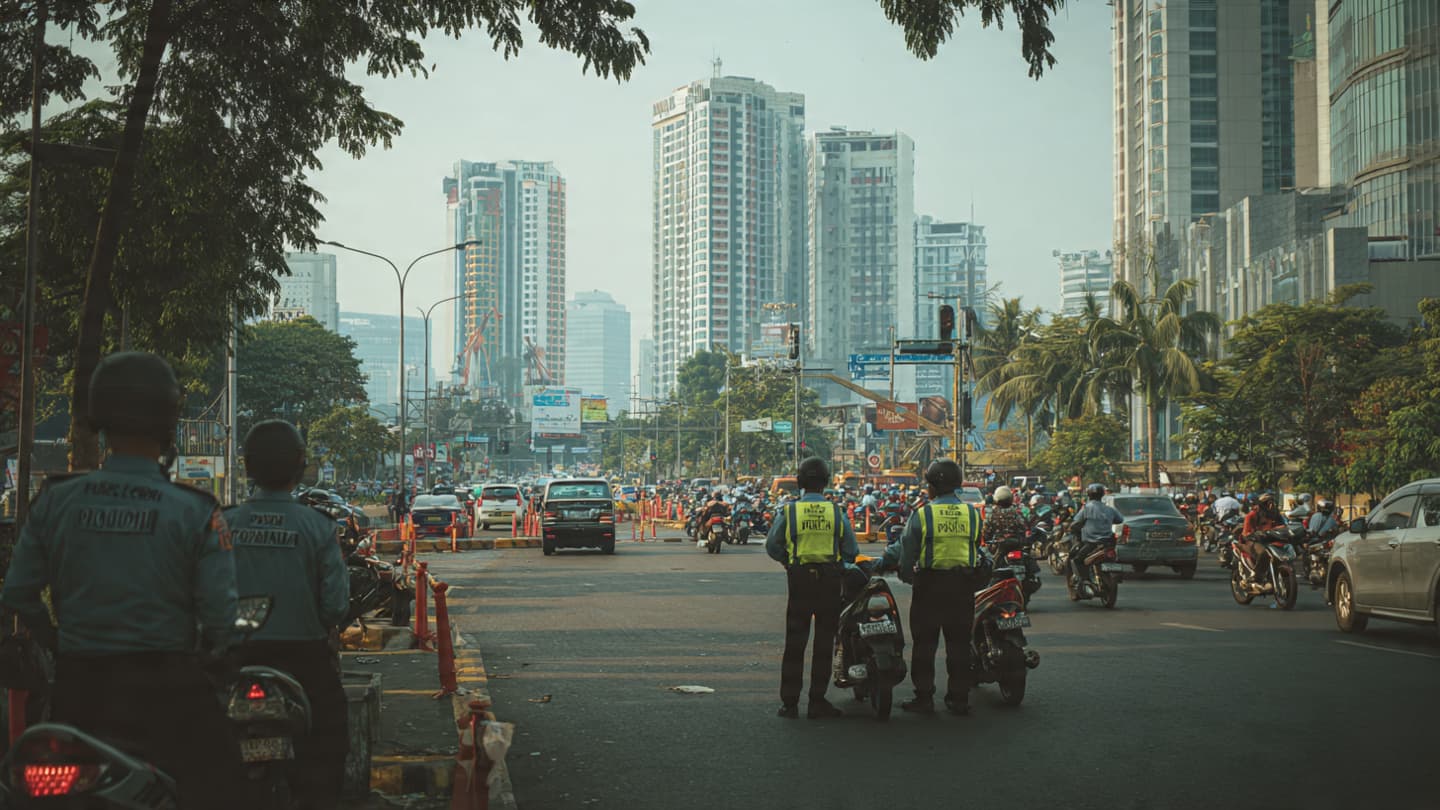
Traffic enforcement in a metropolitan setting often arrives like a scheduled pause in the city’s constant motion, inviting reflection on how order is maintained amid density. As Jakarta prepares for Operasi Patuh Jaya 2026, attention turns once again to the patterns that shape daily commuting behavior.
The operation is set to begin tomorrow, marking the start of a coordinated effort to address violations that frequently occur on urban roads. Authorities emphasize that the initiative is part of a broader commitment to improving safety and reducing traffic incidents.
Among the listed targets are common infractions such as not wearing helmets or seatbelts, driving without valid documents, using mobile phones while operating vehicles, and ignoring traffic signals. These issues remain consistent concerns in metropolitan traffic environments.
Enforcement will be conducted across various strategic points in the city, with officers focusing on both major roads and high-traffic intersections. The aim is to ensure that compliance is visible and consistent throughout the operational period.
Public response to such operations often reflects a mix of caution and acknowledgment of necessity. While some drivers adjust their habits temporarily, others view these periods as reminders of long-term responsibility on the road.
Authorities also continue to highlight that enforcement alone is not the final goal, but rather part of a broader effort to foster sustained awareness and safer driving culture in urban life.
As the operation begins, it joins a series of recurring initiatives designed to maintain order in one of the region’s busiest transportation networks.
Images used in this article are AI-generated for illustrative purposes only.
Sources: Kompas, Detik, CNN Indonesia
Published by Banx Network. This article is part of the Banx decentralized media programme, powered by the BXE token on the XRP Ledger.